

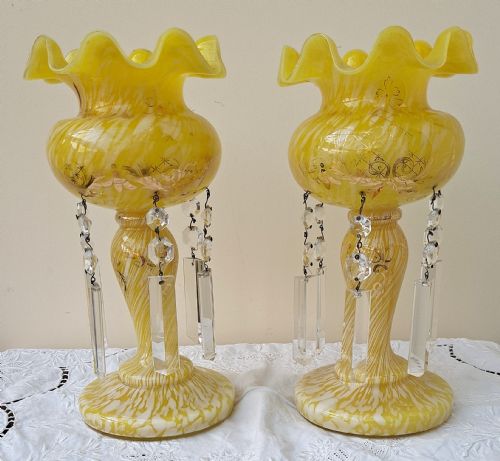


Antique Yellow Glass Lighting
These antique yellow glass lighting pieces bring a warm, luminous glow to a room through coloured and uranium glass.
Antique Yellow Glass Lighting
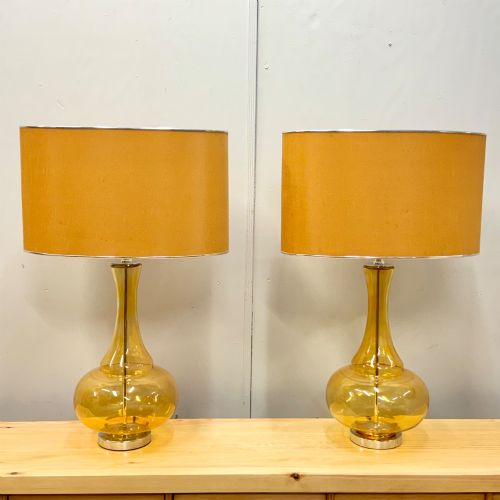
Antique yellow glass lighting encompasses functional and decorative pieces spanning the nineteenth and early twentieth centuries. You will find table lamps, oil lamps, hanging lights, and lustres shaped in styles ranging from Victorian and Gothic Revival to Art Deco and Art Nouveau.
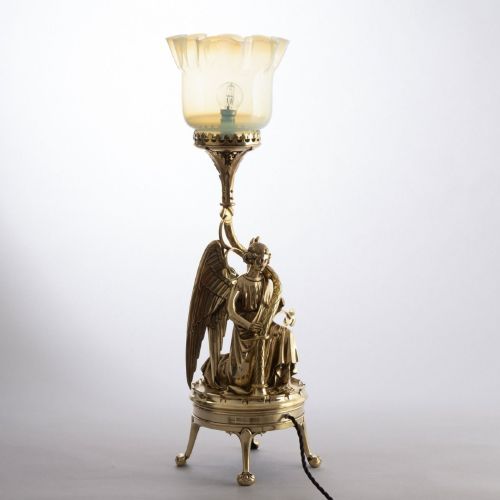
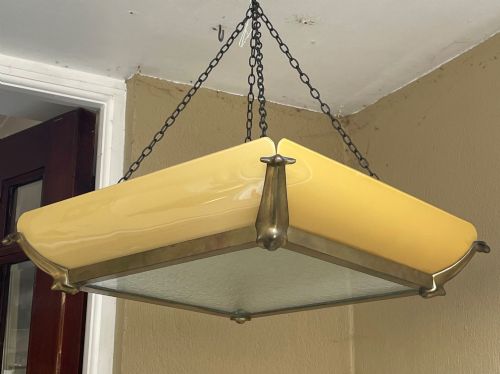
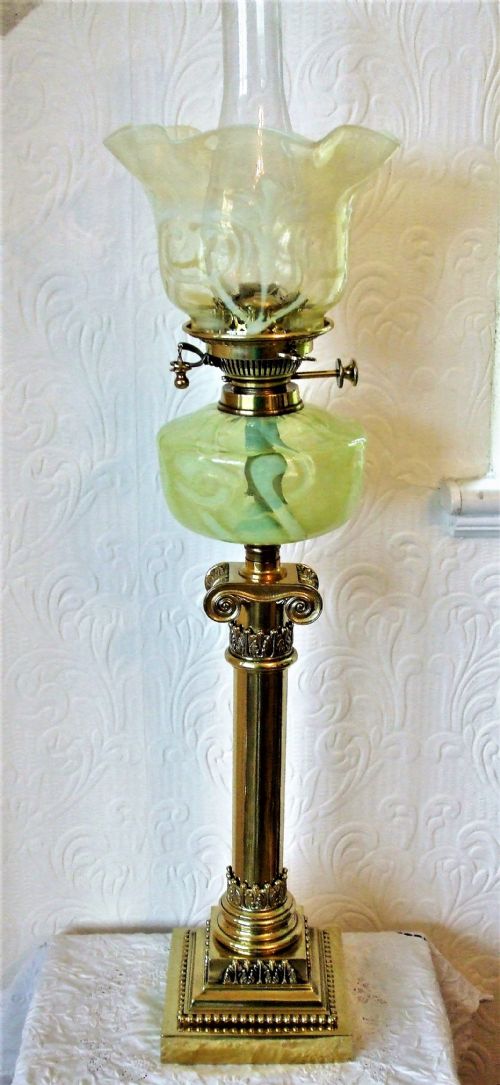
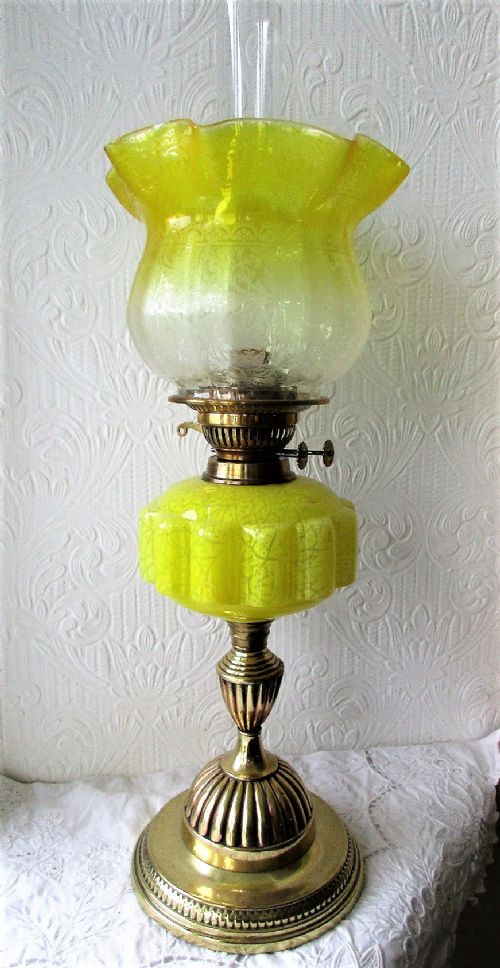
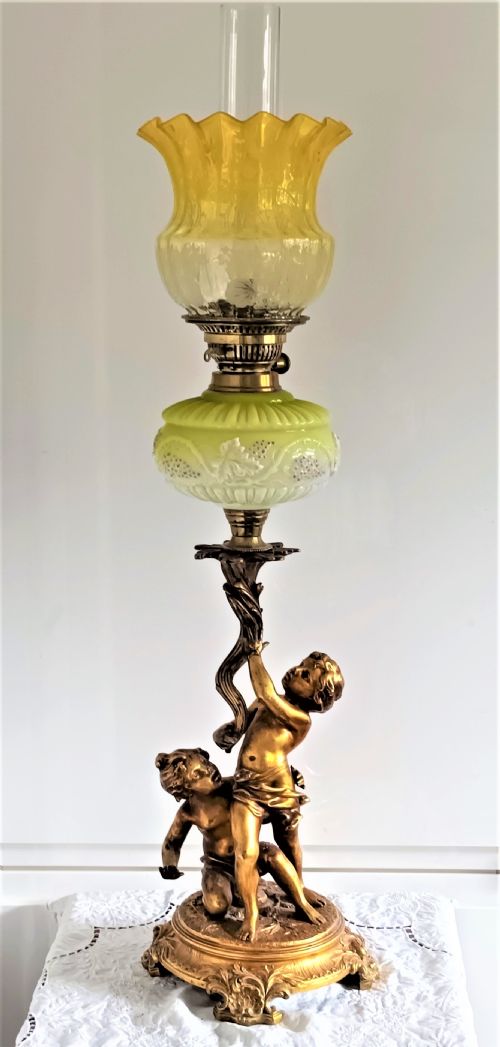
The nineteenth century examples on this page are predominantly oil lamps and glass lustres, often combining brass, porcelain, and glass. Later twentieth century pieces lean towards Art Deco table lamps and hanging lights featuring geometric glass forms paired with wrought iron or ormolu.
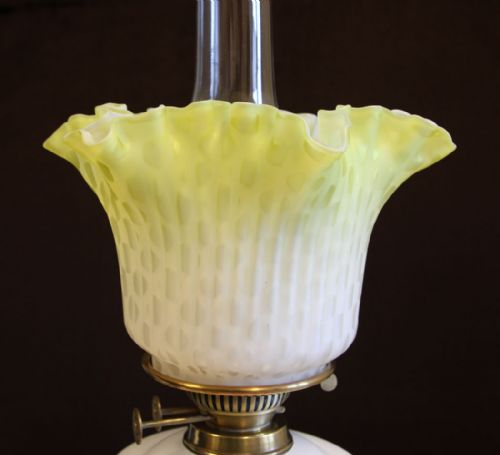
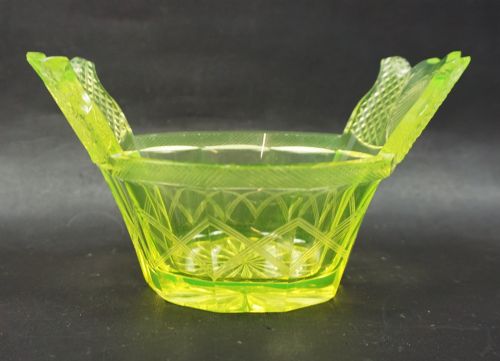
Vaseline glass and uranium glass appear among the early forms, notably in Bohemian and Victorian pieces. These objects serve both as practical illumination and as decorative accents that showcase historical glass-making techniques.
How they were made
Makers shaped glass through blowing and moulding, incorporating uranium or mineral oxides into the batch to achieve distinct yellow tones. These glass components were then paired with metal mounts in brass, ormolu, silver plate, or wrought iron.
Many nineteenth century oil lamps combine ceramic, porcelain, or glass fonts with cast brass columns and heavy metal bases. Later Art Deco and Art Nouveau designs integrate pate de verre or specialised glass shades directly into metal frameworks.
Antique Yellow Glass Lighting Retail Price Guide 2026
Typical asking prices for yellow glass lighting among the pieces listed under this phrase on Sellingantiques today, from the lower quarter to the upper quarter. They describe what is for sale here now, not the wider market.
Listings feature periods from the early nineteenth century through the 1930s, using materials such as vaseline glass, ormolu, and wrought iron.
What varies in quality
Quality reveals itself in the depth and clarity of the glass colour, as well as the weight and detail of the metal mounts. Finer examples display crisp moulding, careful hand-gilding, and harmonious proportions between the glass shade or font and the supporting base.
The execution of decorative elements, from painted details on porcelain and glass to the smithing of wrought iron frames, distinguishes standard production items from exceptional workshop pieces.
Hinks Ionic Column·Meissen Porcelain Cherub·Karl Palda·Muller Freres
The Antique Yellow Glass Lighting Glossary
- Vaseline glass
- Pressed or blown glass containing uranium dioxide, which gives it a transparent yellow or greenish-yellow colour. Under ultraviolet light, this glass exhibits a bright green fluorescence.
- Lustre
- A decorative tabletop ornament featuring a glass bowl hung with long cut-glass prisms. These pieces reflect ambient light and candlelight from their dangling pendants.
- Oil lamp
- A lighting device that burns liquid fuel via a wick raised through a metal burner. In these listings, they frequently feature glass fonts mounted on brass or ceramic columns.
- Pate de verre
- A glass-making technique where finely crushed glass is packed into a mould and fused in a kiln. This process creates pieces with a dense, textured, and frosted appearance.
- Ormolu
- Gilded bronze applied as a decorative mount on furniture and lighting fixtures. It provides a bright golden finish that complements coloured glass components.
Antique Yellow Glass Lighting: Frequently Asked Questions
How do I identify uranium glass?
Uranium glass typically displays a transparent yellow or yellow-green hue under natural light. When exposed to ultraviolet light, it glows with a bright green fluorescence.
Historical pieces from the nineteenth century often show this characteristic reaction due to the mineral content used in the glass-making process.
What styles are common in these lights?
The pieces span several distinct historical periods, featuring Victorian, Gothic Revival, and Rococo Revival designs from the nineteenth century. Later items adopt the clean geometries of Art Deco and the organic motifs of Art Nouveau.
Fittings and metalwork shift accordingly, moving from heavy brass columns to wrought iron and ormolu mounts.
How were oil lamps constructed?
Nineteenth century oil lamps typically combine a glass or porcelain font for holding fuel with a sturdy metal or ceramic base. A brass burner mechanism sits at the top to support the wick and chimney.
Many examples incorporate brass columns, stepped bases, and gilded accents to elevate their decorative presence in a room.
What is a glass lustre?
A lustre is a decorative mantel or table ornament made of glass, featuring a central bowl or vase fitted with a matching set of hanging glass prisms. These pieces caught the light of day or evening flames to brighten a Victorian interior.
They appear in pairs and often showcase bright yellow glass coloration alongside cut crystal pendants.