



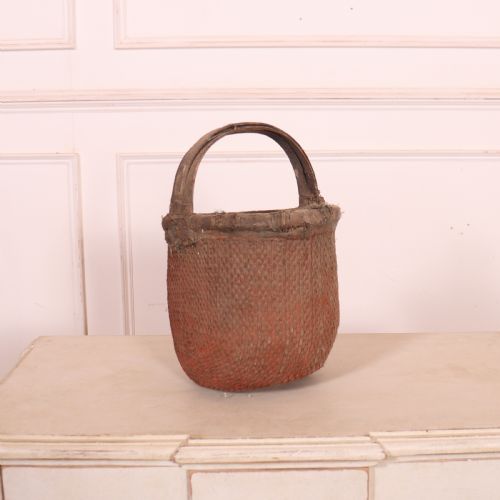


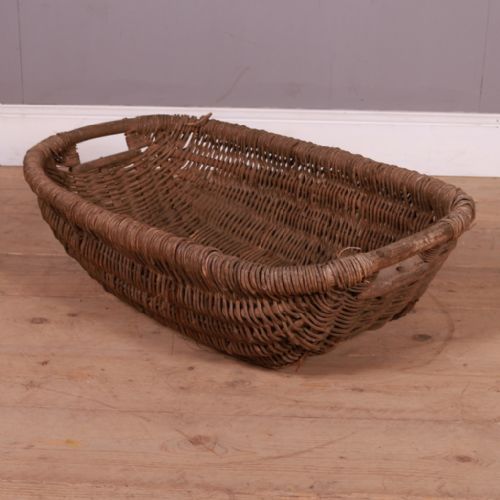

Antique Woven Country Basket
These antique woven country basket pieces are honest utilitarian objects shaped by agricultural labour and regional craft.
Antique Woven Country Basket
When you search for an antique woven country basket, you are looking at utilitarian vessels made for harvest, storage, and market work across rural Europe. The pieces available on this page span the nineteenth century and originate from English, French, and Scandinavian traditions.
The forms reflect specific agricultural tasks, including grape harvesters, market seller carriers, and champagne harvest vessels. These objects served demanding daily functions in farmyards, vineyards, and village markets before finding a place in modern interiors.
French and Scandinavian country styles dominate the selection, often taking the form of large hand-woven pine baskets or wicker grape hods. Each piece carries the distinct regional identity of its maker and the functional requirements of its local trade.
How They Were Made
Maker hands shaped these objects from readily available local resources, utilising materials such as pine, willow, and wood splint. Workers harvested plant fibres and timber, preparing them by hand before weaving sturdy structures designed to endure heavy agricultural loads.
Construction techniques combined flexible woven elements with rigid wooden components, sometimes reinforced with metal for added strength. Certain English examples feature applied paint over the woven surface, adding a layer of protection or visual distinction to the utilitarian form.
Antique Woven Country Basket Retail Price Guide 2026
Typical asking prices for woven country basket among the pieces listed under this phrase on Sellingantiques today, from the lower quarter to the upper quarter. They describe what is for sale here now, not the wider market.
French grape harvesters relied on specialised backpack baskets called hottes to haul sticky fruit down steep vineyard rows.
What Varies in Quality
The integrity of the weave and the tightness of the construction separate everyday utility work from finer regional examples. Baskets that retain their structural form under the strain of heavy pine or willow materials demonstrate superior initial craftsmanship.
Subtleties in the handling of natural fibres and the balance of proportion distinguish pieces made for specific trades, such as grape harvesting or market selling. The preservation of original surfaces, including aged paint and untreated wood patination, defines the character of the surviving object.
The Antique Woven Country Basket Glossary
- Wicker
- A technique of weaving pliable plant materials into rigid objects, commonly used for baskets and furniture. This method provides both flexibility and high tensile strength for carrying heavy loads.
- Splint
- A thin strip of wood peeled or sliced from a log, utilised in traditional basketry for its rigidity and flat profile. Splint construction creates sturdy bases and walls for large agricultural containers.
- Hotte
- A traditional deep backpack basket used in French vineyards for gathering grapes during the harvest. These large containers allowed workers to carry heavy fruit loads securely across uneven terrain.
- Trug
- A shallow horticultural basket traditionally fashioned from wood strips and used for gathering garden produce. The form balances shallow depth with a wide base for sorting fruits and vegetables.
Antique Woven Country Basket: Frequently Asked Questions
What were antique woven country baskets used for?
These vessels served demanding agricultural roles in rural communities, carrying harvested crops, grapes, and market goods. Farmers and merchants relied on their sturdy construction for daily transport.
Over time, these utilitarian objects transitioned from working farm tools into decorative storage pieces valued for their rustic aesthetic.
How do I date an antique woven basket?
Dating relies on examining the materials, construction methods, and regional style characteristics recorded in the piece. Nineteenth-century examples often display specific regional traits like Swedish pine construction or French wicker techniques.
Tool marks and the natural ageing of the wood or plant fibres provide further clues to the period of manufacture.
Where did these country baskets originate?
The pieces originate from various European rural traditions, predominantly English, French, and Scandinavian workshops. Each region utilised local flora and timber species suited to their specific agricultural needs.
French examples frequently reflect vineyard work, while Scandinavian pieces highlight traditional pine woodworking and forestry.
How should I live with a country basket?
These baskets integrate naturally into modern spaces as functional storage containers for blankets, firewood, or household items. Their neutral organic textures complement both contemporary and traditional interior schemes.
Placing them in dry environments away from direct heat sources helps preserve the fragile natural fibres of the weave.