





Antique Workstation
These antique workstation pieces span desks, bureaux, and preparation tables built to organise work.
Antique Workstation
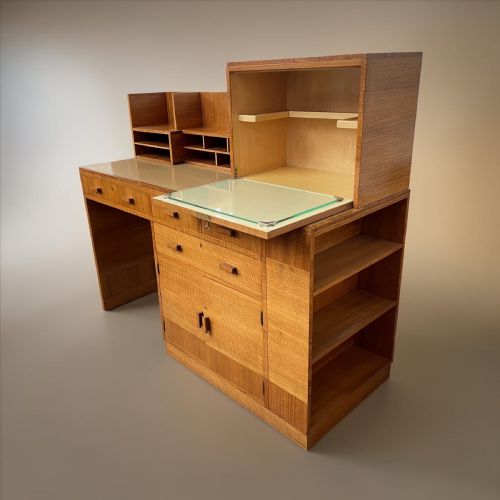
When you search for an antique workstation, you encounter a practical mix of desks, bureau bookcases, writing tables, and utility furniture designed for daily tasks. The selection relies heavily on Victorian and Edwardian examples, alongside Georgian pieces and Art Deco designs from the 1930s.
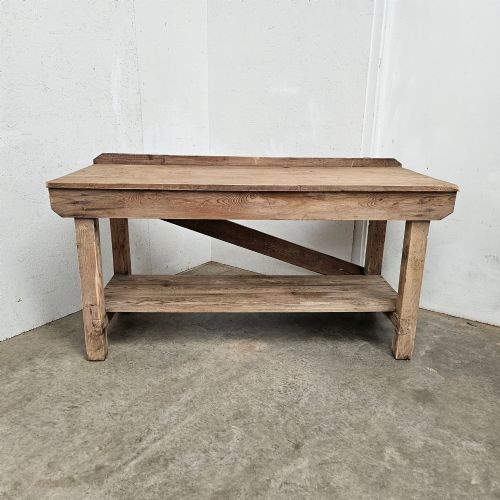
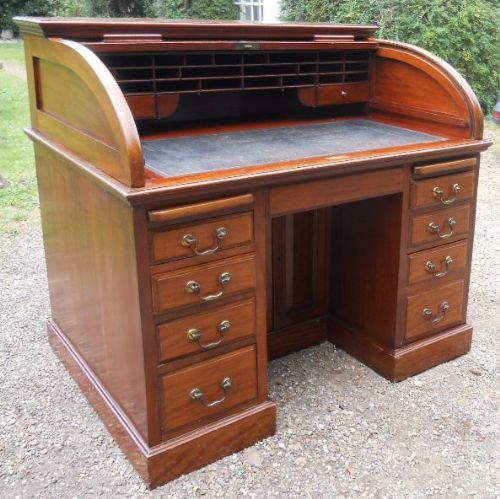
Most entries on this page consist of mahogany desks with multiple drawers, kneehole configurations, and campaign styles. Alongside these formal writing pieces, the category extends to pine potting tables, beech butchers blocks, and large kitchen preparation tables.
Origin and period dictate the character of each workstation, ranging from inlaid ladies writing desks from the early twentieth century to robust office desks in panelled pine or solid mahogany. Buyers select these items to serve as functional hubs in studies, kitchens, and workspaces.
Materials and construction
Construction relies on durable timbers such as mahogany, oak, pine, and beech, chosen to withstand heavy daily use. Mahogany frequently appears in finer desks and bureaux, sometimes in Cuban varieties or paired with leather writing surfaces.
Utility tables utilise pine and beech for simpler frames, potting shelves, and butchers blocks. Brass hardware, glass elements, and iron details complete the construction, supporting drawers, rolltops, and decorative bases.
Antique Workstation Retail Price Guide 2026
Typical asking prices for workstation among the pieces listed under this phrase on Sellingantiques today, from the lower quarter to the upper quarter. They describe what is for sale here now, not the wider market.
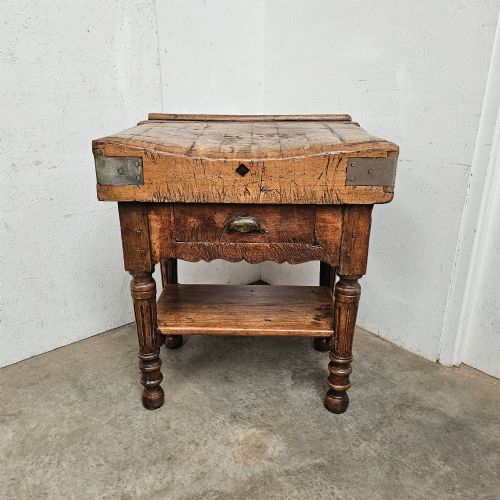
Heavy butchers blocks on decorative bases step out of the butcher shop to hold kitchen mixers.
Assessing quality
Quality reveals itself through timber selection, such as the depth of Cuban mahogany or the grain in solid oak and beech. Construction integrity separates standard utility tables from refined bureau bookcases and pedestal desks with fitted interiors.
Fine inlay work, neat sizing, and balanced proportions distinguish bespoke Edwardian and Georgian writing desks from heavier office variants. The execution of carved details and the retention of original leather inserts mark the upper tier of the range.
E Gomme·Heal's
The Antique Workstation Glossary
- Bureau
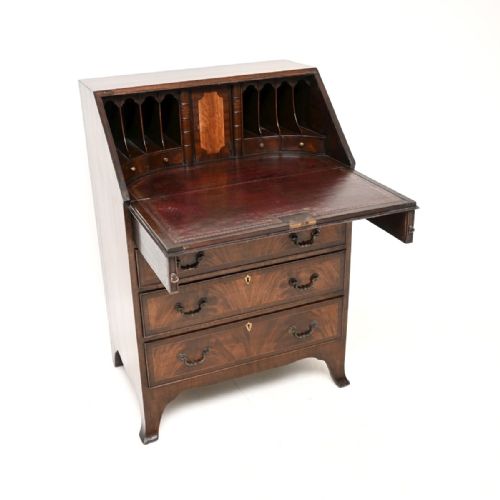
- A sloping desk with a hinged front that opens to reveal compartments and pigeonholes. These items combine storage for writing materials with a flat surface for correspondence.
- Kneehole desk
- A writing table featuring a central recess for the legs, flanked by pedestals of small drawers. This form became popular during the Georgian period and persisted through the Victorian era.
- Campaign desk
- Portable furniture built in sections with brass corners and flush handles, designed for military officers on the move. Victorian examples retain this modular construction for practical transport.
- Butchers block
- A heavy utility table constructed from thick timber blocks to provide a sturdy cutting surface. Beech and pine versions often stand on decorative or braced wooden bases.
- Potting table
- A utilitarian workspace featuring a lower shelf, traditionally used for gardening and potting plants. Pine remains the primary material for these functional items.
Antique Workstation: Frequently Asked Questions
What defines an antique workstation?
An antique workstation encompasses functional furniture used for writing, administration, and preparation, including desks, bureaux, and kitchen tables.
The category bridges formal office furniture and robust utility pieces built from mahogany, oak, pine, and beech.
How were bureau bookcases used?
Bureau bookcases combined enclosed shelving for books with a folding desk flap that concealed inner compartments and drawers.
They served as private spaces for correspondence and document storage in Victorian and Georgian homes.
Where do potting tables fit in?
Potting tables function as sturdy work surfaces equipped with lower shelves for tools and supplies.
Pine versions originated as practical garden furniture but now transition into kitchens and creative studios.
How do I date an antique desk?
Dating relies on timber choices, construction methods, and stylistic markers associated with Georgian, Victorian, Edwardian, or Art Deco periods.
Mahogany kneehole desks often point to Georgian or Victorian eras, while oak bureau bookcases reflect 1930s modernist lines.