



Antique Woolwork Embroidery
Antique woolwork embroidery pieces bring tactile nineteenth-century texture and narrative depth to an interior through dyed threads worked on canvas.
Antique Woolwork Embroidery
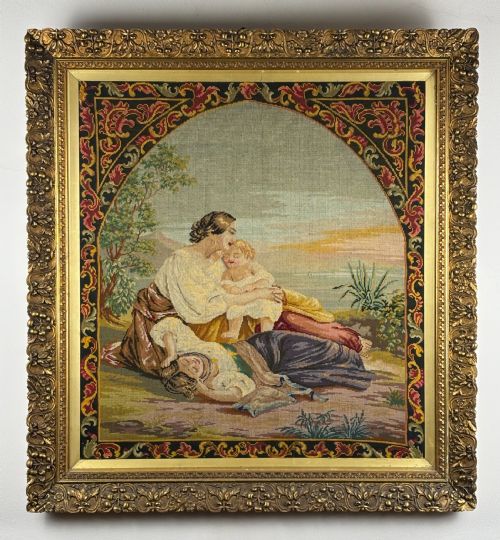
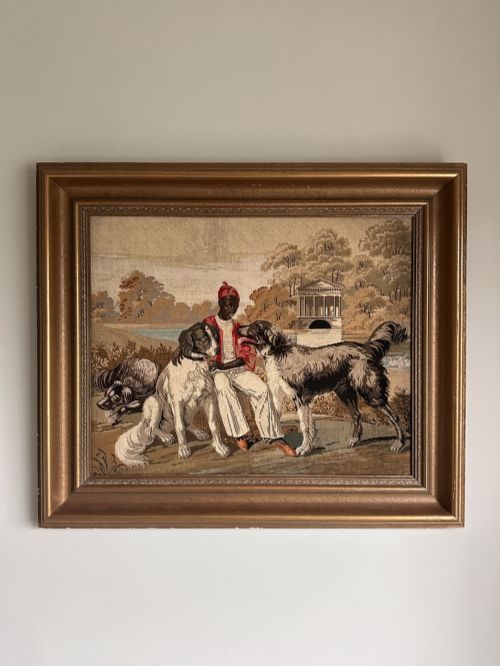
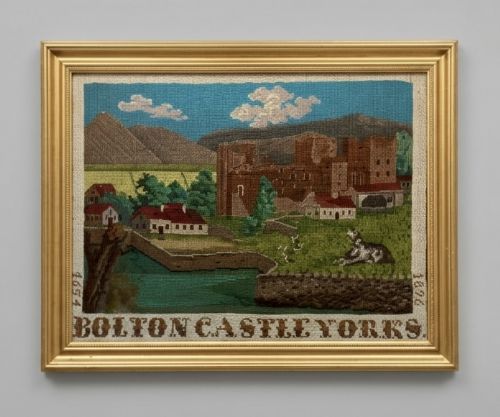
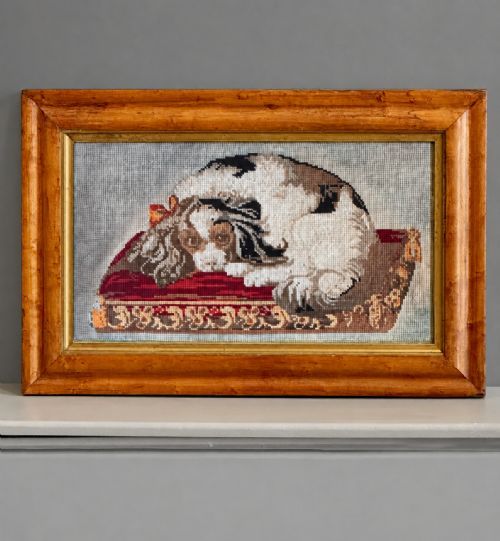
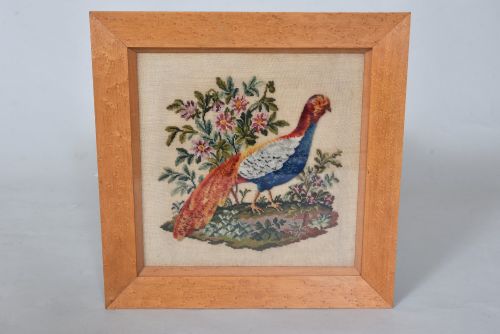
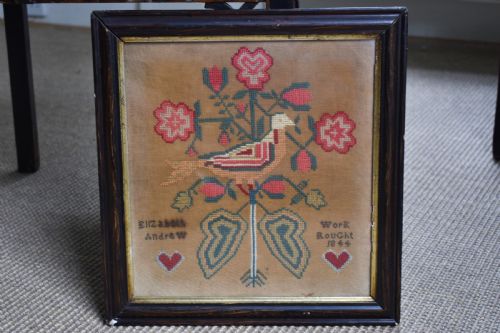
When you search for antique woolwork embroidery, you encounter framed textile wall art spanning the Victorian, Regency, and Edwardian periods. These framed works include maritime folk art woolies, Berlin wool work panels, and detailed figurative needlepoint pictures.
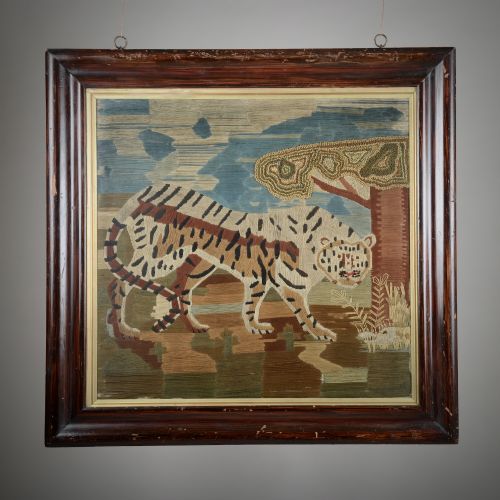
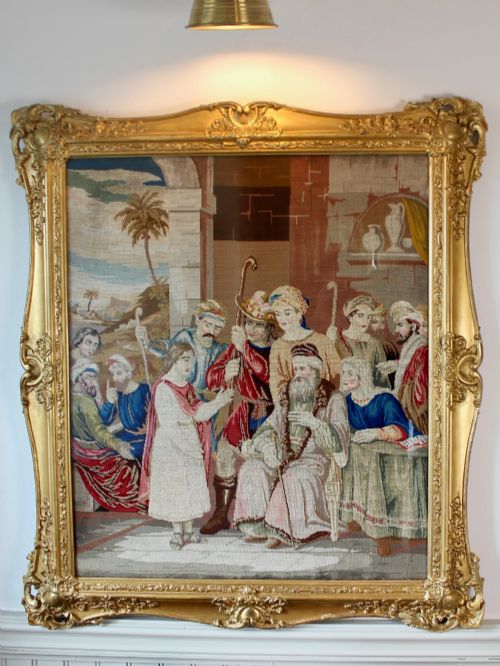
The most common examples on this page are nineteenth-century framed pictures depicting animals, religious scenes, and pastoral portraits. You also find specialised pieces such as sailor woolies, commemorative artillery embroideries, and Scottish tapestries.
Originating across Britain, Europe, and domestic workshops, these textiles survive mounted in period timber frames including burr maple, giltwood, oak, and rosewood. They function primarily as wall art, preserved behind glass or within verre églomisé borders.
How they were made
Maker execution relies on wool, silk, and felt threads stitched onto woven canvas backings using specific needlepoint techniques like gros point and petit point. Plushwork additions create raised, textured surfaces on subjects such as birds and animals.
Finished embroideries are secured within handcrafted wooden frames, utilising materials like giltwood, rosewood, oak, and burr maple. Many examples incorporate glass protection, sometimes enhanced with decorative verre églomisé borders.
Antique Woolwork Embroidery Retail Price Guide 2026
Typical asking prices for woolwork embroidery among the pieces listed under this phrase on Sellingantiques today, from the lower quarter to the upper quarter. They describe what is for sale here now, not the wider market.
Object types documented in the inventory comprise textile art, wall art, framed artwork, and decorative wall hangings.
What varies in quality
Quality rests in the precision of the needlework, the complexity of the colour palette, and the fidelity of the pictorial subject, whether depicting a tiger, a human portrait, or a naval vessel. Finer stitches yield greater anatomical and spatial clarity in the finished picture.
The material integrity of the original frame dictates much of the visual success, with burr maple, rosewood, and giltwood housings elevating the status of the textile within. Condition encompasses the stability of the wool fibres and the preservation of the backing canvas.
The Antique Woolwork Embroidery Glossary
- Berlin work
- A type of needlepoint embroidery worked in wool on canvas using charted painted patterns imported largely from Germany during the nineteenth century. It allowed makers to produce intricate pictorial wall hangings.
- Woolie
- A colloquial term for maritime embroidery created by sailors using coloured wools on canvas. These works typically depict naval ships at sea.
- Plushwork
- A specialised needlework technique where loops of thread are cut to create a velvety, raised pile. It appears on animal depictions to simulate fur.
- Verre églomisé
- A process of applying gold leaf and painting on the reverse side of glass. It provides a reflective, decorative border to framed pictures.
- Gros point
- A coarse needlepoint stitch used for covering large areas of canvas quickly. It forms the structural background in many nineteenth-century tapestries.
Antique Woolwork Embroidery: Frequently Asked Questions
How should I hang antique woolwork embroidery?
Keep framed textile art away from direct sunlight to prevent the dyed wools from fading over time. Mount the pieces securely on interior walls using appropriate fixings for heavy wooden frames.
Ensure the room maintains stable humidity levels to protect both the historic canvas and the original wood or gilt framing.
What frames are original to these embroideries?
Nineteenth-century pieces frequently retain period housings made from rosewood, burr maple, oak, or giltwood. Many incorporate glass protection and decorative mats.
Matching the wood tone and joining style of the frame to the textile period helps confirm its authenticity.
How do I identify a sailor woolie?
Sailor woolies typically depict British naval vessels under sail, sometimes accompanied by flags or maritime motifs. They were produced by nineteenth-century seamen during long voyages.
The naive perspective and heavy use of white and blue wool threads distinguish them from domestic Berlin work.
What is the difference between gros point and petit point?
Gros point utilises a larger needlepoint stitch over fewer canvas threads to cover background space efficiently. It creates a robust texture suited for large wall hangings.
Pitit point employs a much finer stitch on smaller canvas mesh, allowing makers to render intricate facial expressions and detailed shading.