


Antique Wooden Torchere Pair
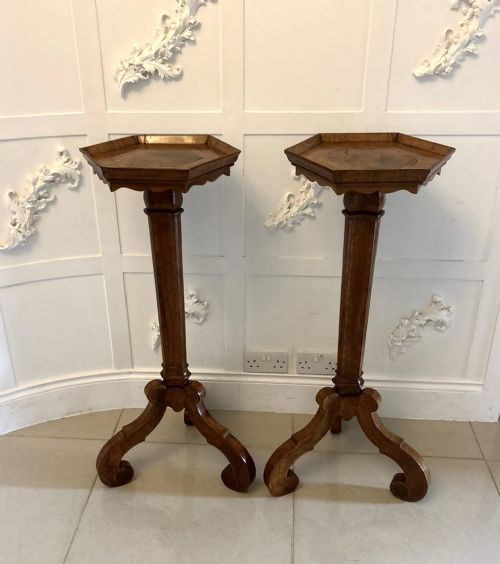
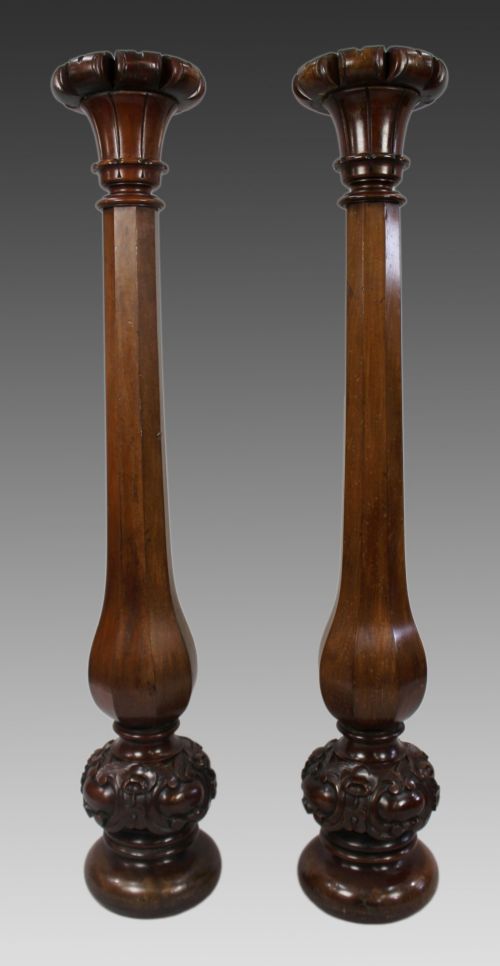
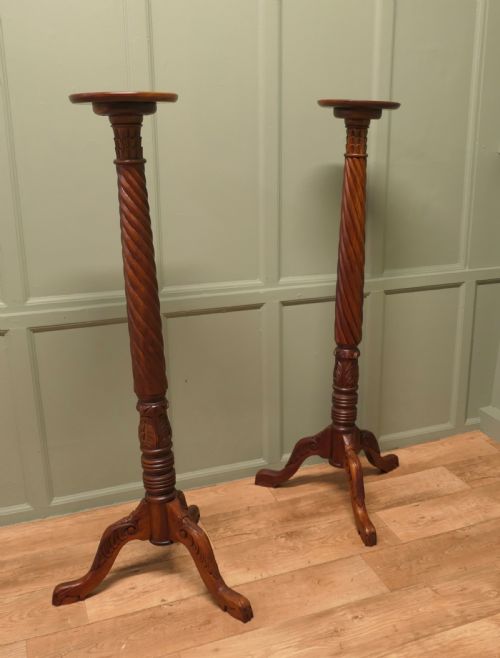
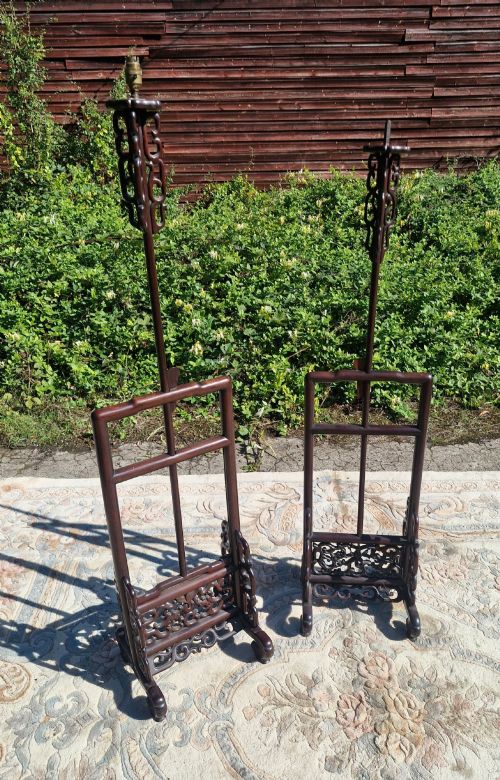
An antique wooden torchere pair brings sculptural height and period presence to a room, holding lamps, plants or urns.
Antique Wooden Torchere Pair
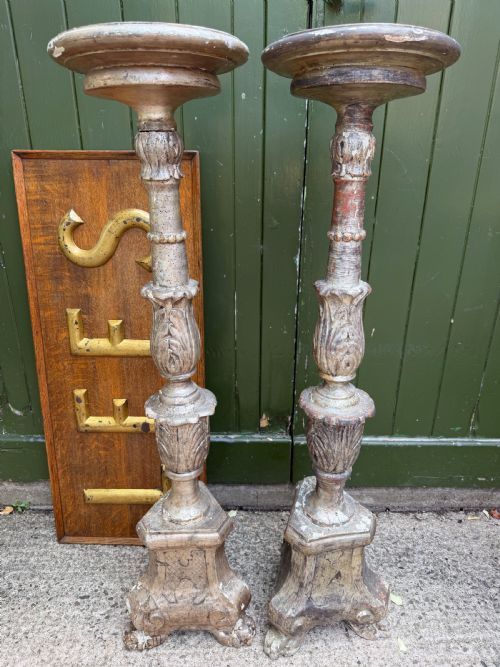
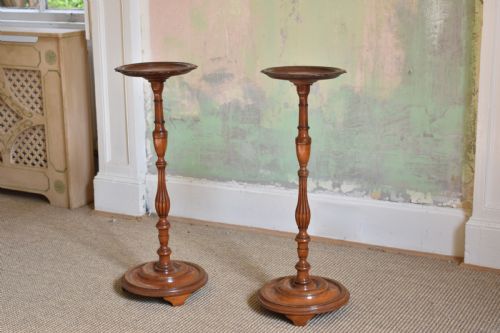
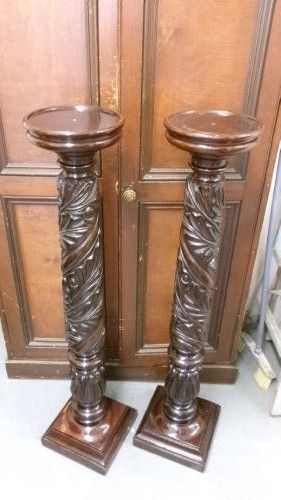
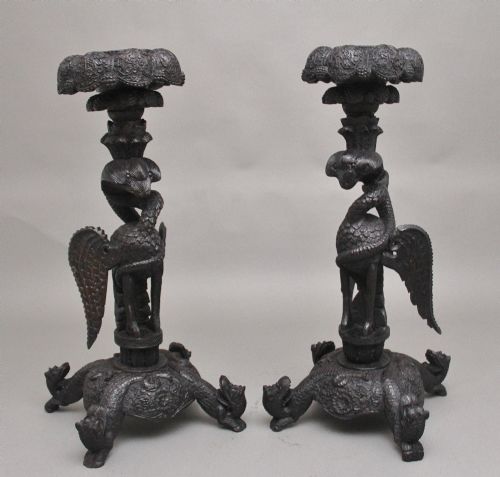
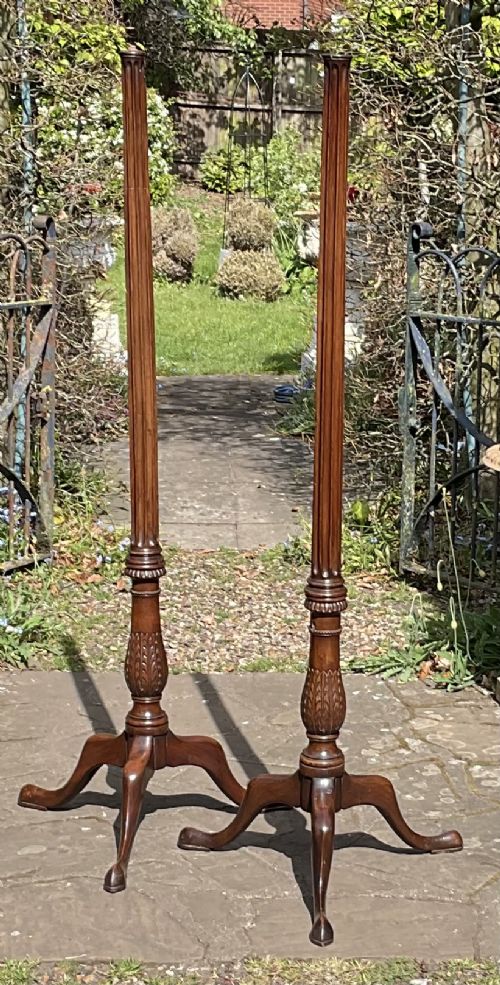
An antique wooden torchere pair consists of tall, slender stands originally designed to hold candles or lights, though today they frequently serve as plant stands or pedestal supports. These matched pairs appear across Georgian, Victorian, and Edwardian periods, as well as the early twentieth century.
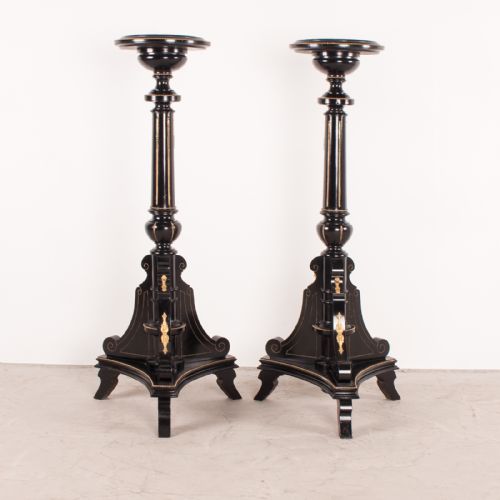
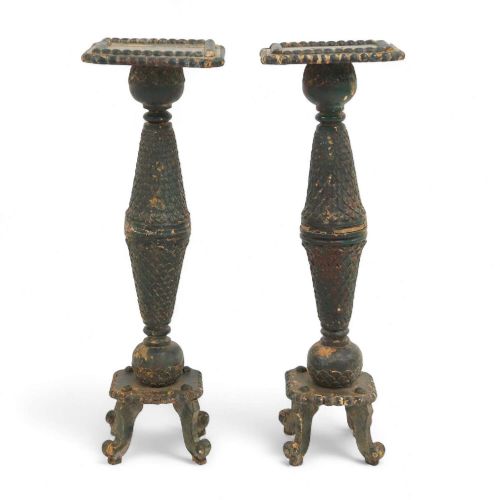
The forms span classical carved wood, turned mahogany, inlaid satinwood, and painted surfaces, originating from English, Italian, Dutch, and Anglo-Indian workshops. Buyers encounter everything from Gothic Revival standards and tall Italian silvered candle stands to compact occasional tables.
Selecting an antique wooden torchere pair means looking at how well the height and timber complement the intended corner or flanking position in a room. Their vertical stance lifts decorative objects away from the floor, adding distinct architectural punctuation.
How they were made
Cabinetmakers constructed these stands using dense timbers such as mahogany, walnut, satinwood, and oak, often combining them with turned brass fittings, gesso enrichment, or ebonised details. Surface finishes range from original green paint and silver leaf to polished burr elm and ebony veneers.
Carving, turning on a lathe, and fine marquetry inlay define the construction methods visible across the periods, from Georgian joinery to Arts and Crafts lacquer work. Structural integrity relies on sound joints where the slender shaft meets the weighted base and upper platform.
Listings for an antique wooden torchere pair span materials including mahogany, brass, satinwood, gesso, ebonised wood, and rosewood across Georgian to Edwardian periods.
What varies in quality
The distinction between ordinary and exceptional examples rests on the crispness of the hand-carving, the choice of figured timber, and the survival of original painted or silvered surfaces. Sharp detailing on acanthus leaves, fluted columns, or inlaid banding indicates a higher grade of workshop production.
Proportion and stability separate finer stands from heavier or clumsier alternatives, particularly when the shaft reaches significant height. Original finish condition, matching grain patterns across the pair, and authentic period patination command greater regard from collectors.
The Antique Wooden Torchere Pair Glossary
- Torchere
- A tall ornamental stand designed for a candle, lamp, or decorative object. The form evolved from eighteenth-century lighting supports to general display pedestals.
- Ebonised
- Wood treated with a dark stain or finish to imitate ebony. This technique was popular for decorative and Victorian stands requiring a dramatic black surface.
- Gesso
- A plaster-like mixture applied to wood surfaces and carved or gilded. It provides a smooth base for silvering or painting on decorative standards.
- Marquetry
- Decorative veneer work arranged in geometric or pictorial patterns. Craftsmen utilised contrasting timbers like satinwood, walnut, and kingwood on the tops and columns.
Antique Wooden Torchere Pair: Frequently Asked Questions
What is an antique wooden torchere pair used for?
These tall stands function primarily to elevate lamps, floral arrangements, bronze figures, or decorative urns in domestic spaces.
Placed in corners or flanking a doorway, they provide vertical interest and sculptural presence without occupying significant floor area.
How do I date an antique torchere?
Dating relies on timber selection, structural joinery, and the prevailing decorative style of the period, from Georgian mahogany to Edwardian inlay.
Tool marks, surface patination, and design motifs such as Gothic Revival or Arts and Crafts lacquer further indicate the era of manufacture.
Are these pairs stable enough for lamps?
Most stands feature weighted or tripod bases designed to support upright loads securely.
Buyers should check that the central shaft connects firmly to the base and that the upper platform remains level.
How do I care for wooden torchere stands?
Maintenance involves dusting with a soft cloth and occasionally applying appropriate wax to nourish antique timber surfaces.
Keeping them away from direct heat sources and strong sunlight preserves the finish, polish, and integrity of the wood.