

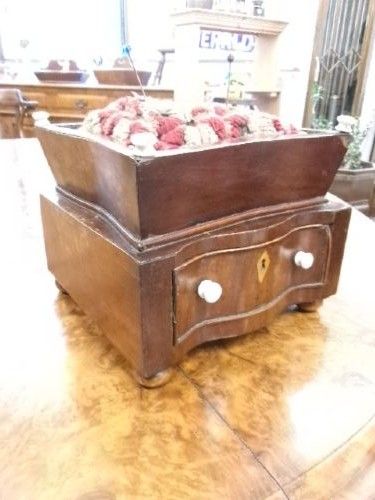
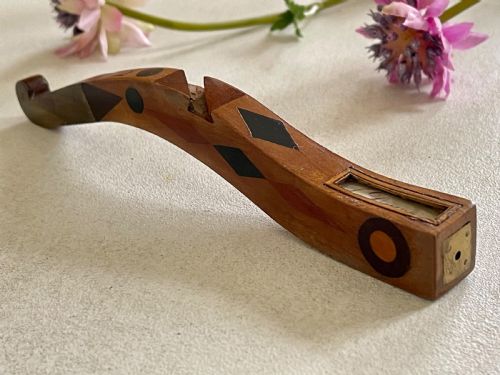


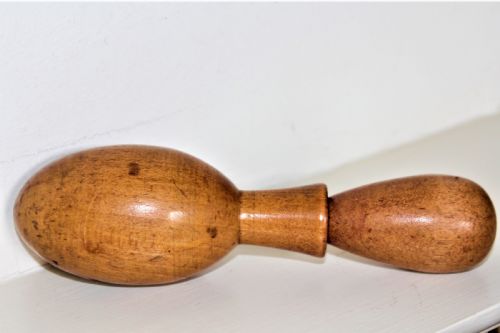
Antique Wooden Sewing Tools
These antique wooden sewing tools are the turned treen and inlaid treenware that kept past domestic needlework in order.
Antique Wooden Sewing Tools
When you search for antique wooden sewing tools, you encounter items designed for domestic needlework and textile tasks from the eighteenth century to the early twentieth century. The selection ranges from Georgian treen to Victorian boxed sets and folk art pieces.
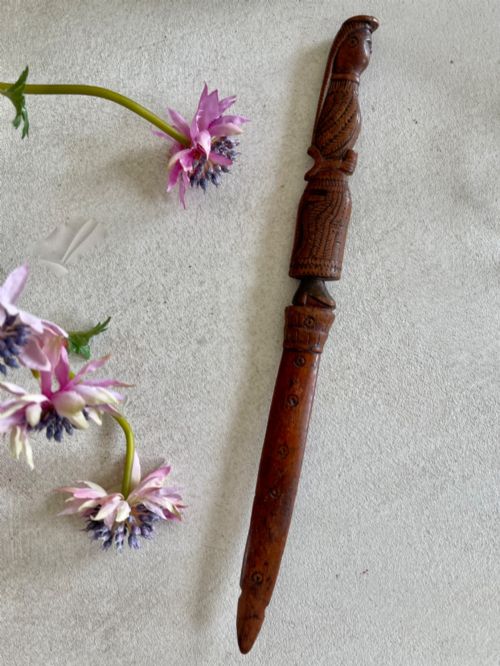
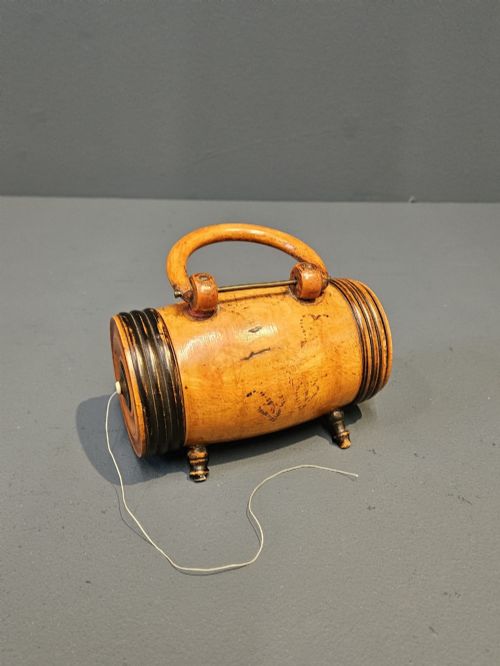
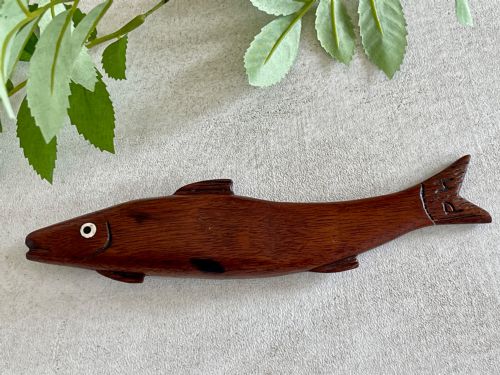
The pieces you are most likely to meet on this page include clamps, silk skein holders, knitting sheaths, pincushions, bobbin winders, sock darners, and sewing cases. Many are carved from single pieces of timber or decorated with intricate inlay work.
Origins span formal Georgian workshops, Victorian domestic output, and regional traditions such as Black Forest carving and Tunbridge Wells inlay. These objects cross several collecting categories, including treen, folk art, and sewing accessories.
Materials and construction
Makers utilised dense hardwoods such as boxwood, rosewood, walnut, and mahogany, alongside general turned wood and mixed wood inlays. These materials were selected for their ability to hold fine detail under a lathe or carving tool.
Techniques relied heavily on woodturning for objects like bobbin winders and sock darners, combined with precision marquetry for Tunbridge Ware pieces. Black Forest examples demonstrate hand-carving in fruit wood, while other items incorporate small elements of bone, brass, and cast iron.
Antique Wooden Sewing Tools Retail Price Guide 2026
Typical asking prices for wooden sewing tools among the pieces listed under this phrase on Sellingantiques today, from the lower quarter to the upper quarter. They describe what is for sale here now, not the wider market.
The listings span the eighteenth, nineteenth, and early twentieth centuries, incorporating materials such as boxwood, rosewood, walnut, bone, and brass.
Judging quality in wooden sewing equipment
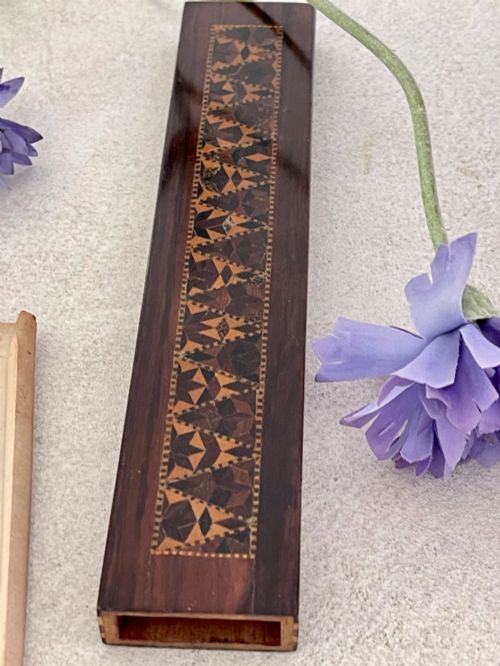
Quality rests on the crispness of the turning and the precision of any decorative inlay, such as the geometric patterns found on Tunbridge Ware pieces. Finer items display sharp, unsoftened edges and tight joints in the wood.
The intricacy of the carving distinguishes standard utility pieces from exceptional items, particularly in folk art knitting sheaths or carved fruit wood sewing cases. Original surface patination and the retention of matching accessories elevate the standing of a piece.
The Antique Wooden Sewing Tools Glossary
- Treen
- Small handmade wooden objects for domestic use. This term covers everything from nineteenth-century knitting sheaths to Georgian bobbin winders.
- Tunbridge Ware
- Woodworking characterised by mosaic woodwork pictures or geometric patterns made from tiny wood blocks. It appears frequently on nineteenth-century clamps and silk skein holders.
- Knitting Sheath
- A device tucked into an apron or belt to hold a knitting needle steady while working. Many surviving examples are carved folk art pieces in wood.
- Bobbin Winder
- A mechanical tool used for winding thread onto bobbins for sewing or lace-making. Georgian and later specimens often feature turned wooden frames.
Antique Wooden Sewing Tools: Frequently Asked Questions
How were knitting sheaths used?
A knitting sheath was tucked into the user's waistband or apron string to anchor one knitting needle firmly in place. This allowed workers to knit faster using a two-handed method common in traditional cottage industries.
Many surviving examples display geometric inlay or folk art carvings reflecting the personal taste or local traditions of the maker.
What is Tunbridge Ware?
Tunbridge Ware is a form of decorative woodwork originating from Tunbridge Wells, featuring intricate mosaic patterns assembled from thousands of tiny pieces of naturally coloured wood. It was often applied to sewing clamps, boxes, and silk holders.
Inspectors and collectors look for tight, uniform tessellation and the variety of native and foreign timbers used to create the pictorial or geometric designs.
How do I date wooden sewing items?
Dating relies on stylistic clues, timber choices, and mechanical complexity. Georgian pieces often show simpler, robust turned profiles, whereas Victorian items frequently exhibit elaborate inlay, bone elements, or association with fitted cases.
Makers' names stamped on metal components or incorporated into boxed sets can also narrow down the manufacturing period to the nineteenth or early twentieth century.