


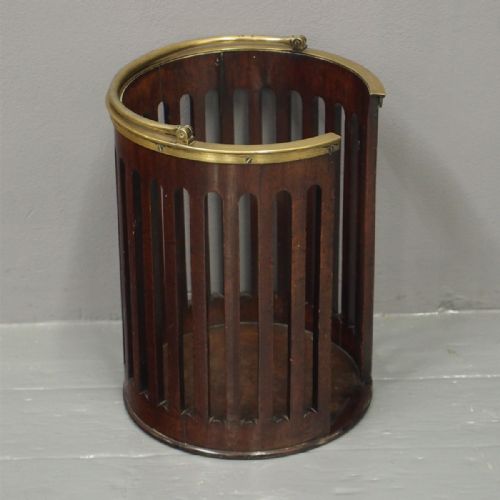

Antique Wooden Pail
An antique wooden pail brings domestic utility into the reception room or garden through sturdy timber and metal work.
Antique Wooden Pail
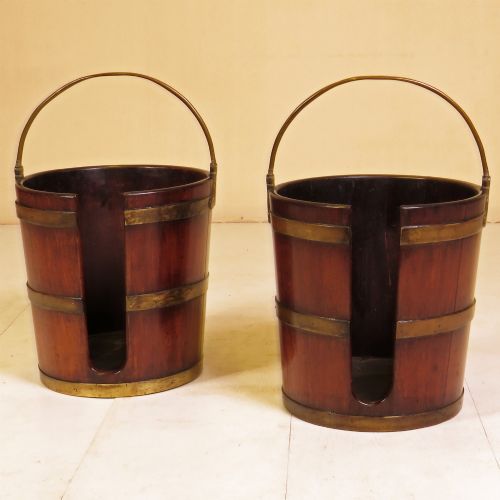
The antique wooden pail encompasses plate buckets, garden well buckets, and ice vessels shaped from timber during the eighteenth, nineteenth, and early twentieth centuries. These vessels served functional roles around the estate, from carrying dining plates to holding coal by the hearth or water from the garden well.
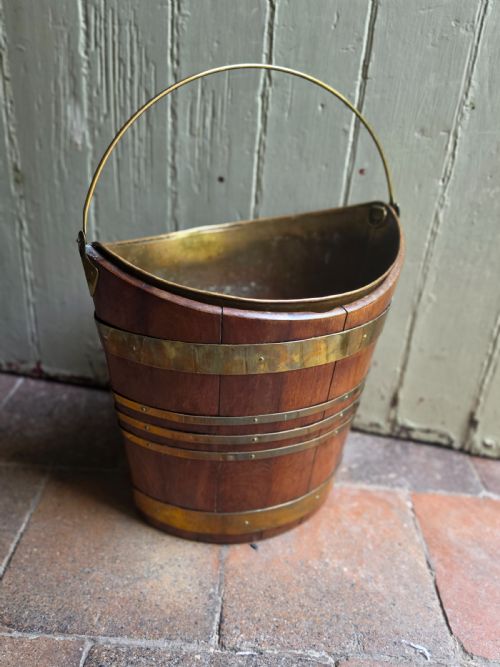
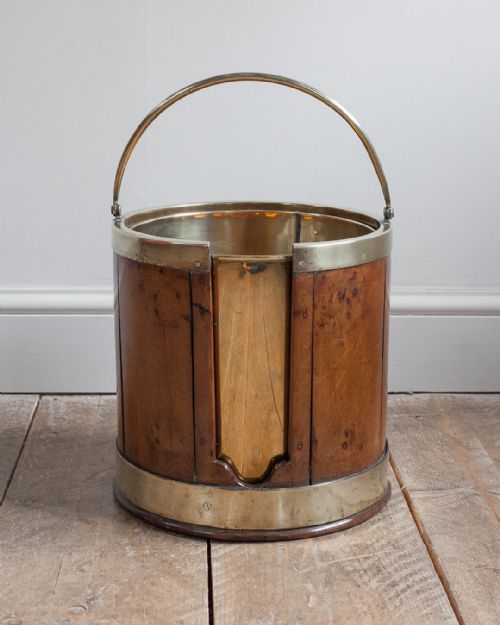
Mahogany examples predominate among formal plate buckets, often displaying stave construction reinforced with brass bands for strength and decorative contrast. Oak, elm, walnut, and ebony appear alongside mahogany, shaped into rustic country forms as well as refined Edwardian ice buckets fitted with ceramic creamware liners.
Georgian and Victorian makers produced these vessels across distinct regional styles, including Dutch colonial work and English rustic country designs. Buyers encounter pairs of plate buckets alongside single well buckets suited for use as planters or fireside stores.
Construction and materials
Coopers and joiners built each antique wooden pail using curved timber staves locked together tightly to hold contents safely. Woods such as mahogany, oak, elm, and walnut provided the structural body of the vessel, selected for grain pattern and resilience.
Several buckets found new leases on life holding firewood instead of well water.
Judging quality and craftsmanship
Quality rests upon the precision of the stave joinery and the harmonious integration of metal mounts with the timber body. Finer examples display carefully fitted brass banding and select mahogany or ebony grains that age with a deep lustre.
The presence of original internal liners, such as ceramic creamware within ice buckets, distinguishes better preserved pieces. Matching pairs command particular attention due to the difficulty of keeping two identical utility vessels intact through centuries of use.
The Antique Wooden Pail Glossary
- Plate bucket
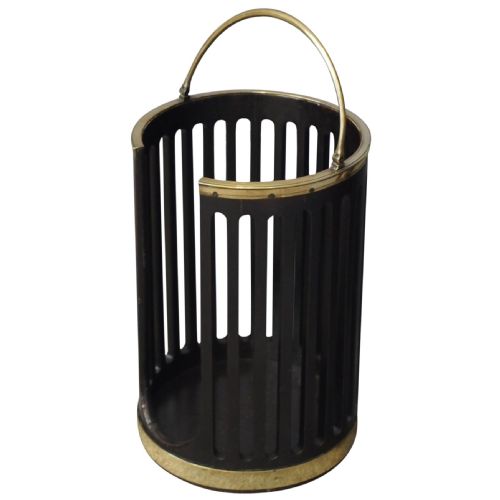
- A deep cylindrical vessel designed with vertical staves to hold porcelain plates safely at the dining table. They frequently feature brass swing handles and banding.
- Well bucket
- A sturdy vessel traditionally dropped down a water well for collection, constructed with thick oak or elm and heavy iron bands.
- Stave
- One of the narrow shaped strips of wood fitted together edge-to-edge to form the circular wall of the pail. Coopers tapered each stave to ensure a watertight seal.
- Creamware
- A refined fine earthenware developed in the eighteenth century, often used for removable internal liners in ice buckets. It offered a clean, white surface.
- Brass bound
- A description of wooden vessels secured externally with polished brass hoops or bands. These bands provided structural strength while adding decorative contrast to the timber.
Antique Wooden Pail: Frequently Asked Questions
How were antique plate buckets used?
Dining rooms utilised plate buckets to store and transport stacks of ceramic plates near the table during large meals.
Servants moved the heavy mahogany vessels by their metal handles to clear courses efficiently without constant trips to the kitchen.
Can I use an old well bucket outdoors?
Many buyers repurpose large well buckets as garden planters or fuel stores for the fireside.
Original timbers withstand domestic placement well, though prolonged exposure to modern garden moisture requires careful monitoring of the historic metal bands.
What is the difference between an ice bucket and a plate bucket?
Ice buckets date primarily towards the Edwardian era and often include internal ceramic creamware liners to keep contents chilled.
Plate buckets are deeper eighteenth and nineteenth-century mahogany cylinders built specifically to hold flat dinnerware.
How do I date an antique wooden pail?
Dating relies upon timber selection, metal type, and the construction methods visible in the staves and handles.
Georgian examples frequently use solid mahogany with heavy brass bands, while later Victorian and Edwardian pieces introduce elm, oak, and silver plate.