
Antique Wooden Miniature
These antique wooden miniature items span centuries of careful small-scale craftsmanship, offering collectors compact chests, furniture, and models with immense character.
Antique Wooden Miniature
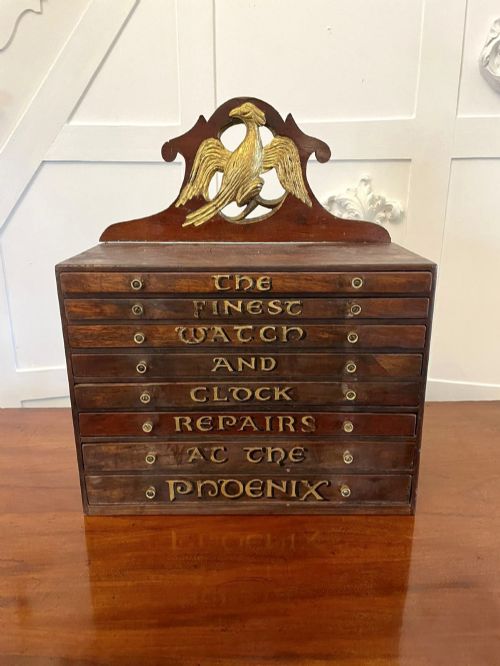
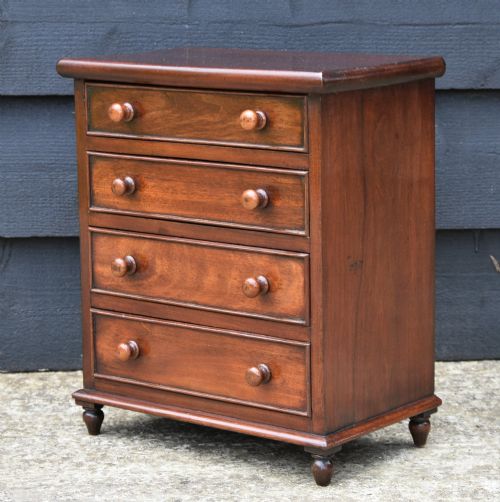
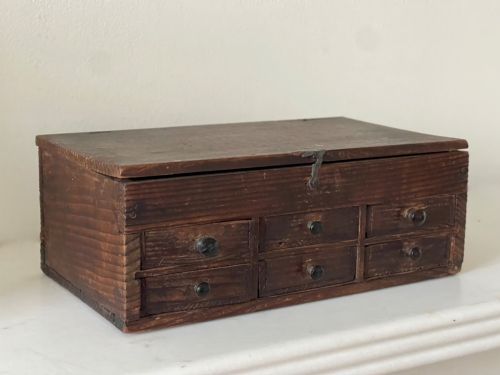
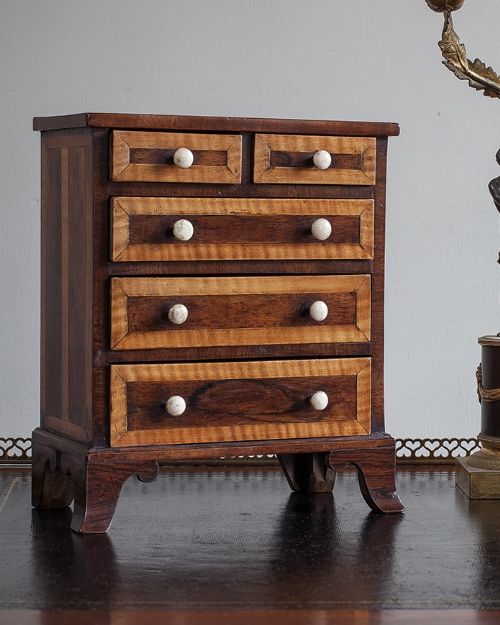
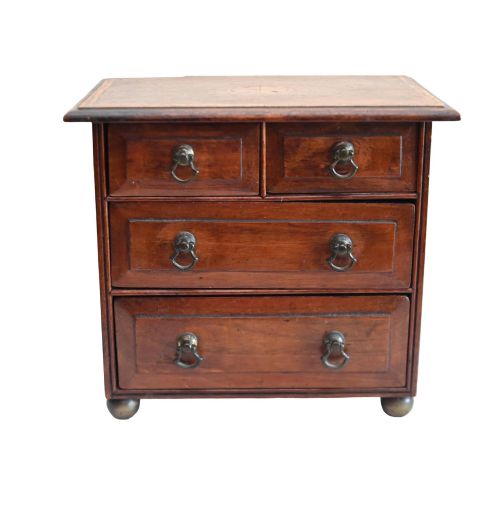
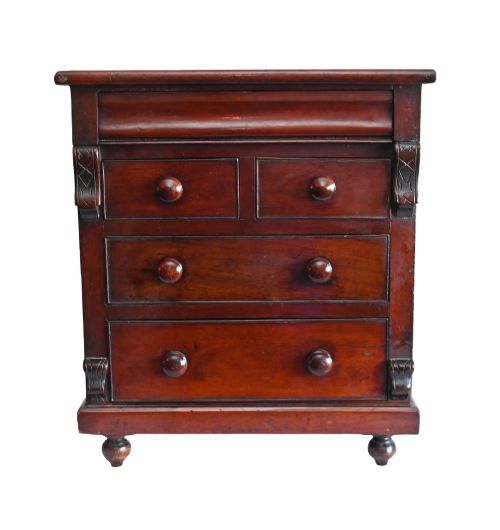
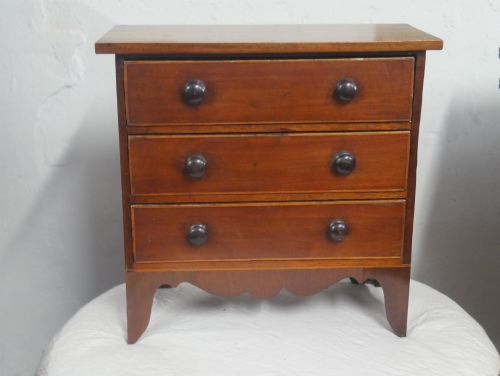
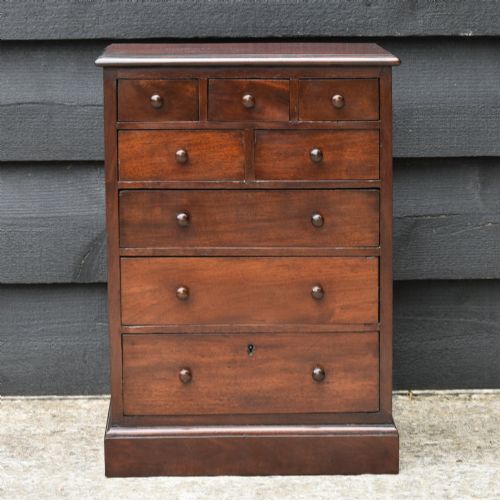
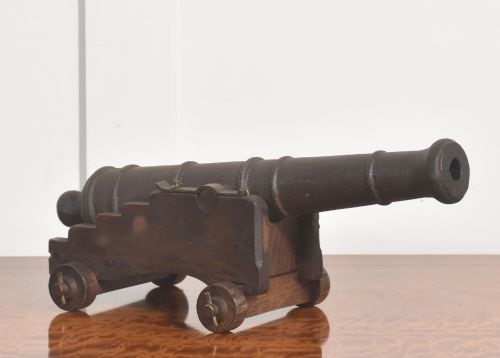
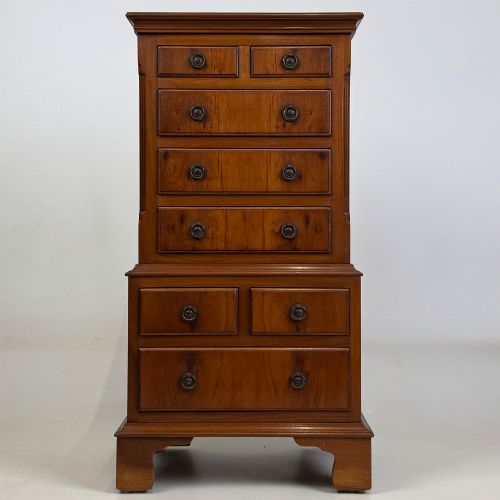
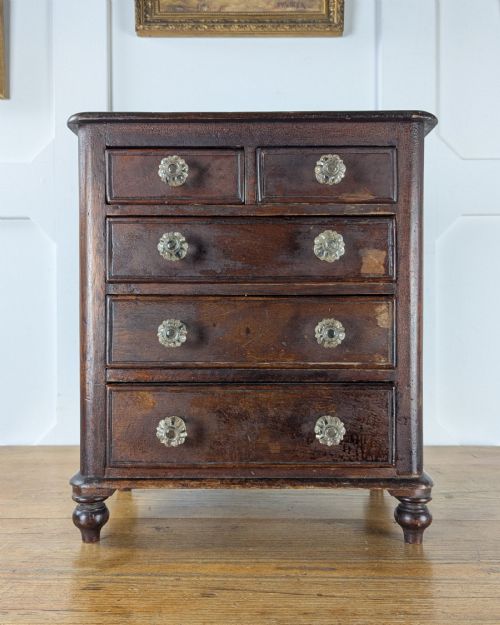
When you search for antique wooden miniature items, you encounter a diverse range of small-scale domestic objects, furniture forms, and folk art models. These pieces appear frequently in the form of apprentice chests of drawers, miniature chests, and tabletop cabinets originating across the eighteenth, nineteenth, and early twentieth centuries.
How they were made
Wood serves as the primary medium for these objects, with mahogany, oak, walnut, pine, and yew selected for their grain and stability at a reduced scale. Artisans utilised traditional joinery techniques, such as dovetail joints for drawer construction and turned wooden feet, ensuring durability despite the compact dimensions.
Makers occasionally integrated secondary materials like brass for hardware, glass for display elements, iron for structural reinforcement, and bone for small decorative accents. Surface finishes typically relied on polish, wax, or paint to highlight the natural qualities of the timber.
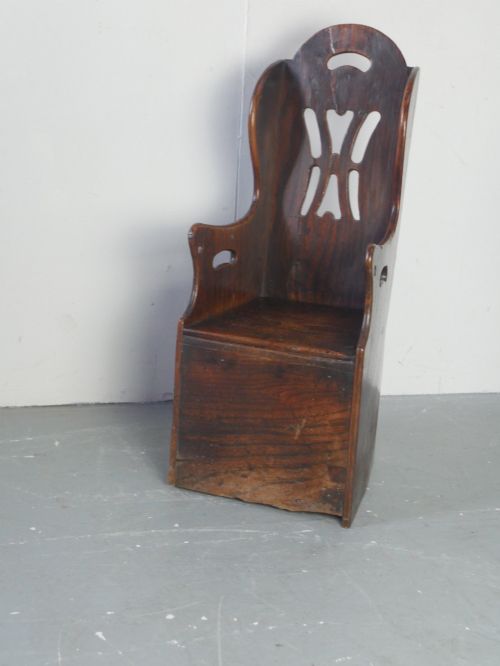
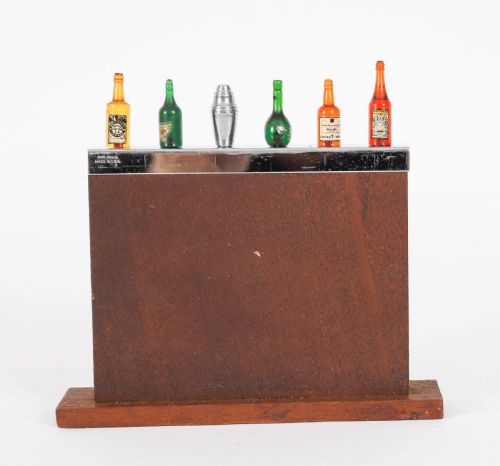
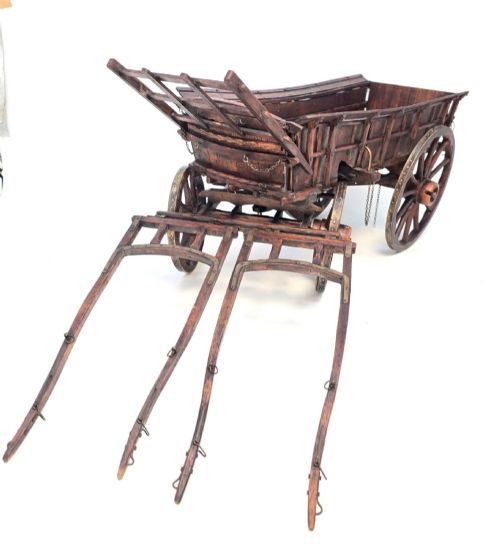
Miniature forms span tabletop chests of drawers, rocking chairs, collector cabinets, and farm cart models.
What varies in quality
The degree of refinement in the joinery and proportion separates standard utilitarian items from finer examples of miniature cabinetmaking. Pieces that maintain correct architectural proportions and precise wood selection at a reduced scale command greater attention.
Originality of surface finish and hardware also dictates quality, as untouched patination and period-correct brass handles elevate an object. Conversely, heavy alterations or poorly executed repairs diminish the integrity of the piece.
R.D. Roberts·Mappin & Webb·Reprodux
The Antique Wooden Miniature Glossary
- Apprentice piece
- A small item of furniture demonstrated by a craftsman to prove skill before gaining full guild membership. These objects frequently mirror full-sized chests and cabinets in miniature.
- Coffer bach
- A small Welsh oak chest or coffer, often featuring a drawer beneath the main compartment. These traditional pieces served domestic storage needs in compact households.
- Treen
- Small handmade wooden household objects and utilitarian items produced before the era of mass plastics. Collectors prize these items for their tactile qualities and visible tool marks.
- Wellington chest
- A tall, narrow chest of drawers secured by a hinged locking side stile that fastens over the drawer edges. Miniature versions replicate this clever security mechanism.
Antique Wooden Miniature: Frequently Asked Questions
What is an apprentice chest?
An apprentice chest is a small-scale piece of furniture created by a woodworker to demonstrate mastery of joinery and design to a guild.
These items duplicate the exact construction methods of standard furniture, featuring dovetailed drawers and panelled sides scaled down for evaluation.
How old are these miniatures?
The pieces span multiple periods, ranging from eighteenth-century Georgian examples through the Victorian era and into the early twentieth century.
Stylistic cues, timber choices, and construction methods help determine the precise era of manufacture for each individual item.
Were these items meant for children?
While some smaller chairs, beds, and toys were made for children or dolls houses, many miniatures served different domestic functions.
Chests, cabinets, and samples were often utilised by travelling salesmen, craftsmen, or adults needing compact desktop storage.
What woods were commonly used?
Cabinetmakers utilised dense, stable hardwoods that held fine detail well at a reduced scale.
Mahogany, oak, walnut, and yew appear frequently across the listings, often complemented by secondary softwoods like pine.