
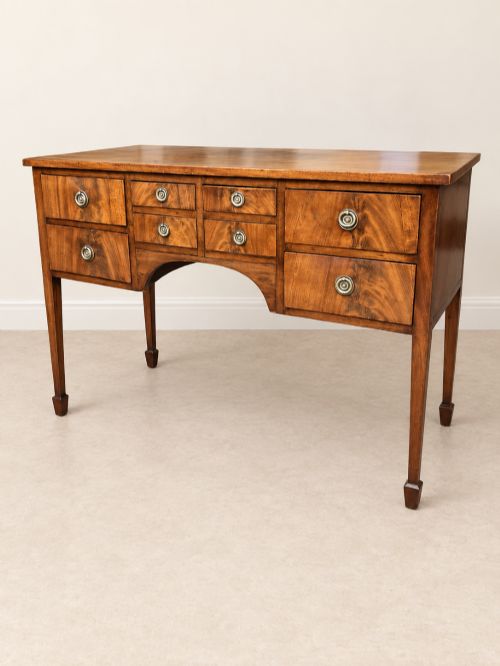
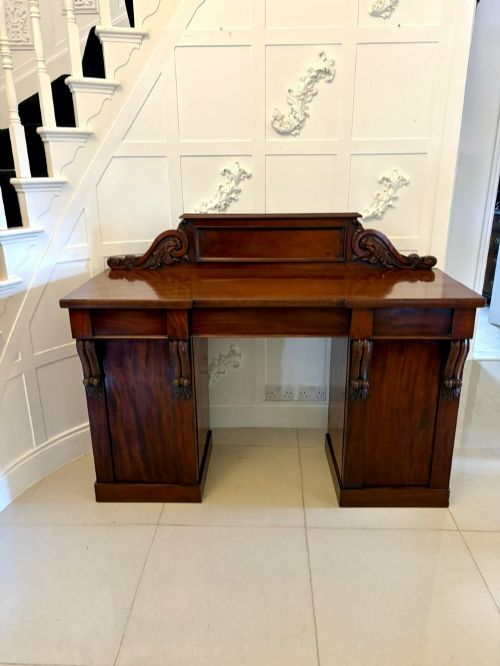
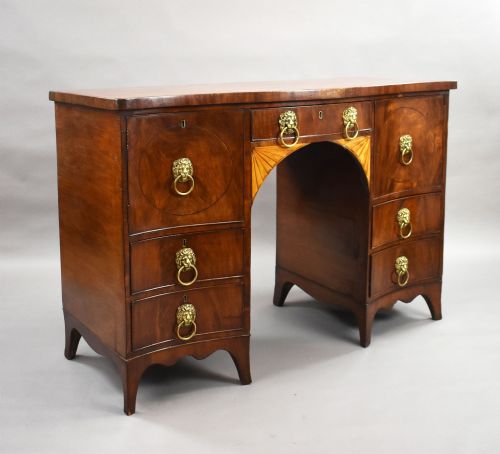
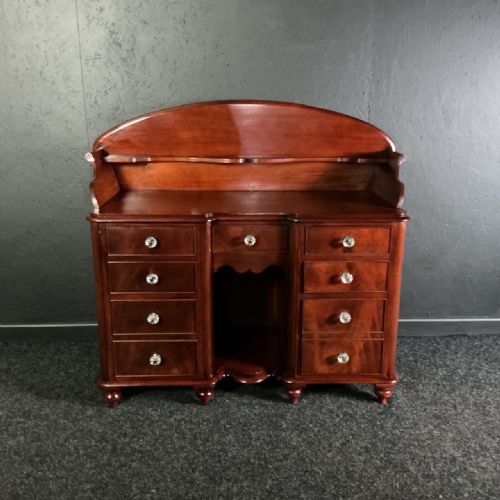


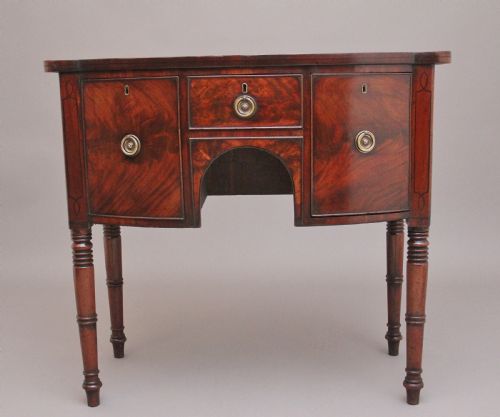

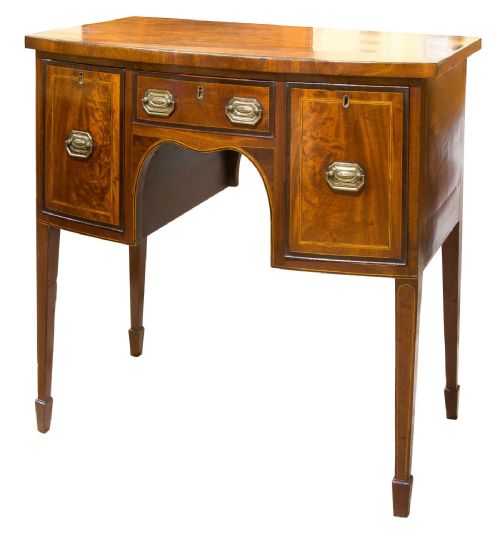


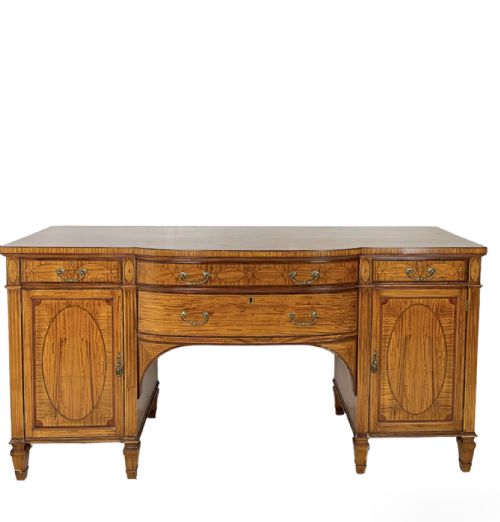
Antique Wooden Kneehole Sideboard
An antique wooden kneehole sideboard brings timber warmth and practical storage to a room, offering the classic proportions collectors prize in period furniture.

Antique Wooden Kneehole Sideboard
The selection ranges from early nineteenth century mahogany sideboard examples and bowfront pieces to compact tea caddies and washstands. Makers incorporate brass hardware, boxwood stringing, and glass elements to enhance the timber surfaces.
Revival items from the nineteenth and twentieth centuries sit alongside pieces from the 1800s and 1860, reflecting enduring demand for traditional English country house and Regency aesthetics.
How they were made
Cabinet makers constructed these pieces primarily using solid mahogany, oak, and yew wood, frequently applying wood veneer to achieve figured surfaces. Workshops utilised boxwood inlay and brass mounts to accent the timber grain.
Construction techniques include hand-carved detailing seen in Victorian examples and precision turning found in nineteenth century washstands and desks. Carpenters joined structural elements with traditional joinery suited to the demands of domestic utility.
Design styles represented include Regency, Georgian, Victorian, and Art Deco, alongside regional English country house interpretations.
What varies in quality
The distinction between standard domestic items and finer pieces rests in the selection of figured mahogany and the crispness of carved wooden ornamentation. Superior examples display thoughtful timber matching across drawer fronts and harmonious proportions that reflect the maker's skill.
Refinement shows in the quality of brass hardware, the delicacy of boxwood stringing, and the integrity of the underlying wood veneer. Pieces retaining their original surfaces and authentic period fixings command greater appreciation from discerning buyers.
John Gregory London·Étienne Kohlmann
The Antique Wooden Kneehole Sideboard Glossary
- Kneehole
- A recessed central space beneath a desk or sideboard designed to accommodate the user's legs when seated. This arrangement allows for cupboards or drawers to flank the central opening.
- Mahogany
- A durable tropical hardwood prized for its rich reddish-brown colour and stable grain. It served as the primary timber for fine cabinet making throughout the Georgian and Victorian eras.
- Bowfront
- A curved convex cabinet front that projects outward in an arc. This styling softens rigid room angles and featured prominently on dining room sideboards.
- Veneer
- A thin slice of decorative wood applied over a secondary timber base. Skilled artisans utilised figured veneers to create striking symmetrical grain patterns on primary surfaces.
- Boxwood
- A dense, pale yellow wood frequently used for stringing and contrasting inlay work. Cabinet makers employed it to trace geometric borders on drawer fronts and tabletops.
Antique Wooden Kneehole Sideboard: Frequently Asked Questions
How do I style a kneehole sideboard?
Position the piece against a principal wall in a dining room or hallway where its proportions anchor the space. Pair the timber surface with simple ceramics or lighting to highlight the grain without cluttering the top.
Allow sufficient clearance around the central recess if seating is intended. The classic wood tones integrate naturally with both traditional and restrained contemporary interior schemes.
Where were these sideboards placed originally?
Georgian and Victorian households positioned these items primarily in dining rooms to store serving dishes, cutlery, and glassware. Smaller scaled variations functioned effectively in entrance halls and parlours for general storage.
Their compact footprints made them adaptable to various domestic rooms where surface space and concealed storage were both required.
How do I distinguish Regency from Victorian pieces?
Regency items generally exhibit restrained classical lines, cleaner surfaces, and architectural brass mounts dating from the early nineteenth century. Victorian examples often display heavier carved ornamentation, darker finishes, and more elaborate detailing.
Examining the underlying timber construction and hardware style helps clarify the manufacturing period. Revival pieces from later decades frequently blend these stylistic elements.
Can I use a kneehole sideboard as a desk?
Many sideboards and related kneehole forms provide adequate clearance for chair placement and comfortable writing surfaces. Historical overlap between desk and sideboard forms means proportions often suit seated tasks.
Ensure the internal kneehole height matches your seating requirements before daily use. Drawer configurations may differ from standard modern desks but offer practical stationery storage.