
Antique Wooden Desk Light
An antique wooden desk light brings warm character and purposeful illumination to a workspace, drawing on centuries of craftsmanship in oak, mahogany, and brass.
Antique Wooden Desk Light
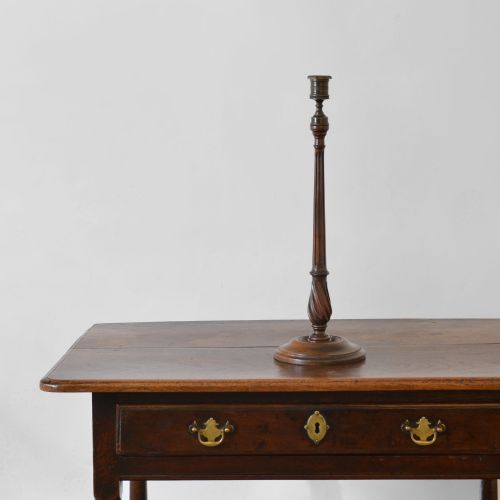
When searching for an antique wooden desk light, a buyer is looking for functional task lighting housed in traditional timber bases, often originating from the Georgian, Victorian, or Edwardian eras. These pieces frequently manifest as converted candlesticks, carved lamp bases, or fitted desk accessories created from durable hardwoods.
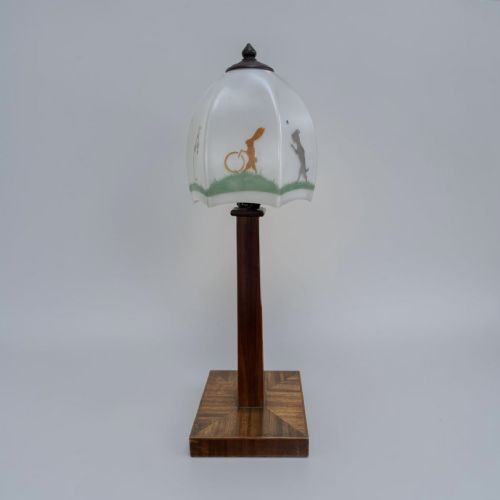
The selections available range from sturdy oak and rich mahogany to carved root wood and limed finishes, reflecting the distinct aesthetics of periods such as Arts and Crafts, Art Deco, and the nineteenth century. Many of these items utilise converted antique elements like wooden candlesticks or architectural fragments to hold modern electrical fittings.
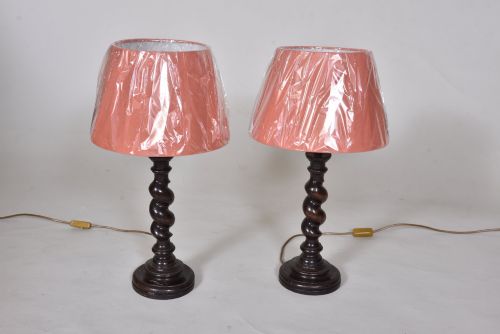
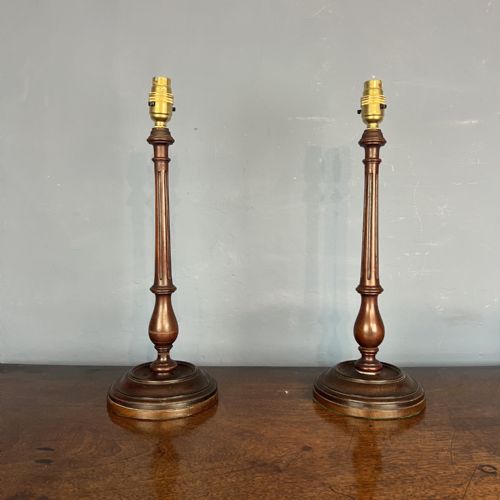
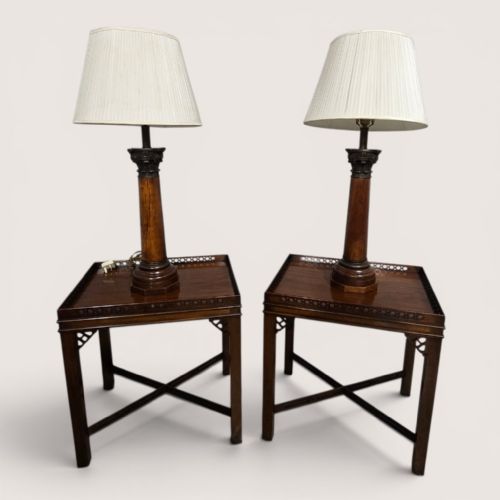
Buyers are most likely to encounter sturdy oak or mahogany constructions dating from the nineteenth and early twentieth centuries, often paired with brass accents, fabric shades, or exposed wooden turnings. These lamps serve as practical desk companions while retaining the distinct patination and joinery of their original periods.
Materials and construction techniques
Makers utilised dense hardwoods such as oak, mahogany, and satin birch, often selecting timber for its pronounced grain and structural stability. These woods were shaped through traditional turning, carving, and joinery methods appropriate to the cabinetmaker's workshop.
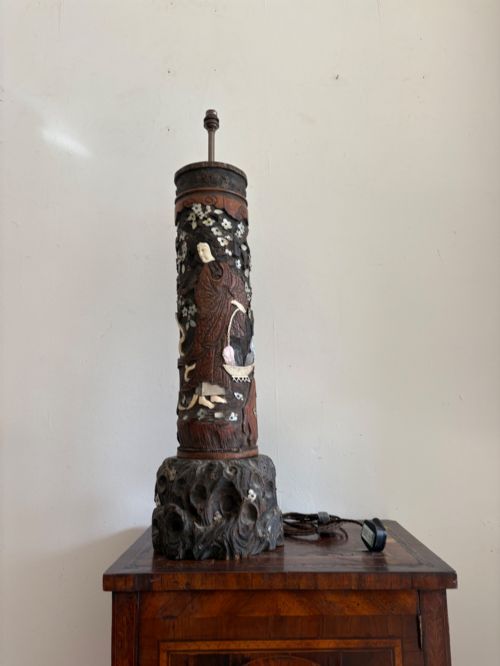
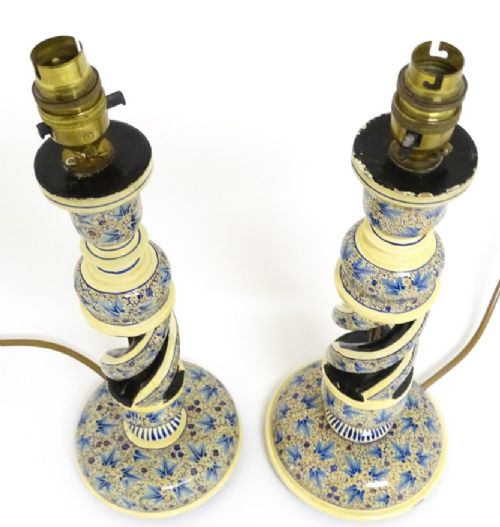
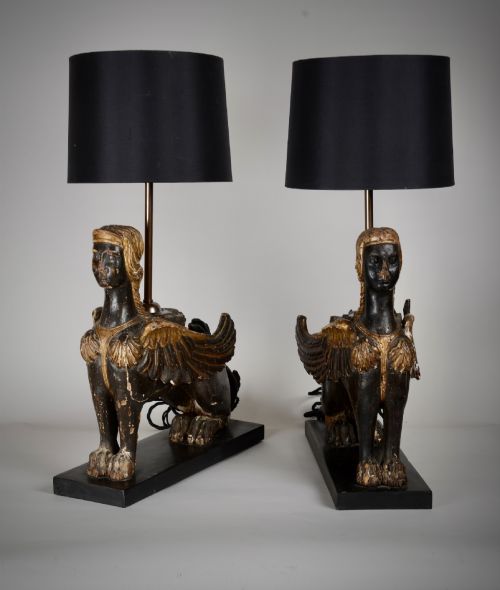
Metal components in brass and giltwood frequently complement the wooden bodies, providing structural support or decorative contrast to the organic materials. Hand-painted details, lacquering, and mother-of-pearl inlay appear on specific regional variations, demonstrating specialised surface decoration techniques.
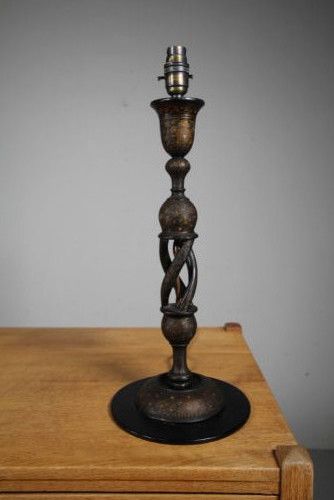
Many lighting pieces incorporate older items, such as Georgian candlesticks or carved wooden pillars, which were subsequently adapted for electrical wiring while preserving the original hand-carved details and patinated surfaces.
One remarkably dedicated nineteenth-century tree managed to become a carved root wood lamp base after a very long nap.
Distinctions in quality and execution
Quality in these wooden lights rests on the integrity of the timber selection and the precision of the carving or turning. Superior examples display crisp detail in hand-carved elements, harmonious proportions, and tight joinery that has remained stable across decades.
The character of the patination heavily influences the overall standard of a piece. Depth of colour, honest wear through handling, and the preservation of original surface finishes separate master-workshop pieces from later or more utilitarian productions.
Heals of London·Arthur Basil Reynolds·James Mein of Kelso·Bryn Mawr Welsh Oak
The Antique Wooden Desk Light Glossary
- Patina
- The surface sheen and softening of colour developed by wood and metal over decades of handling and exposure to light. It serves as a primary indicator of genuine age.
- Turned wood
- Timber shaped on a lathe to create symmetrical, rounded profiles such as columns, balusters, and bases. This technique defines the silhouette of many traditional lamp bodies.
- Arts and Crafts
- A design movement emphasising handcraftsmanship, simple forms, and local materials rather than mass production. Pieces from this style often feature exposed grain and honest construction.
- Giltwood
- Wood that has been coated with a thin layer of gold leaf or metallic paint. This treatment adds reflective brilliance to carved details and mouldings.
- Conversion
- The process of adapting an older, non-electrical object, such as a candlestick or carved pillar, into a lamp. This allows historical wooden artefacts to serve a modern functional purpose.
Antique Wooden Desk Light: Frequently Asked Questions
What defines an antique wooden desk light?
An antique wooden desk light is a task illumination piece built from traditional hardwoods like oak and mahogany, often dating from the nineteenth or early twentieth century.
These items frequently incorporate older turned bases, carved figures, or architectural elements that have been adapted to hold electrical fittings.
How can I tell the period of a wooden lamp?
Dating relies on examining the timber species, turning styles, and surface finishes characteristic of specific eras such as the Victorian period or the Art Deco movement.
Makers' labels, joinery methods, and the nature of any integrated brass or fabric components also provide reliable chronological markers.
Were these lights originally made with electricity?
Many older wooden desk lights started as candlesticks, decorative columns, or carved vessels before being converted for electrical use in subsequent decades.
This adaptation practice preserves historical woodwork while updating the object for contemporary interior illumination needs.
How do I care for wooden lamp bases?
Maintenance involves dusting with a soft, dry cloth and occasionally applying appropriate beeswax to nourish the timber and protect the aged finish.
Kept away from direct heat sources and excessive moisture, the wood retains its natural patination and structural stability over time.