
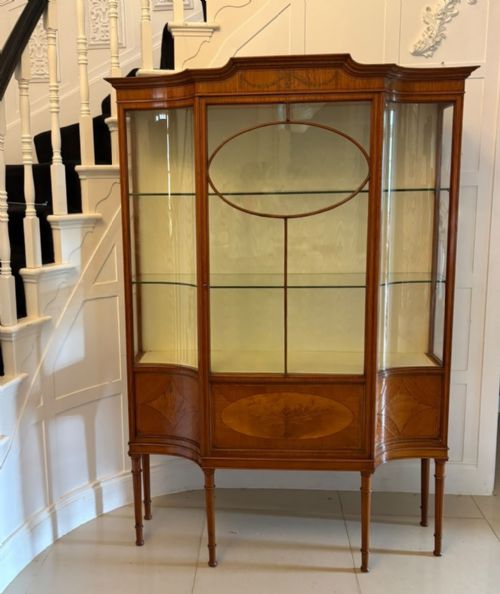


Antique Wooden Curio Cabinet
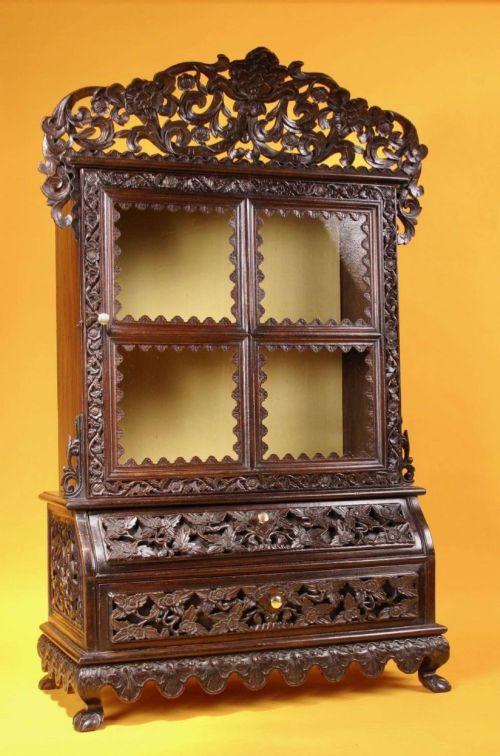
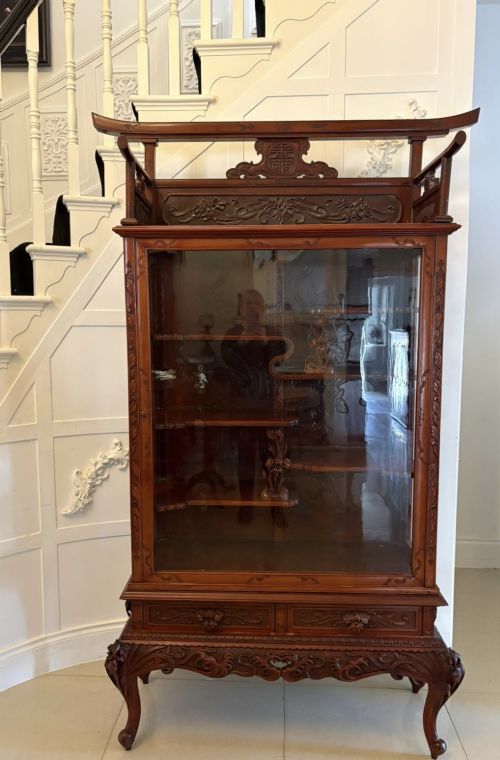
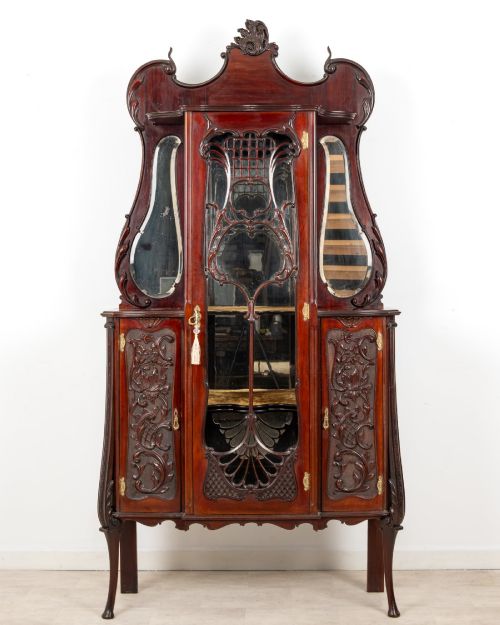
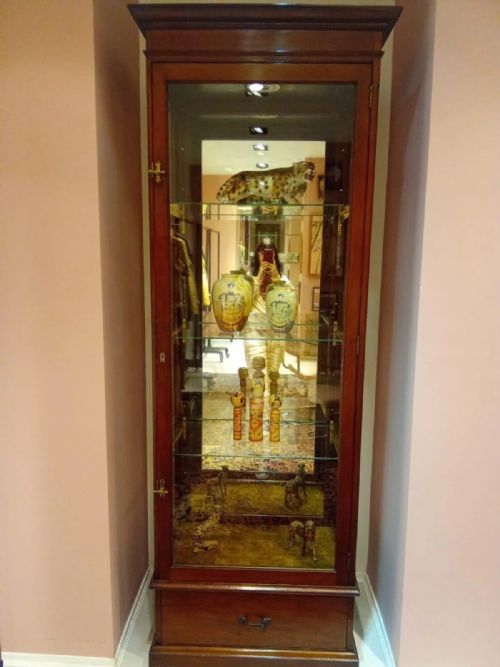
An antique wooden curio cabinet brings order to small treasures, showcasing collected curiosities behind glass within frames of mahogany, satinwood, or kingwood.
Antique Wooden Curio Cabinet
An antique wooden curio cabinet serves the collector as a designated vitrine for holding small objects, figures, and keepsakes. When searching for an antique wooden curio cabinet, buyers encounter forms ranging from floor-standing vitrines to table top cases and wall-mounted shelves.
The pieces available span the Victorian and Edwardian eras, alongside early twentieth-century examples and specific regional revivals. Mahogany and satinwood predominate, though kingwood, red lacquer hardwood, and hongmu also appear among the selections.
Cabinets arrive in various architectural formats including bow fronts, demi-lune shapes, and glazed wall cases. Some incorporate internal glass shelves or fabric linings to set off the displayed contents.
Judging quality and execution
Quality in these cabinets rests upon the precision of the timber selection, the crispness of any inlaid marquetry, and the integration of ormolu mounts. Finer examples display meticulous attention to timber grain matching and careful cabinetwork around curved bow fronts or demi-lune shapes.
The sophistication of the glazing bars and the quality of the original brass fittings further distinguish standard production from superior workshop output. Well-executed pieces maintain structural stability in their doors and frames while preserving their glass components.
A polished wood apothecary box joins the display cases, proving that medical storage makes an excellent stage for curiosities.
The Antique Wooden Curio Cabinet Glossary
- Vitrine
- A glass-fronted cabinet or display case designed specifically for showing porcelain, curiosities, or small valuables. These pieces often feature glass sides to allow light to enter from multiple angles.
- Marquetry
- Decorative veneer work formed by fitting together small pieces of wood, shell, or ivory to create pictorial or geometric patterns on furniture surfaces. This technique requires considerable skill from the woodworker.
- Ormolu
- Gilded bronze mounts applied to furniture for decorative effect during the eighteenth and nineteenth centuries. The metal is cast and then treated with gold to achieve a bright finish.
- Bow front
- A convex, curved furniture front that projects outward in a smooth arc. This shape appears frequently on chests, sideboards, and display cabinets from the nineteenth century.
- Demi-lune
- A half-moon shape used to describe furniture tables and cabinets with a flat back and a curved front. Such forms fit flat against a wall while projecting outward into the room.
Antique Wooden Curio Cabinet: Frequently Asked Questions
What is the difference between a vitrine and a curio cabinet?
A vitrine typically refers to a glass-sided display case with French influences, often featuring ormolu mounts and marquetry. A curio cabinet describes any case built primarily to hold small objects and collections.
Both terms describe glazed furniture meant for display, though vitrines tend to lean toward decorative European revival styles.
Where should I place a table top display cabinet?
Table top display cases sit securely upon existing sideboards, desks, or chests of drawers to elevate small collections to eye level. They make efficient use of space in rooms where floor area is limited.
Ensure the supporting furniture is sturdy enough to hold the weight of the wood and glass case safely.
How do I identify an Edwardian display cabinet?
Edwardian cabinets date from the early years of the twentieth century and frequently showcase lighter timbers such as satinwood and inlaid mahogany. Their design often reflects simplified classical revivals.
Construction from this period typically emphasises brightness and refined inlay work over the heavier proportions of mid-Victorian pieces.
Can I adjust the shelves inside these cabinets?
Certain cabinets include adjustable glass shelves to accommodate objects of varying heights within the display area. Surviving examples from the Edwardian period often incorporate this practical feature.
Not all antique cabinets allow for shelf movement, as many rely on fixed timber or glass supports built into the original frame.