
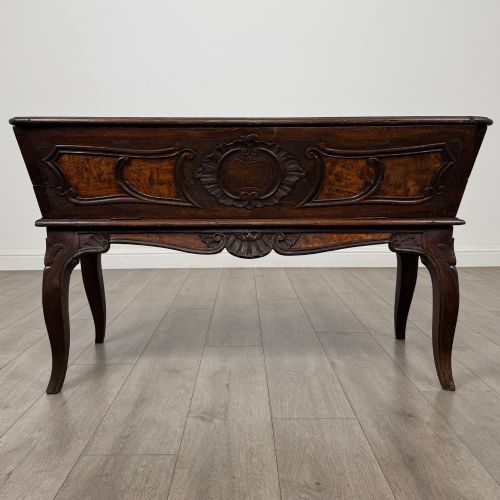


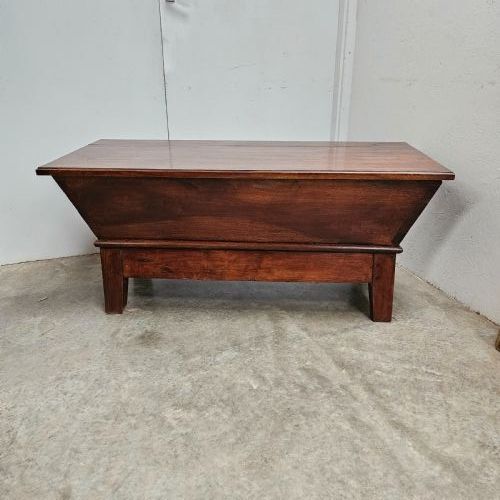


Antique Wooden Coffer Bin
An antique wooden coffer bin is a sturdy storage container built from timber to hold dry goods, logs, or household provisions.
Antique Wooden Coffer Bin
When you search for an antique wooden coffer bin, you encounter heavy utilitarian containers designed for domestic labour and storage, spanning domestic utility forms like dough bins, grain arks, and log boxes. These pieces range from vernacular country furniture originating in Wales and Scandinavia to formal English and French workshop pieces.
The most common examples on this page are dough bins and log boxes dating from the nineteenth century, constructed to serve functional daily roles in rural kitchens and firesides. You will frequently meet utilitarian pine, elm, and walnut examples bearing the straightforward marks of country joinery.
Earlier centuries appear through seventeenth century oak grain arks and eighteenth century Georgian storage chests, showing heavier timber scantlings and pegged joints. These regional forms reflect the specific domestic requirements of their local agrarian economies, from Snowdonia to provincial France.
Materials and construction
Construction relies heavily on native hardwoods and softwoods such as oak, walnut, elm, and pine, selected for availability and durability in working environments. Timbers are frequently joined with traditional pegged mortise and tenon joints or robust dovetails to withstand heavy daily use.
Hardware elements like iron banding, rope handles, and brass fittings provide structural reinforcement and functional mobility to heavy storage boxes. Paint finishes, both original and stripped, protect the wood while surface treatments record generations of kitchen or fireside service.
Several dough bins retain faint traces of historic flour dust trapped deep within their pegged joints.
Judgments of quality
Quality in a coffer bin rests upon the integrity of the timber selection and the honesty of the original construction rather than decorative excess. Finer examples display well-chosen grain figures in walnut or oak, alongside tight, precise joinery that maintains structural rigidity.
The degree of original surface wear and untouched patina distinguishes honest vernacular pieces from heavily restored examples. Better proportioned bins retain their original hardware, feet, and operational lids without clumsy timber replacements.
The Antique Wooden Coffer Bin Glossary
- Coffer bin
- A sturdy wooden box or chest utilised for secure storage of provisions, fuel, or household goods. These containers combine deep storage cavities with heavy lids.
- Dough bin
- A specialised utilitarian box designed for bread making, often featuring a trough-like interior and fitted covers for proving dough. They sit on stands or legs for working height.
- Grain ark
- A heavy seventeenth century vernacular timber chest built to store dry grain or flour safely away from pests and damp. These pieces utilise thick oak planks.
- Vernacular furniture
- Domestic objects built by local tradesmen using regional traditions and native materials rather than following metropolitan stylistic fashions.
Antique Wooden Coffer Bin: Frequently Asked Questions
What were coffer bins used for?
These versatile containers served rural households as secure receptacles for dry food stores, bread dough preparation, grain, or hearth fuel. Their heavy lids protected contents from household pests and dust.
In domestic settings, they doubled as impromptu work surfaces or fireside seating when covered with cushions, adapting to the changing needs of the room.
How do I clean an old pine bin?
Maintain the surface timber by dusting with a dry, soft cloth to remove everyday particles without disturbing the underlying patina. Avoid harsh modern detergents or excessive water.
If the wood appears dry, application of a traditional beeswax feed nourishes the timber and preserves the historical surface without creating an artificial gloss.
Where should I place a log box?
Position these substantial wooden boxes beside a working fireplace or in a boot room to store firewood, kindling, or outdoor gear. Ensure they sit away from direct, intense heat sources that might dry out and split ancient timbers.
Their sturdy construction also suits hallway storage for blankets, boots, or bulky household items that benefit from heavy-duty containment.
How do I date a wooden bin?
Examine the construction methods, tool marks left on the interior boards, and the choice of timber species to establish an approximate period. Hand-sawn boards and pegged joinery generally indicate earlier manufacture.
Compare the form and regional style with documented vernacular pieces, noting whether ironwork or hinges show hand-forged characteristics typical of older centuries.