


Antique Wooden Candleholders
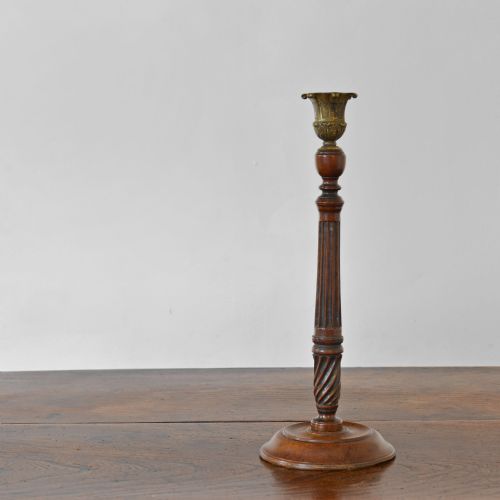
Antique wooden candleholders bring warmth and hand-turned character to a room, ranging from simple barley twist oak to monumental giltwood altar pieces.
Antique Wooden Candleholders
When you search for antique wooden candleholders, you encounter a diverse group of lighting supports spanning several centuries. The selection includes domestic candlesticks, travel pieces, wall sconces, and grand architectural altar-type forms.
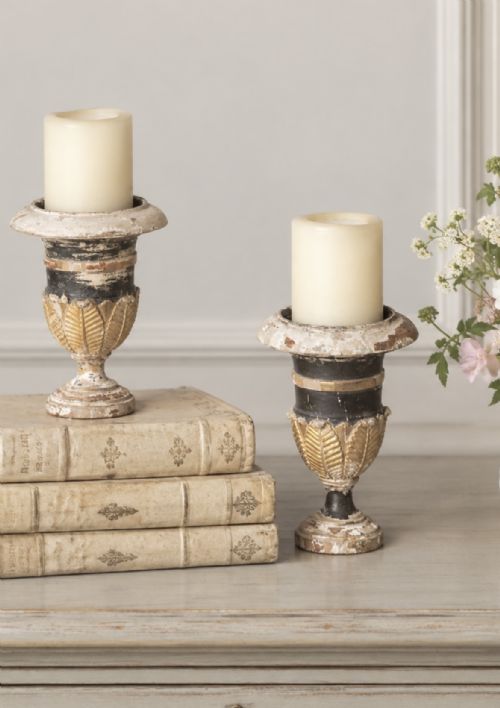
Mahogany and oak dominate the domestic examples, often paired with brass nozzles or sockets for safety. Italian and French pieces frequently showcase carved, giltwood, or silvered finishes built on softer woods.
The forms stretch from simple turned shafts to figural carvings, folk art poachers, and rushlight holders. Buyers frequently meet pairs intended for mantelpieces or side tables, alongside individual monumental floor-standing torcheres.
How they were made
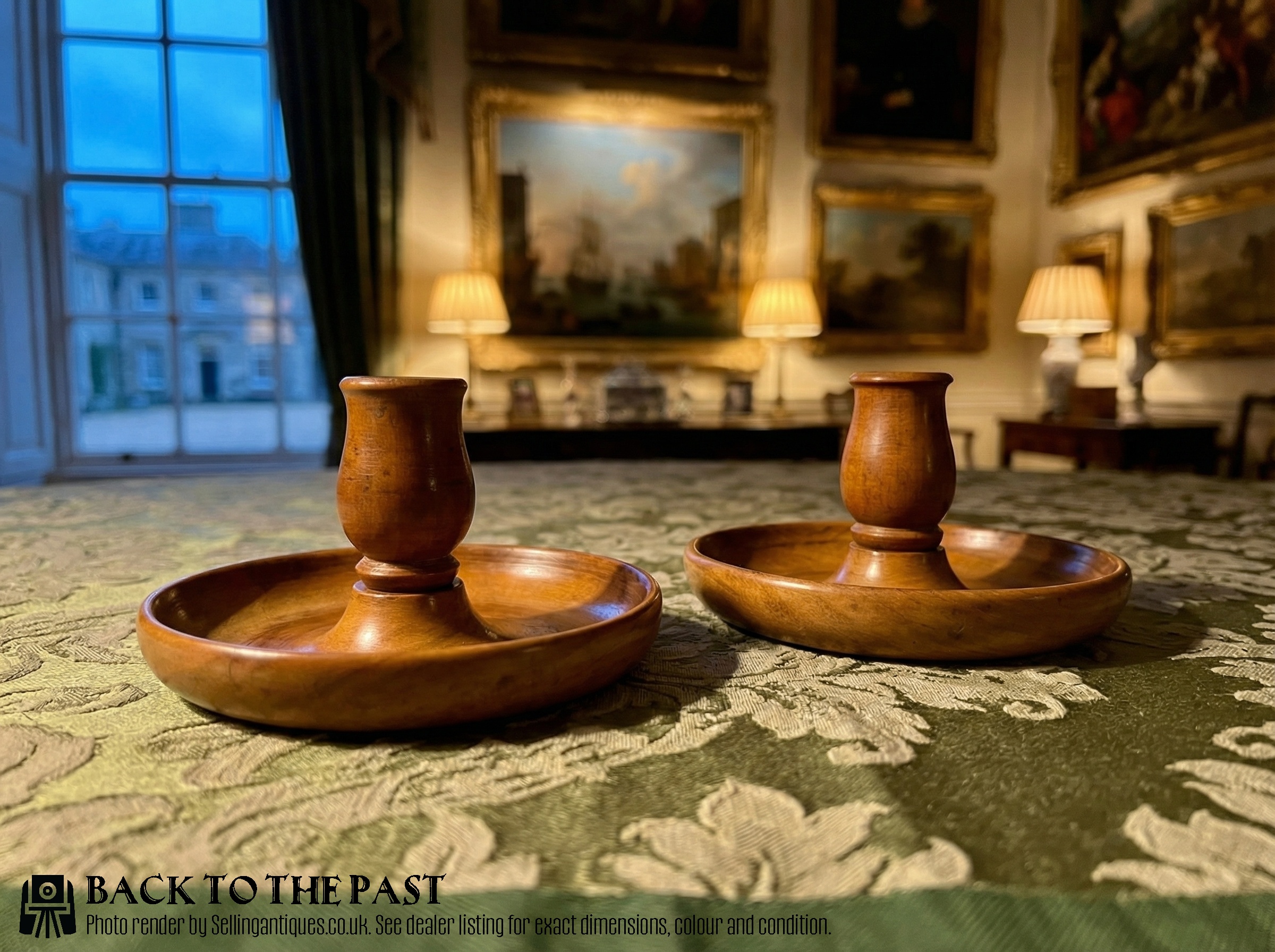
Turnery shapes the majority of these pieces, utilising lathes to produce barley twist, bobbin turned, and tapering columns in mahogany, oak, and olive wood. Master carpenters shaped structural elements before passing them to specialists for surface decoration.
Giltwood, gesso, and polychrome finishes define the decorative continental altarpiece tradition, layering metal leaf and paint over carved wood. Brass components, including bobbins and sconces, were integrated to protect the timber from melting wax.
One exceptional pair of nineteenth-century folk art wood candlesticks depicts poachers carrying their game.
What varies in quality
The precision of the turning and the depth of the hand-carving separate standard utility items from exceptional examples. Crisp details on acanthus leaves, figures, or barley twists indicate superior craftsmanship from the workshop.
Surface preservation dictates overall desirability, whether dealing with original gilding, mecca silvering, or polished mahogany. Retaining original brass fittings and matching pairs enhances the integrity of the piece.
The Antique Wooden Candleholders Glossary
- Rushlight holder
- A spring-loaded iron clip mounted on a wooden or iron base designed to grip a dried rush dipped in animal fat for illumination. These domestic items date primarily to the eighteenth century.
- Torchere
- A tall stand or candlestick designed to elevate a light source above floor level. Grand examples often feature heavy Georgian carved mahogany construction.
- Brighton bun
- A small, portable travelling candlestick that unscrews into two hemispherical sections resembling a bun. Olive wood is a typical medium for these pocket designs.
- Mecca
- A warm-toned transparent varnish applied over silver leaf to simulate true gold leaf. It appears frequently on Italian altar-style candleholders.
- Barley twist
- A helical or spiral turning carved into the wooden shaft of a candlestick. This technique gained popularity in oak during the late nineteenth and early twentieth centuries.
Antique Wooden Candleholders: Frequently Asked Questions
How do I date an antique wooden candlestick?
Dating relies on timber selection, turning styles, and construction methods. Mahogany and heavy brass fittings often point to Georgian or Victorian periods, while barley twist stems commonly suggest the early twentieth century.
Design influences like Italian Neoclassical or Jacobean Revival provide further clues. Comparing the wear patterns around the socket helps confirm the age of the woodwork.
What is a Brighton bun?
A Brighton bun is a compact, portable travelling candlestick made to unscrew safely into halves. Travellers carried them in luggage during the Edwardian era.
They are typically turned from dense timbers like olive wood. The candle stores securely inside the hollow wooden halves when not in use.
How were rushlight holders used?
Rushlight holders provided functional lighting in homes before candles became cheap or common. A dried rush soaked in grease was gripped between iron jaws and burned slowly.
Many examples pair these iron clips with heavy wooden bases for stability. They represent early domestic lighting technology from the eighteenth century.
Are wooden candlesticks safe to use?
Most antique wooden candlesticks feature metal sconces or brass drip pans at the top. These metal inserts prevent the flame and hot wax from contacting the wood directly.
Modern users should check that these original metal liners remain intact. Extinguish candles before the flame reaches the wooden collar to preserve the timber.