
Antique Wood Wall Mirror
An antique wood wall mirror brings depth and historic craftsmanship to a room, reflecting light through centuries-old glass framed in carved timber, giltwood, or polished mahogany.
Antique Wood Wall Mirror
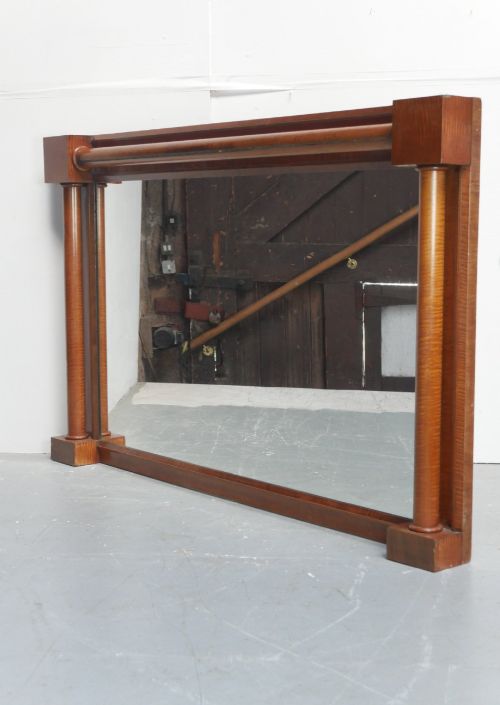
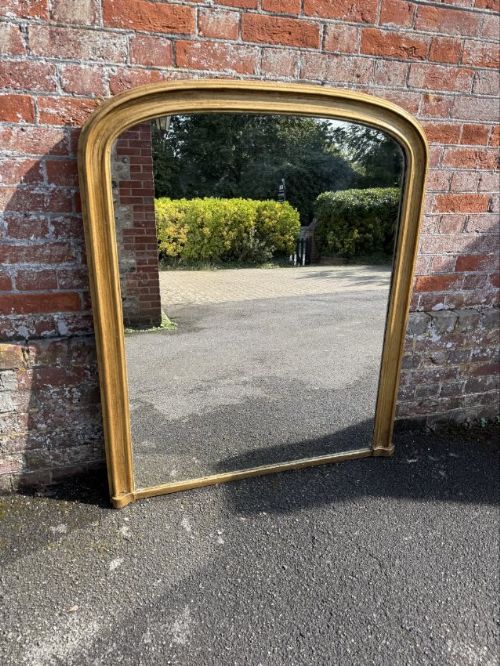
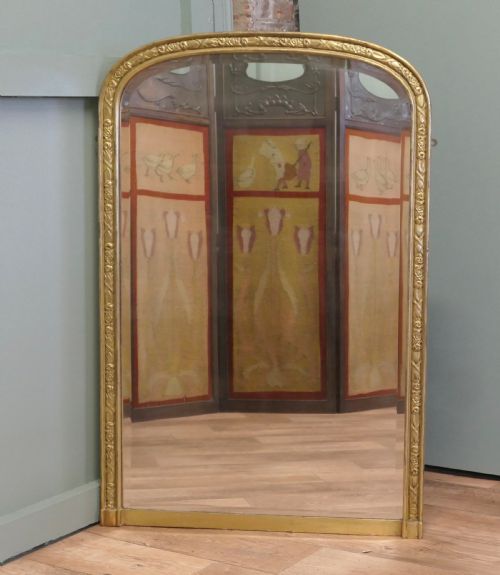
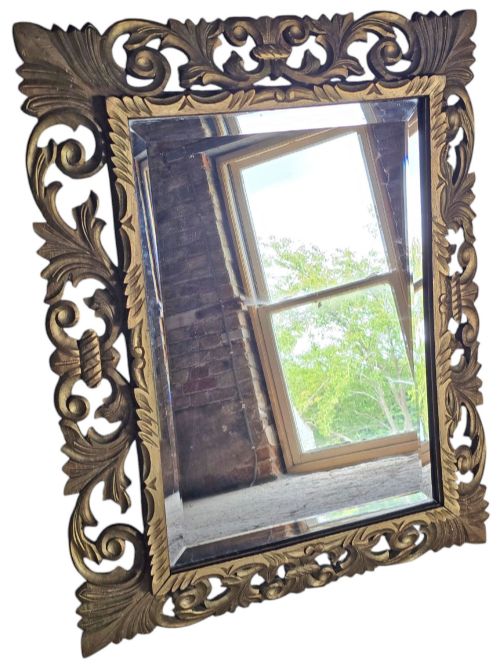
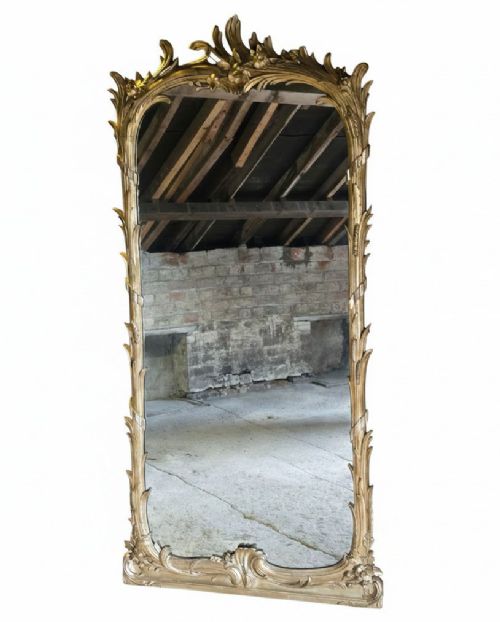
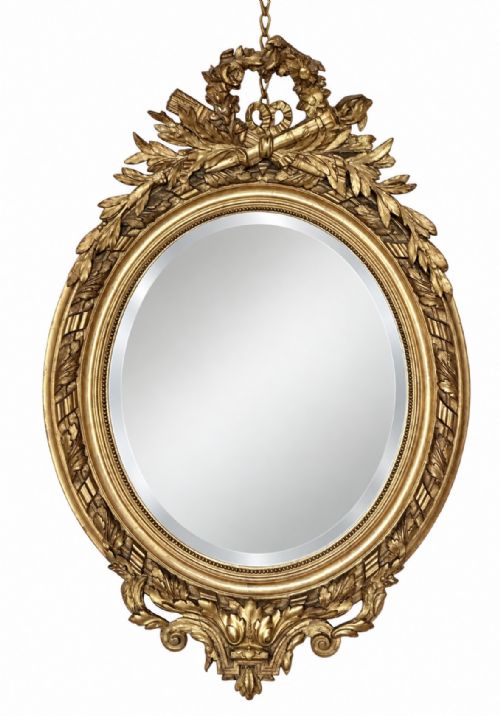
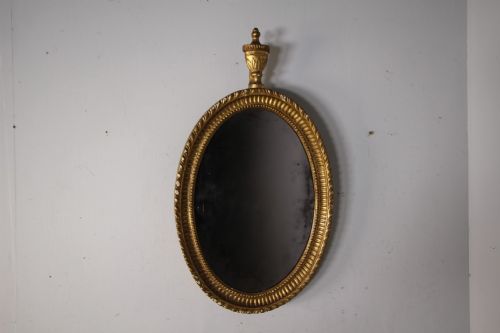
When searching for an antique wood wall mirror, buyers encounter a diverse selection spanning the eighteenth, nineteenth, and early twentieth centuries, including substantial overmantels designed for fireplaces and smaller pier mirrors meant for narrow wall spaces between windows.
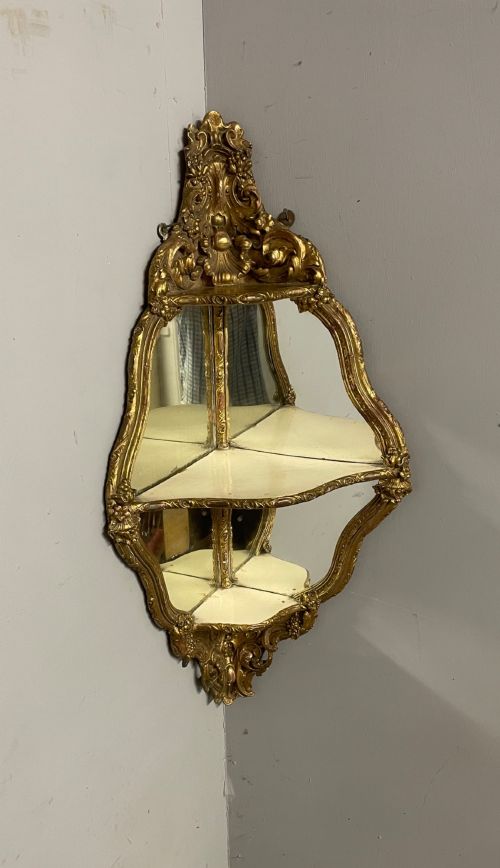
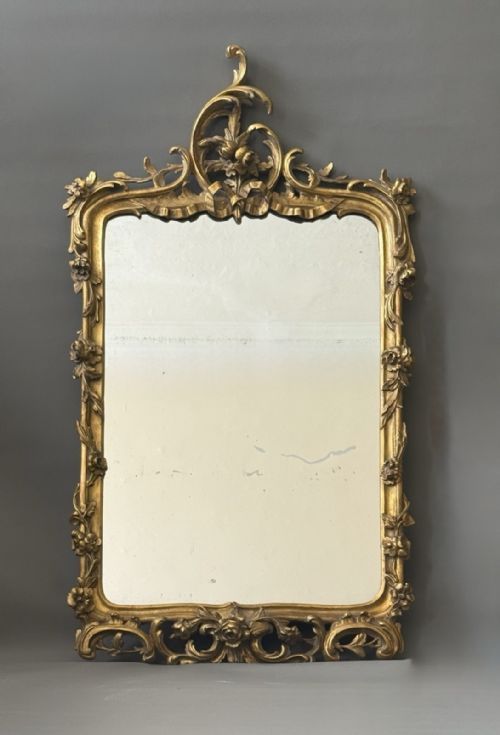
The inventory on this page ranges from restrained Georgian walnut and Victorian carved oak to elaborate French Rococo Revival and Florentine giltwood frames, showing regional variations from English country houses and continental workshops.
Many examples combine structural wood frames with applied gesso and gold leaf, while others present exposed mahogany, maple, oak, or fruitwood timbers, often incorporating bevelled glass plates or original mercury mirror glass.
Materials and Construction
Carvers shaped solid woods such as oak, mahogany, walnut, and fruitwood to form the structural carcasses of these pieces, sometimes utilising secondary timbers for backboards and bracing.
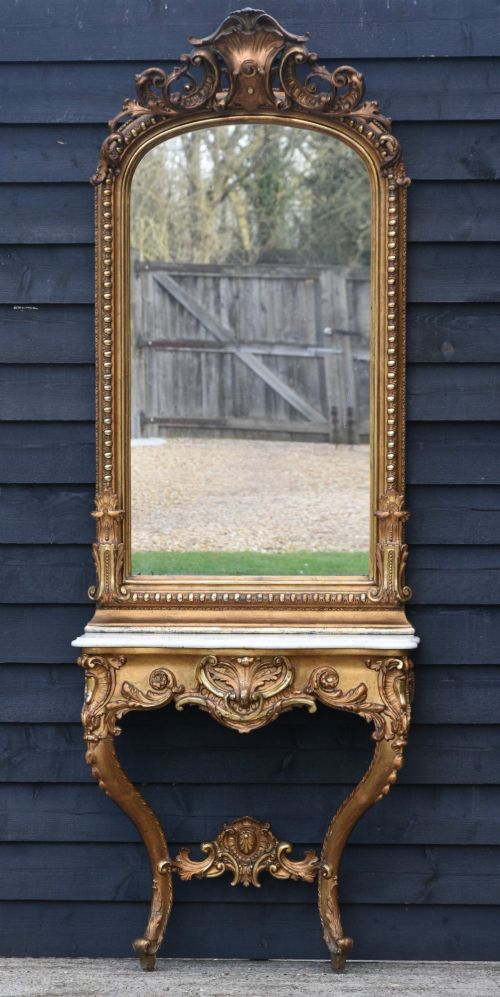
Giltwood frames required meticulous layers of gesso applied over carved timber before receiving thin sheets of gold leaf, a technique that created a brilliant reflective surface susceptible to subtle ageing.
Makers integrated mirror plates secured with traditional wooden backing boards, occasionally utilising bevelled edges or retaining historic silvered mercury glass that displays characteristic soft speckling.
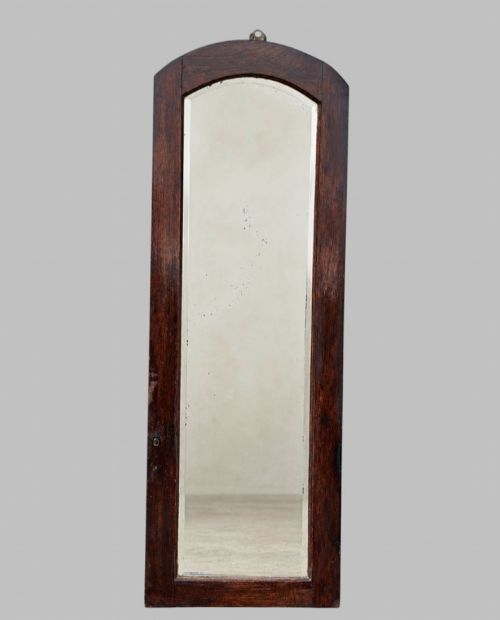
Listings feature eighteenth-century Georgian walnut pieces alongside Victorian giltwood overmantels and early twentieth-century oak designs.
Distinctions in Execution
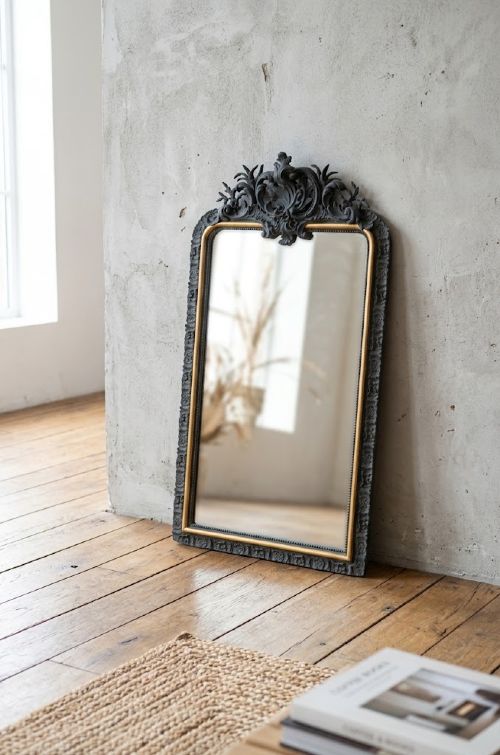
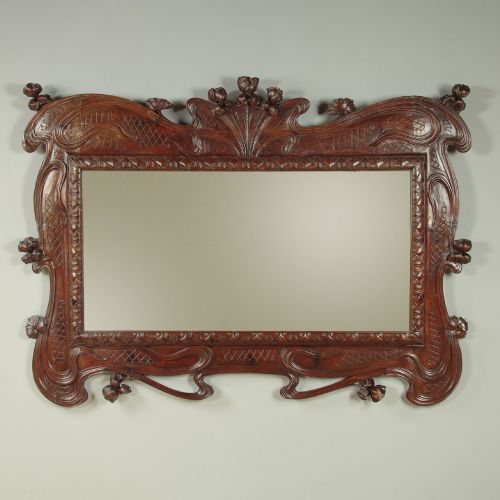
The distinction between ordinary production and exceptional work rests on the crispness of hand-carved ornamentation, where skilled artisans rendered floral motifs, scrolls, and crests with striking depth and anatomical precision.
Quality reveals itself in the structural integrity of the frame joints and the purity of the gilding application, distinguishing deep layers of gold leaf over gesso from flat modern metallic paints.
The character of the glass plate further elevates a piece, as genuine period mirror plates or well-preserved bevels impart an authentic historic presence missing in later replacements.
Waring and Gillow·Butti and Son
The Antique Wood Wall Mirror Glossary
- Giltwood
- Timber that has been coated with a thin layer of gold leaf over a prepared ground of gesso. This finish creates the luminous golden frames seen on many period decorative pieces.
- Gesso
- A plaster-like mixture applied to wood frames to provide a smooth, absorbent base for gilding and intricate relief carving. Artisans could model fine details into this compound before it set.
- Overmantel Mirror
- A large mirror specifically proportioned to hang on the wall above a mantelpiece or fireplace. These pieces frequently feature architectural framing to anchor grand interior spaces.
- Pier Mirror
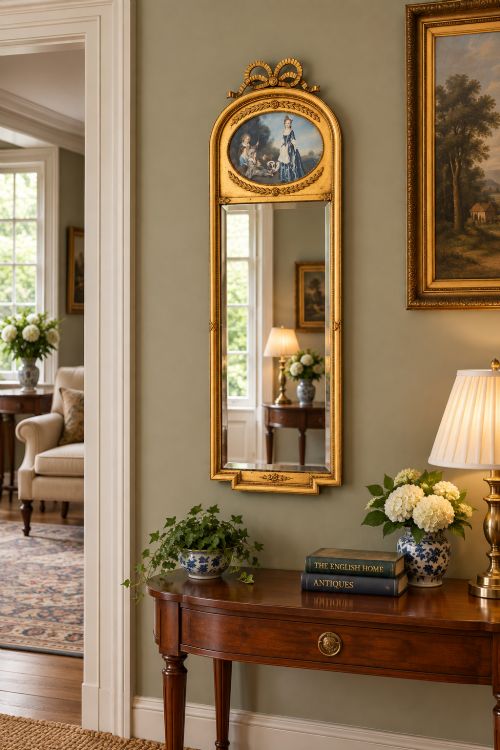
- A tall, narrow mirror designed to fit on the wall space between two windows, often placed directly above a matching console table. They served to maximise natural light in formal rooms.
- Mercury Glass
- A type of silvered mirror glass produced by pouring a mercury and tin amalgam behind the glass plate. It develops a characteristic mottled appearance over time.
- Convex Mirror
- A circular mirror with an outward-curving glass plate that provides a wide-angle reflection of the entire room. They often feature elaborate round frames surmounted by carved figures.
Antique Wood Wall Mirror: Frequently Asked Questions
How do I hang a heavy antique mirror safely?
Heavy antique mirrors require secure wall fixings anchored directly into masonry or substantial timber studs rather than standard plasterboard plugs. Professional mirror hangers utilise heavy-duty steel brackets or mirror plates distributed across the frame carcass to support the considerable weight safely.
It is essential to check the structural condition of the wooden frame and backboards before hanging to ensure the timber can bear the suspension strain over time.
How can I tell if a mirror frame is original?
Examining the backboards, fixings, and the interface between the glass and the rebate provides clues to a piece's originality. Period frames typically feature hand-sawn timber boards, old iron or brass screws, and accumulated dust and patination within the crevices of the joinery.
Look for consistent signs of ageing across both the frame and the mirror plate, keeping in mind that glass plates were frequently replaced during the nineteenth or twentieth centuries.
Where should I place an overmantel mirror?
An overmantel mirror traditionally hangs centrally above a fireplace mantel, reflecting the room's interior and drawing light downward into the seating space. The scale of the mirror should harmonise with the width of the mantelpiece below it without exceeding the outer edges.
Beyond the fireplace, these grand frames work effectively above low sideboards or console tables in entrance halls and dining rooms to create an illusion of greater spatial depth.