


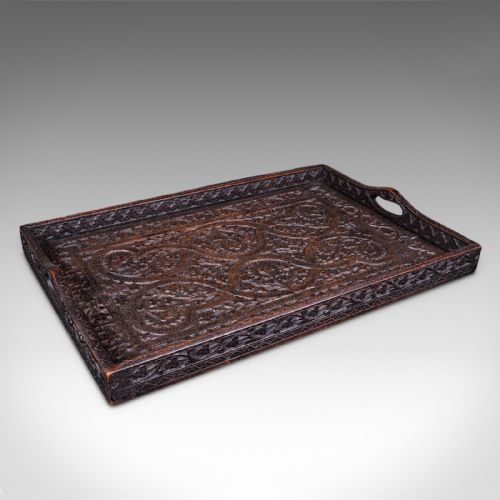


Antique Wood Tea Platter
These antique wood tea platter examples bring timber and brass together for a proper afternoon tea, offering both function and decorative grain.
Antique Wood Tea Platter
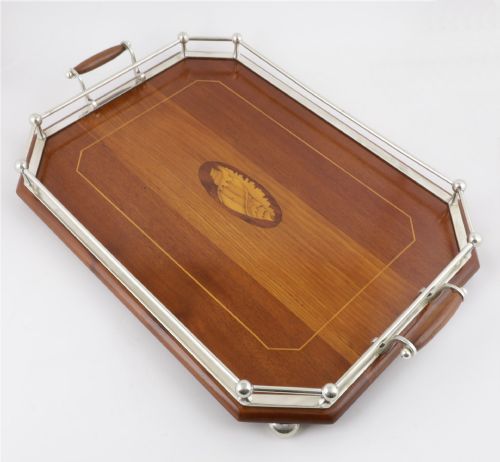
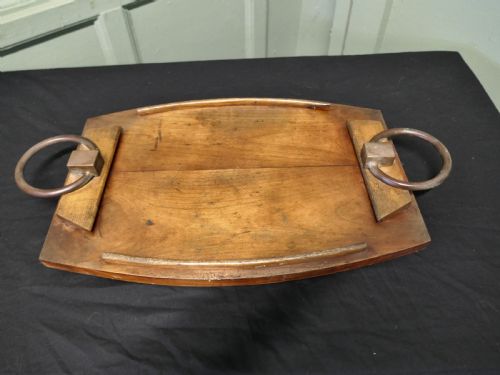
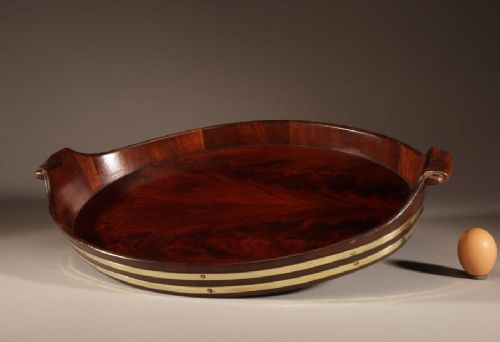
An antique wood tea platter serves as a sturdy base for teapots and porcelain, appearing in forms such as serving trays, octagonal gallery pieces, and ship's trays. The examples found here span the Georgian, Victorian, and Edwardian periods, alongside nineteenth century output.
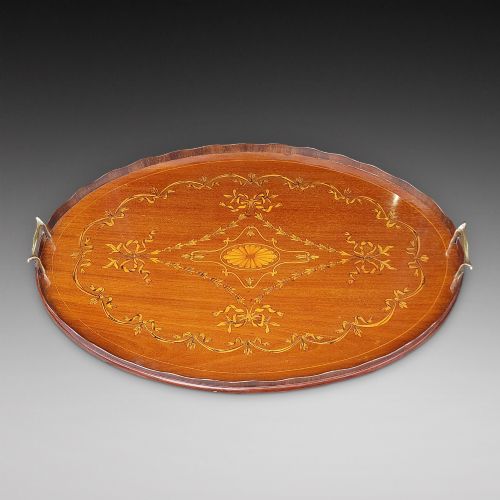
Buyers meet Edwardian oval serving trays, Georgian mahogany galleried pieces, and carved Anglo-Indian afternoon tea platters in teak and walnut. Styles stretch from Sheraton Revival and Arts and Crafts to Kashmiri and Japanese Meiji work.
Makers produced these items in timber, mahogany, satinwood, walnut, and golden elm, often incorporating brass galleries or silver plate. They function as both daily tea service accessories and decorative surfaces for the home.
Distinguishing quality
Quality rests on the crispness of the carving, the precision of the inlay work, and the structural integrity of joints. Finer pieces display well-figured timber grains, tightly fitted brass galleries, and balanced proportions.
Simpler versions rely on plain timber with minimal shaping, whereas better examples feature marquetry, intricate oyster veneering, or specialised regional carving traditions.
The Antique Wood Tea Platter Glossary
- Gallery tray
- A tray featuring a raised pierced or solid metal border designed to keep items from sliding off the surface. These borders are frequently cast in brass or pierced silver plate.
- Coopered
- A method of construction using curved or straight wooden staves joined side by side, similar to barrel making. This technique creates sturdy, walled serving vessels.
- Marquetry
- The art of applying pieces of veneer to a structure to form decorative patterns and pictures. Craftsmen utilise various coloured woods to achieve tonal depth.
- Oyster veneering
- A decorative technique using branch wood cut transversely to produce circular or oval patterns resembling oyster shells. It creates a rich, mottled surface appearance.
Antique Wood Tea Platter: Frequently Asked Questions
What is an antique wood tea platter used for?
These items serve primarily to carry teapots, cups, and saucers from the kitchen to the parlour. They provide a stable, bounded wooden surface for pouring tea.
Today, owners also utilise them as decorative display pieces on sideboards, coffee tables, or ottoman surfaces.
How do I clean an antique wooden tray?
Dust the surface regularly with a soft, dry cloth to prevent dirt accumulation in carved areas or grain lines. Avoid soaking the timber in water.
Apply a quality furniture wax occasionally to nourish the wood and maintain a soft sheen without building up heavy residues.
How can I tell a Georgian tray from an Edwardian one?
Georgian pieces often display simpler, robust mahogany construction with elegant galleried edges and classic proportions. Inlays tend to follow neoclassical motifs.
Edwardian examples frequently incorporate lighter satinwood timbers, intricate marquetry, and oyster veneering influenced by earlier revival tastes.
Are brass galleries original to these trays?
Many trays retain their original brass galleries, which were pinned or screwed directly into the wooden base or rim during initial construction. These fixtures provided structural stability as well as a decorative border.
Inspect the fixing points underneath to check that the metalwork matches the age and wear patterns of the timber.