



Antique Wood Spheres
Antique wood spheres bring scholarly weight and sculptural form to a room, turning utilitarian geography and carved treen into striking focal points.
Antique Wood Spheres
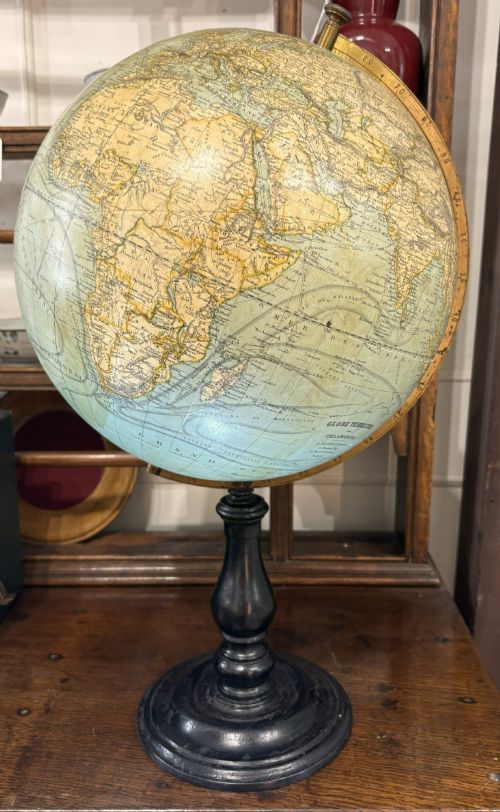
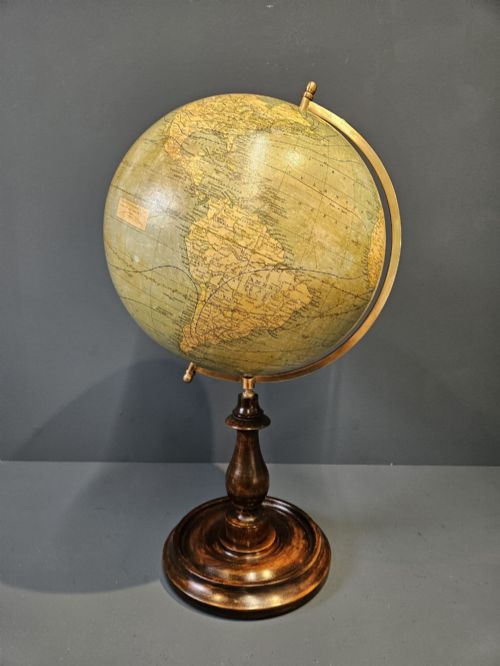
When you search for antique wood spheres, you encounter a specialised selection of desk and floor-standing globes, carved treen, and decorative objects. The examples on this page span the nineteenth century, the Edwardian era, and the interwar period, reflecting both practical cartography and ornamental design.
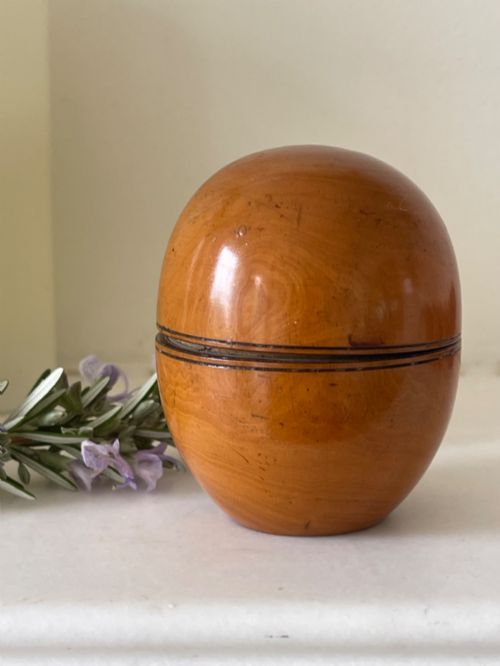
Most pieces combine turned wooden stands or bases with terrestrial globes, alongside solid carved wooden items such as pill silverers and sculptural figures. Origins range from British workshops to continental makers, utilising mahogany, boxwood, and walnut for their structural components.
How they were made
Maker construction relies heavily on turned mahogany, boxwood, and walnut to form stable desk stands, pedestals, and pill silverers. Globe spheres combine paper gores and plaster or papier-mâché cores mounted onto these wooden frameworks.
Detailing often involves brass hardware, metal fittings, and hand-carved motifs that complement the primary timber structure. Master craftsmen applied printed cartographic maps directly onto curved spheres before sealing the surfaces.
Antique Wood Spheres Retail Price Guide 2026
Typical asking prices for wood spheres among the pieces listed under this phrase on Sellingantiques today, from the lower quarter to the upper quarter. They describe what is for sale here now, not the wider market.
A tiny wooden sphere once rolled in an apothecary shop to coat pills in silver now rests quietly on a modern desk.
What varies in quality
Quality rests in the crispness of the wood turning and the precision of the cartographic details on globe gores. Superior examples maintain intact original surfaces and well-proportioned wooden mounts that support the central sphere securely.
The choice of dense timber such as boxwood or finely grained walnut elevates standard utilitarian objects into refined decorative works. Condition of the underlying plaster core and paper map layers also distinguishes standard production from exceptional survivals.
The Antique Wood Spheres Glossary
- Treen
- Small handmade wooden household objects. These utilitarian items display traditional turning and carving skills from past centuries.
- Globe gore
- A triangular paper strip printed with map details. Multiple gores are applied to a spherical core to create a terrestrial globe.
- Grand Tour
- Cultural travel undertaken by wealthy Europeans in the eighteenth and nineteenth centuries. Souvenirs from these journeys included carved stone and wood sculptures.
- Papier-mâché
- A composite material consisting of paper pieces bound with glue. This substance formed lightweight, durable cores for nineteenth-century globes.
Antique Wood Spheres: Frequently Asked Questions
How do I date an antique globe?
Dating relies on examining the political boundaries and country names printed on the paper gores. Cartographers updated these details regularly, providing a reliable bracket for manufacture.
The materials of the base, such as walnut or mahogany, and the style of the wooden turning offer further clues to the period.
Where were these pieces used historically?
Floor-standing and desk globes occupied libraries, studies, and offices as practical reference tools and symbols of learning. Smaller treen objects served specific domestic or medical functions in the home.
Grand Tour carvings and decorative spheres were displayed on mantelpieces and tabletops to signal the owner's cultural education.
How should I care for wooden spheres?
Keep wooden bases and carved treen away from direct heat sources and strong sunlight to prevent the timber from drying and splitting. Dust gently with a dry, soft cloth rather than using liquid polishes.
Paper and plaster globes require stable humidity levels to protect the delicate surface maps from peeling or cracking over time.
What is a pill silverer?
A pill silverer is a specialised nineteenth-century treen tool used in apothecary work. These small turned wooden spheres held pills during the silver-coating process.
Collectors prize them for their smooth turned wood surfaces and unusual domestic utility.