







Antique Wood Okimono
These antique wood okimono are carved Japanese sculptures and figurines from the nineteenth century and Edwardian period, offering collectors intricate miniature artistry.
Antique Wood Okimono
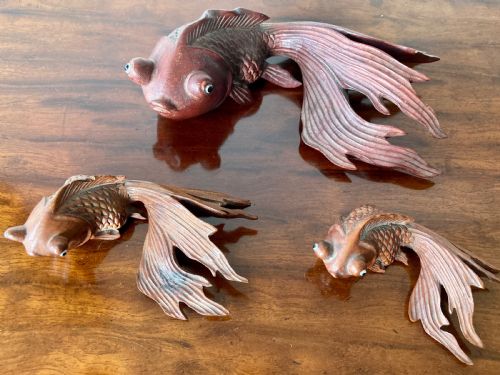
You will most commonly meet pieces depicting traditional subjects such as mythological figures, deities like Fukurokuju and Ebisu, and fauna including tigers, rodents, toads, rabbits, and birds. These range from miniature netsuke and paperweights to larger standalone carved hardwood and boxwood figures.
The origin spans Japanese craftsmanship from the Meiji period through to Edwardian interpretations, showcasing diverse regional approaches to carving natural subjects. These objects served primarily as decorative displays within traditional interiors rather than utilitarian items.
How they were made
Carvers utilised dense organic materials, predominantly boxwood, bamboo, burr wood, and general carved hardwood, selecting timbers that accepted minute detail without splintering. These woods were shaped using specialised gouges and knives to achieve high levels of anatomical realism in animals and human figures.
Antique Wood Okimono Retail Price Guide 2026
Typical asking prices for wood okimono among the pieces listed under this phrase on Sellingantiques today, from the lower quarter to the upper quarter. They describe what is for sale here now, not the wider market.
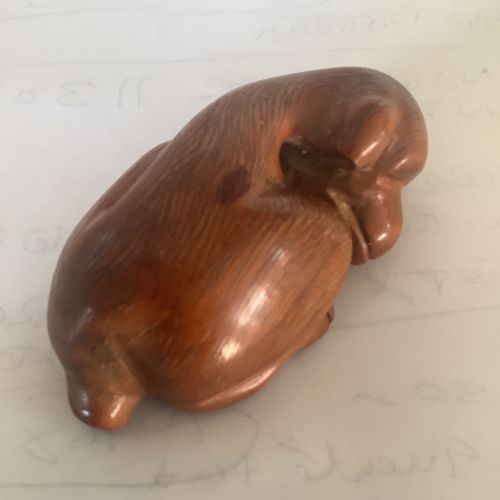
Among the carved fauna are rodents, a toad acting as a paperweight, and two rabbits sharing a quiet moment in boxwood.
What varies in quality
The standard of carving distinguishes superior pieces, marked by anatomical accuracy, depth of undercut, and the lifelike expression rendered in figures and animals. Finer examples display meticulous attention to textures such as animal fur, fabric folds, and the grain of the wood itself.
The selection of the timber dictates quality, with tightly grained boxwood or figured burr wood allowing for sharper, more enduring detail than coarser hardwood. Signatures or seals left by master carvers further elevate the status of an okimono within the range.
Tomochika·Gyoko
The Antique Wood Okimono Glossary
- Okimono
- A Japanese ornamental statue or sculpture intended for display on a tokonoma or shelf. These freestanding decorative carvings typically depict animals, figures, or legendary subjects.
- Netsuke
- A small carved toggle fastened to the end of a cord attached to a pouch or traditional container. Carved from wood or other materials, they feature a hole for the cord.
- Meiji Period
- The era in Japanese history spanning from 1868 to 1912, characterised by extensive artistic output for both domestic and international markets. This period produced many of the detailed wood carvings found today.
- Boxwood
- A dense, pale yellowish wood prized by carvers for its fine, uniform grain and ability to hold microscopic detail. It forms the material base for many miniature figurines.
- Edo Period
- The period in Japanese history lasting from 1603 to 1868, preceding the Meiji era and establishing foundational artistic traditions in sculpture and craft.
Antique Wood Okimono: Frequently Asked Questions
How do I identify a Meiji period carving?
Meiji period carvings often display exceptional naturalism, deep undercut details, and dynamic poses in subjects like animals and human figures. The era ran from 1868 to 1912, a time when Japanese carvers refined miniature wooden sculptures.
Many pieces from this timeframe also incorporate signatures or seals carved directly into the wood by the artisan.
What is the difference between a netsuke and an okimono?
A netsuke is a small toggle with cord holes specifically designed to secure a suspended pouch or basket to a kimono sash. An okimono is strictly a standalone decorative sculpture meant for display on a surface.
While both share similar themes and carving techniques, their original functions in traditional Japanese dress and interior decoration separate them.
How should I care for antique wood sculptures?
Antique wood sculptures require stable environmental conditions away from direct sunlight and rapid humidity fluctuations to prevent the timber from cracking. Dust them gently with a soft, dry brush without applying modern polishes or oils.
Maintaining a consistent indoor climate preserves the natural patina and delicate carved details built into the wood over the centuries.