

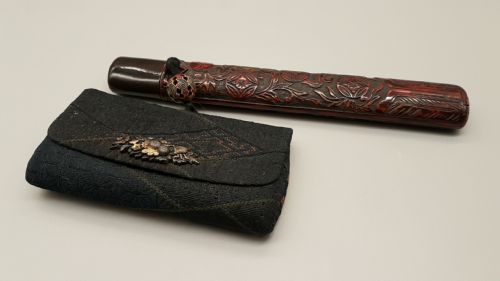


Antique Wood Netsuke
These antique wood netsuke are small carved toggles carved from boxwood and other timbers, prized for their tactile presence and intricate Japanese craftsmanship.
Antique Wood Netsuke
When you search for antique wood netsuke, you encounter traditional Japanese toggles and small figural carvings that date predominantly from the nineteenth century, spanning both the Edo and Meiji periods. These objects were originally designed to secure pouches and boxes to traditional Japanese garments, serving a practical daily function while displaying miniature artistry.
The pieces you are most likely to meet on this page take the form of boxwood netsuke, manju kagamibuta, and small okimono depicting animals, wise men, and legendary figures. Common subjects include frogs, toads, rabbits, rodents, and deities such as Ebisu and Daruma, often carved with remarkable naturalism.
How they were made
The primary material seen across these listings is boxwood, chosen for its dense, fine grain which allows carvers to execute microscopic detail without splintering. Artisans also utilised exotic woods, horn, metal, lacquer, and mother-of-pearl inlay to add contrast and texture to the miniature sculptures.
Carving was executed entirely by hand using specialised gouges and knives, capturing organic forms such as clusters of nuts, fur on rabbits, and the smooth skin of toads. Certain pieces incorporate champleve cloisonne enamel and metalwork elements, particularly within manju kagamibuta constructions.
Antique Wood Netsuke Retail Price Guide 2026
Typical asking prices for wood netsuke among the pieces listed under this phrase on Sellingantiques today, from the lower quarter to the upper quarter. They describe what is for sale here now, not the wider market.
Listings feature wood and boxwood predominantly, alongside occasional additions of horn, metal, and mother-of-pearl.
What varies in quality
The choice of timber significantly influences the desirability of a piece, with dense boxwood and select exotic woods showing superior wear and patination over time. Furthermore, legible artist signatures, such as those by recognised carvers, elevate the standing of an individual carving.
Tomochika·Masayuki
The Antique Wood Netsuke Glossary
- Netsuke
- A small carved toggle used in traditional Japanese dress to suspend pouches from the sash. They are typically perforated with himotoshi channels for the cord.
- Boxwood
- A dense, pale hardwood favoured by carvers for its fine grain and ability to hold microscopic detail. It develops a rich, dark patina through handling.
- Manju Kagamibuta
- A circular button-style netsuke resembling a traditional Japanese sweet, frequently featuring a metal disc set into a carved wood body.
- Okimono
- A small Japanese display carving intended for placement on a shelf or tabletop rather than for fastening to a kimono sash.
- Sashi netsuke
- An elongated form of toggle designed to be tucked directly behind the obi sash rather than secured with a cord and fastening bead.
Antique Wood Netsuke: Frequently Asked Questions
How were netsuke used?
These objects functioned as practical toggles on traditional Japanese clothing, which lacked internal pockets for carrying personal items.
A cord attached to a tobacco pouch or medicine box threaded through the netsuke, allowing the entire assembly to hang securely from the sash.
How do I care for boxwood carvings?
Boxwood carvings require minimal intervention, benefiting chiefly from gentle handling that encourages the natural development of a warm patina over time.
Keep them away from direct heat sources and drastic humidity changes to prevent the timber from splitting or warping.
How can I tell the Edo and Meiji periods apart?
Edo period carvings often reflect traditional, restrained aesthetics, while Meiji period pieces frequently exhibit greater naturalism, elaborate detail, and increased commercial production for export.
Many listings bridge these eras or reflect the transitional styles spanning the mid to late nineteenth century.