
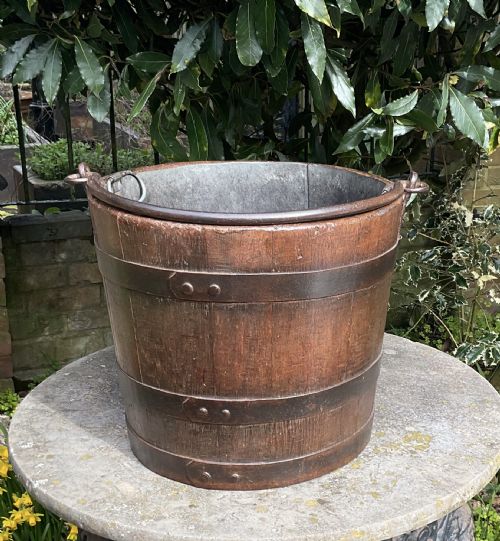


Antique Wood Coal Scuttle
These robust holders of fuel bring texture and utility to a hearth, uniting practical containment with period craftsmanship.

Antique Wood Coal Scuttle
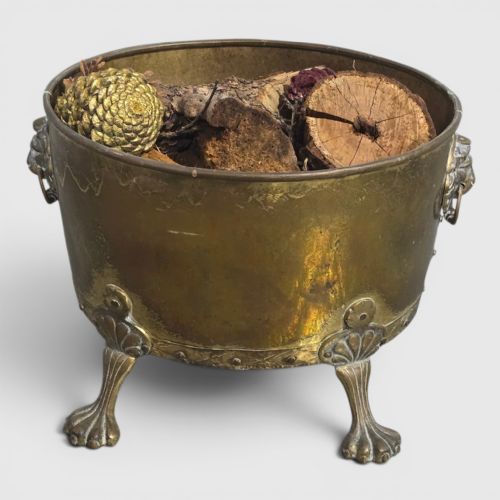
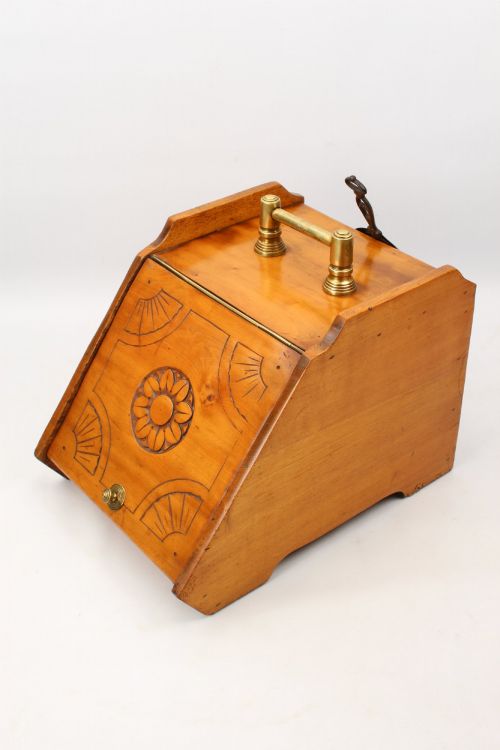
The objects take several distinct structural forms, ranging from traditional coopered buckets with metal liners to drop-front boxes fitted with shovels. The prevailing examples across the inventory date from the nineteenth and early twentieth centuries, reflecting changing domestic habits of Victorian and Edwardian households.
Materials and construction methods
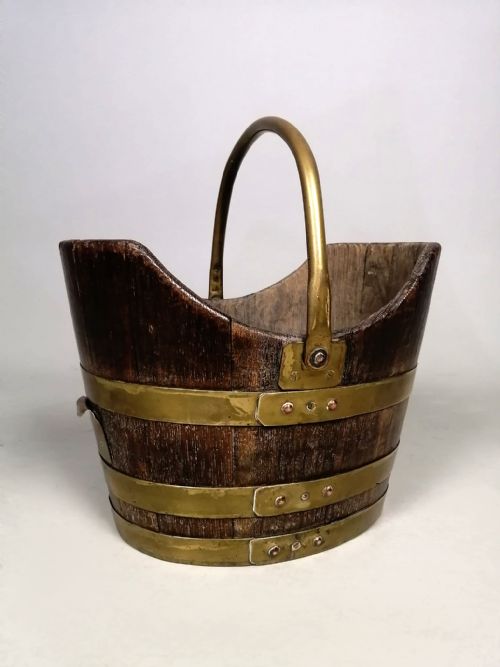
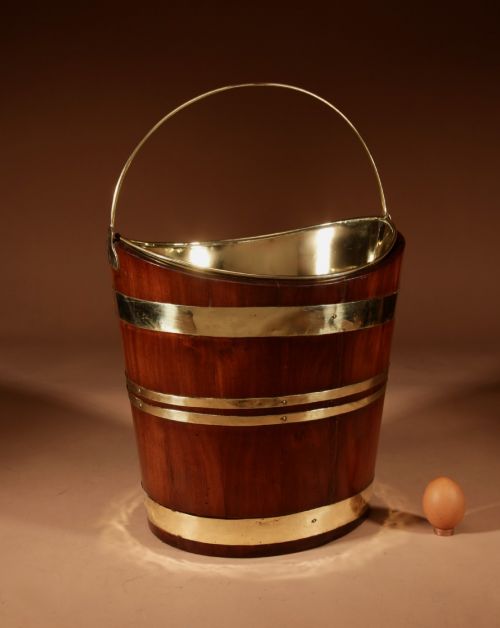
Cabinetmakers constructed these pieces primarily from sturdy hardwoods including mahogany, oak, walnut, and rosewood, often selecting timber for rich grain patterns. Many cylindrical vessels employ traditional cooperage techniques, binding wooden staves tightly with heavy brass bands or hoops to ensure structural integrity.
Interior elements frequently rely on functional metals, pairing wooden bodies with removable zinc or metal liners designed to contain soot and moisture. Decorative details range from elaborate marquetry inlay and carved panels to brass swing handles and applied spindle mounts.
Distinctions in construction and finish
The distinction between standard utility items and exceptional pieces rests in the choice of timber and the precision of the joinery. Finely figured mahogany, intricate marquetry work, and robust dovetail or coopered construction elevate a simple fuel container to a piece of fine furniture.
Originality of internal liners, matched shovels, and hardware heavily influence the character of each piece. Surviving examples that retain their untouched patination and original brass mounts command greater interest from collectors than those with replaced fittings.
The Antique Wood Coal Scuttle Glossary
- Purdonium
- A domestic cabinet designed to store coal, typically featuring a sloping drop-front door to facilitate easy access to the fuel. These units often incorporate a dedicated interior compartment for a metal shovel.
- Coopered
- A method of construction where narrow wooden staves are fitted together side by side and bound by metal hoops. This technique is commonly seen in cylindrical buckets and log bins.
- Peat bucket
- A deep wooden vessel originally intended for holding turf or peat used as fuel in hearths. They frequently feature brass banding and a swing handle for transport.
- Schuitje
- A boat-shaped container derived from Dutch vernacular design, often utilised as a peat bucket or indoor jardinière. The distinctive curved profile distinguishes it from standard cylindrical buckets.
- Liners
- Removable metal or zinc inserts placed inside wooden coal boxes to protect the surrounding timber from moisture and debris. Original liners add authenticity to the piece.
Antique Wood Coal Scuttle: Frequently Asked Questions
How do I clean a wooden coal scuttle?
Maintain the timber by dusting regularly with a soft cloth and applying a quality beeswax to nourish the polished surface.
Avoid using water directly on the wood, and clean the interior metal liner separately before returning it to the wooden housing.
Can I still use these for real coal?
While these vessels were built to hold solid fuel, modern usage often involves storing logs or kindling rather than loose coal.
Utilising a sturdy interior liner helps protect the historic structure from heavy impacts and residual moisture.
What is the difference between a bucket and a purdonium?
Buckets are open-topped cylindrical vessels with swing handles, whereas purdoniums are enclosed cabinets with hinged doors.
Purdoniums generally conceal the fuel entirely from view and frequently include a dedicated slot for a shovel.
How do I date a wooden coal container?
Dating relies on examining the construction techniques, timber choices, and prevailing decorative styles of the period.
Georgian examples often favour coopered mahogany with heavy brass bands, while Edwardian versions frequently showcase marquetry inlay and cabinet formats.