

Antique Wood Chess
Antique wood chess encompasses boards, tables, and sets designed for play, offering tactile warmth and period craftsmanship for the home.
Antique Wood Chess
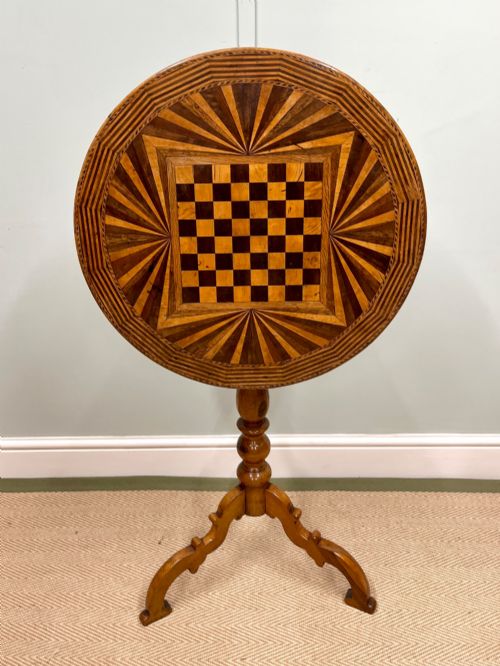
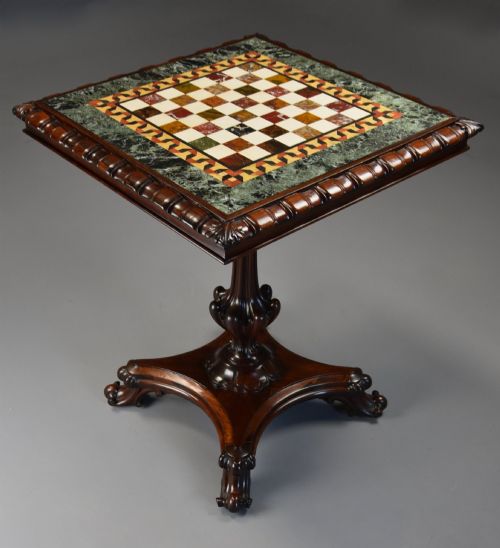
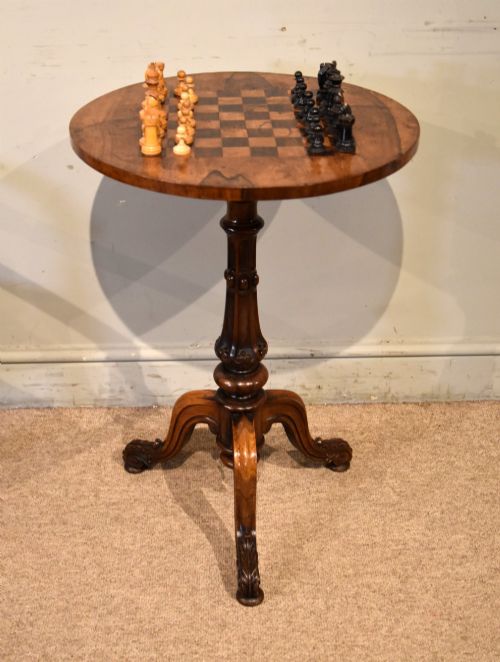
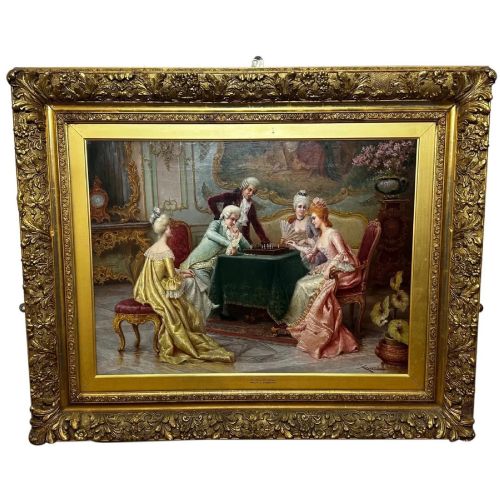
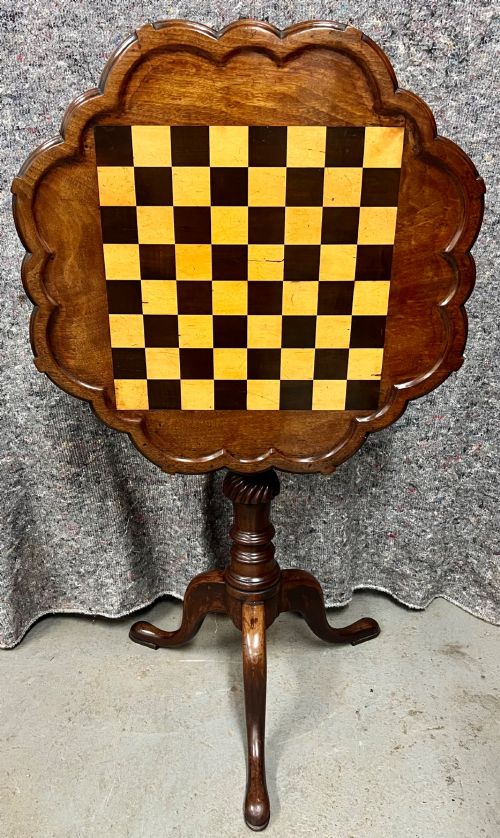
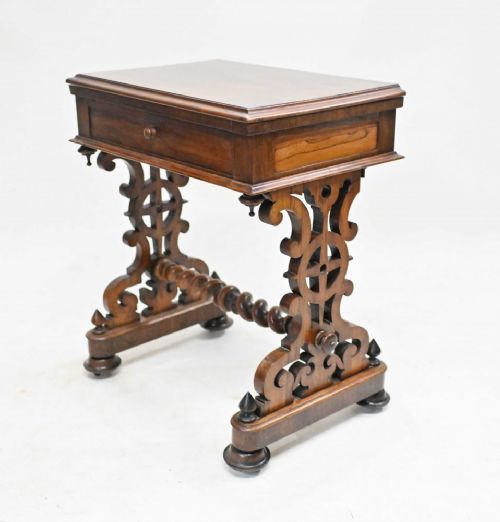
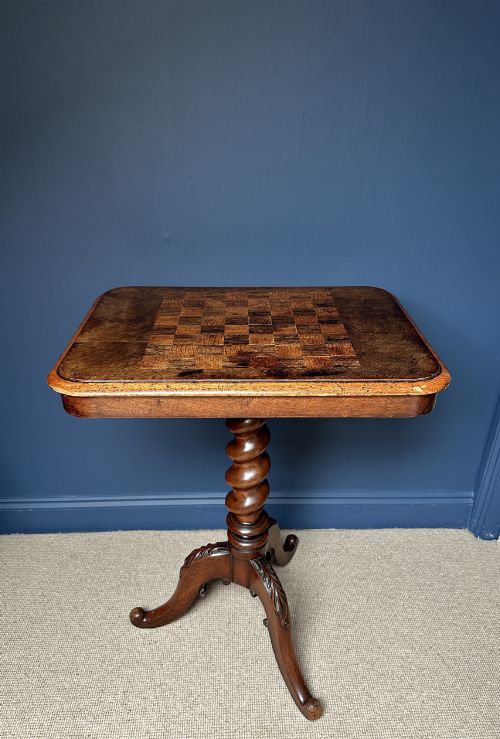
Antique wood chess items primarily manifest as games tables, occasional tables, and folding boards spanning the Georgian, Regency, and Victorian eras. These pieces frequently integrate chess with backgammon, cards, or work table compartments, reflecting the social habits of nineteenth-century parlours.
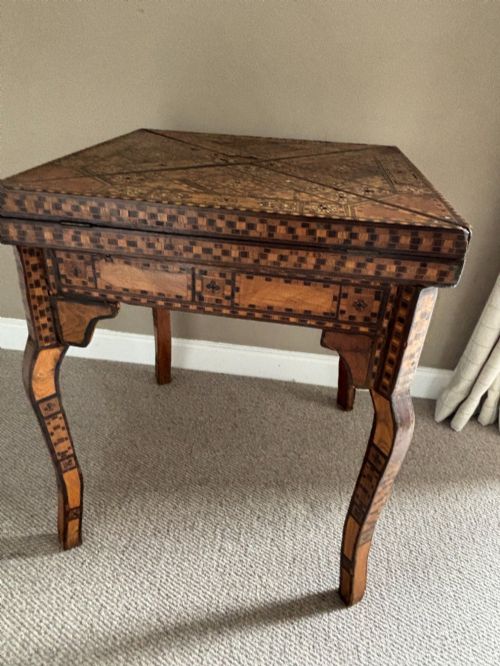
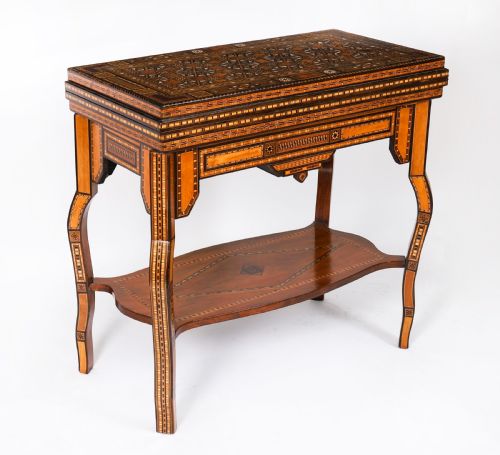
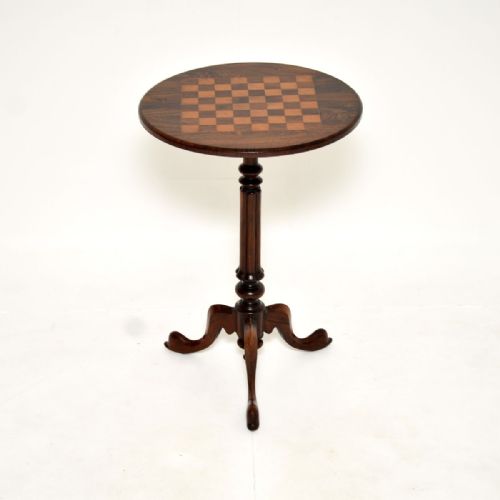
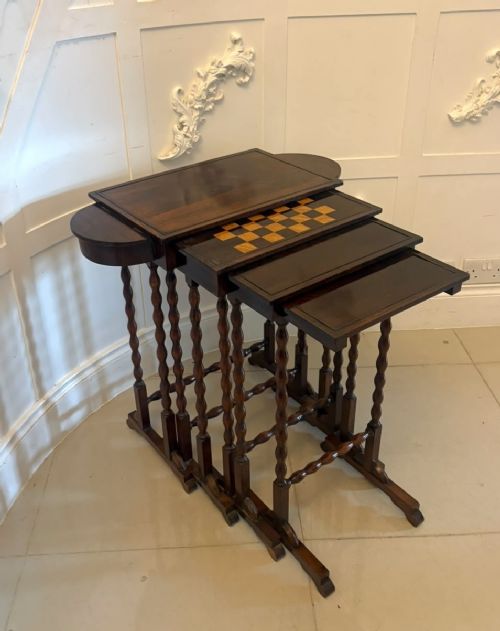
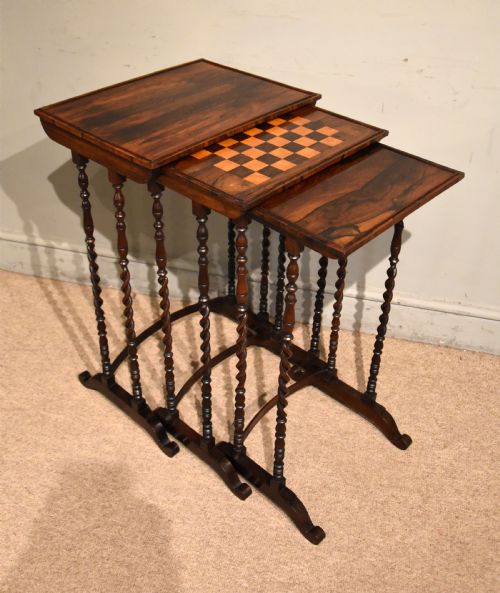
Buyers encounter walnut, rosewood, and mahogany constructions alongside specialised regional work such as Syrian Ottoman, Damascene, and Sorrento marquetry. Tables often feature tilt-top mechanisms, draw leaves, or nesting formats designed for versatile domestic use.
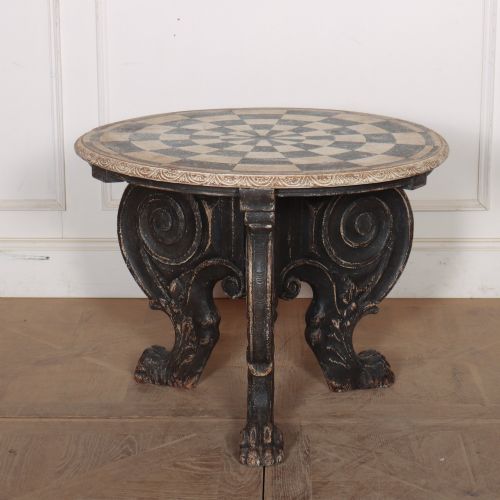
Occasional tables and games boxes dominate the available selections, bridging the gap between functional furniture and parlour entertainment. The design vocabulary shifts from restrained Georgian lines to ornate Victorian burr walnut and intricate inlay.
Materials and Technique
Cabinet makers utilised dense hardwoods including rosewood, mahogany, and walnut as structural bases and decorative surfaces. Boxwood, ebony, and brass supplied contrasting elements for inlay and playing pieces.
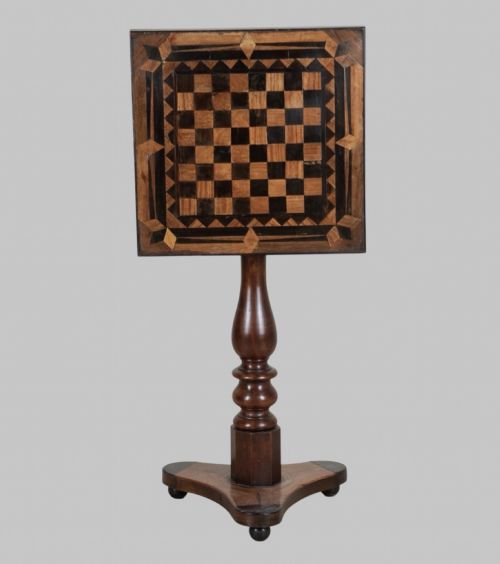
Marquetry and wood inlay formed the chequer boards, requiring precise geometry and contrasting timbers. Turnery shaped pedestals, tripod legs, and chess pieces, while French polishing finished the timber surfaces.
Antique Wood Chess Retail Price Guide 2026
Typical asking prices for wood chess among the pieces listed under this phrase on Sellingantiques today, from the lower quarter to the upper quarter. They describe what is for sale here now, not the wider market.
Tables hide secrets beneath their tops, folding and swivelling to transform a quiet tea stand into a battleground.
Judging Quality
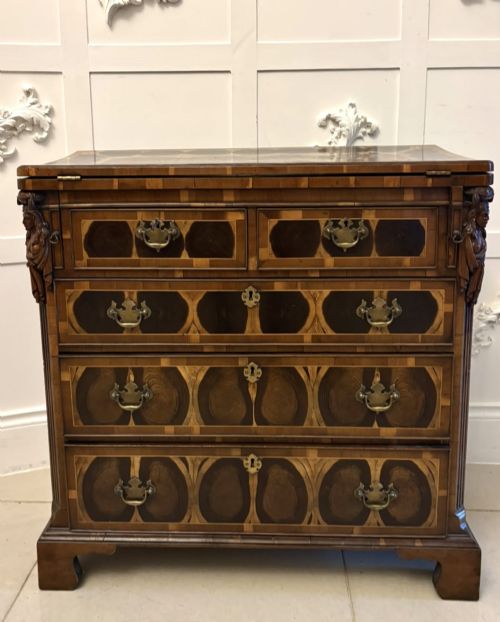
The refinement of the timber selection and the precision of the parquetry inlay dictate the distinction between standard and superior examples. Integrated mechanisms, such as swivelling tops or sliding drawers, demand exact joinery that operates smoothly over time.
Regional execution demonstrates varied mastery, from local English cabinet work to complex Damascan and Sorrento marquetry detailing. Original surfaces and patination preserve the integrity of the piece far better than stripped or heavily restored timber.
Gillows
The Antique Wood Chess Glossary
- Marquetry
- Decorative patterns formed by the insertion of small pieces of wood into a veneered surface. This technique creates complex pictorial or geometric motifs on tabletops.
- Parquetry
- Geometric mosaic woodwork used to create chequer patterns for games boards. Artisans arrange contrasting timber tiles in precise grid formations.
- Tripod Table
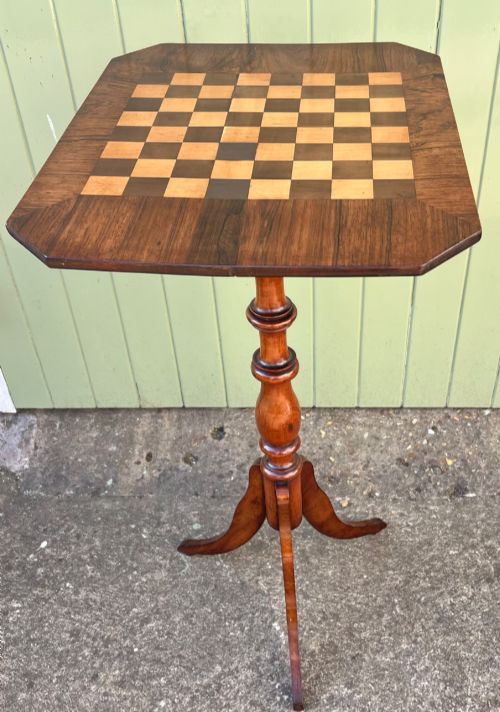
- A small standalone table supported by a central pillar resting on three legs. Many examples incorporate tilt-top mechanisms for storage.
- Compendium
- A multi-game box or cabinet containing equipment for chess, backgammon, and cards. These portable sets aggregate various pastimes in one container.
Antique Wood Chess: Frequently Asked Questions
What is an antique games table?
A games table is a piece of furniture featuring an integrated playing surface for pastimes like chess or backgammon. Many designs incorporate fold-over tops or removable boards to conceal the game area when not in use.
These versatile tables served as functional parlour furniture in Georgian and Victorian homes, transitioning easily from writing desks or side tables to gaming stations.
How do I identify a Victorian chess table?
Victorian chess tables typically utilise dark timbers such as walnut, burr walnut, and rosewood. They frequently feature carved pedestals, turned legs, and elaborate marquetry or wood inlay on the playing surface.
Many examples from this era include drawers for storing pieces or combine chess with backgammon and card playing surfaces within a single foldover design.
Where were Syrian Ottoman games tables made?
Syrian Ottoman tables originated in the Middle East, incorporating distinctive Arabic inlay and geometric patterns using contrasting woods and bone. These pieces arrived in European markets during the nineteenth century as exotic import items.
They reflect the global trade and eclectic tastes of the period, offering a striking alternative to standard English cabinet work.
How should I care for a wood chess table?
Maintain wood chess tables by keeping them away from direct sunlight and extreme humidity fluctuations to prevent timber warping and veneer cracking. Dust regularly with a soft, dry cloth and avoid harsh chemical polishes.
Applying microcrystalline wax occasionally helps protect the antique polish and preserves the natural lustre of the walnut, rosewood, or mahogany surfaces.