
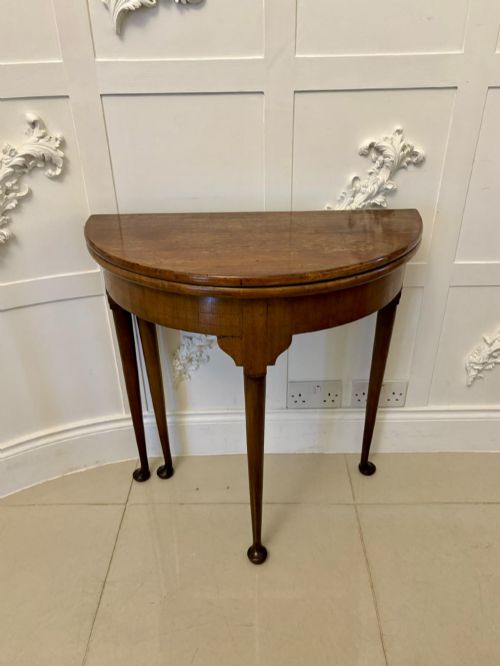
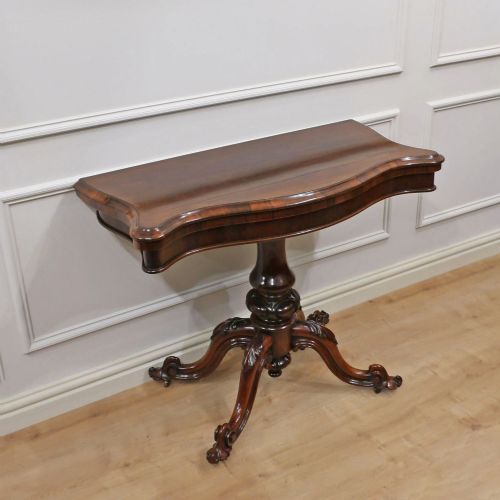
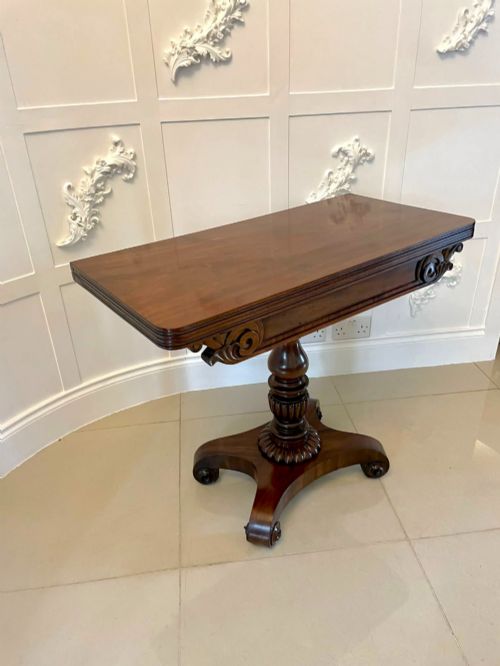
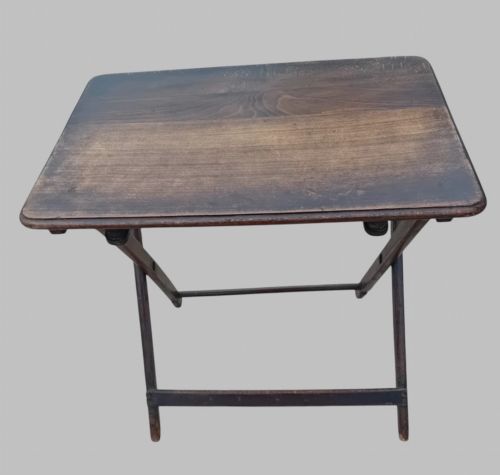
Antique Wood Card Table
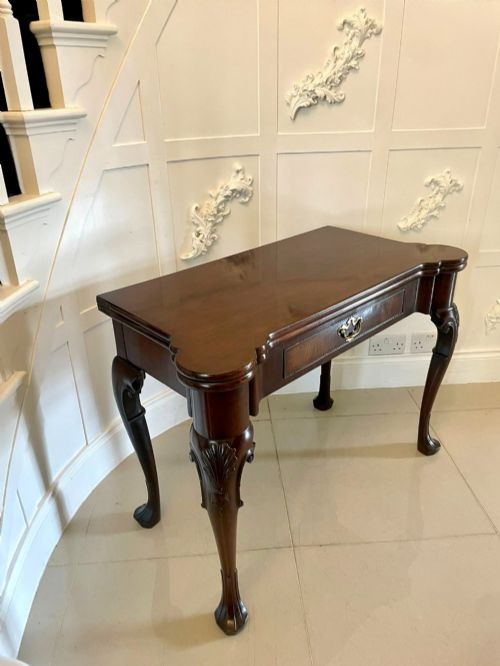
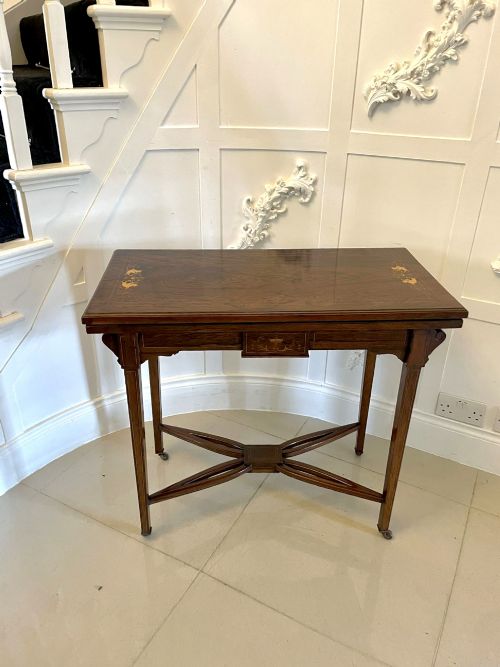
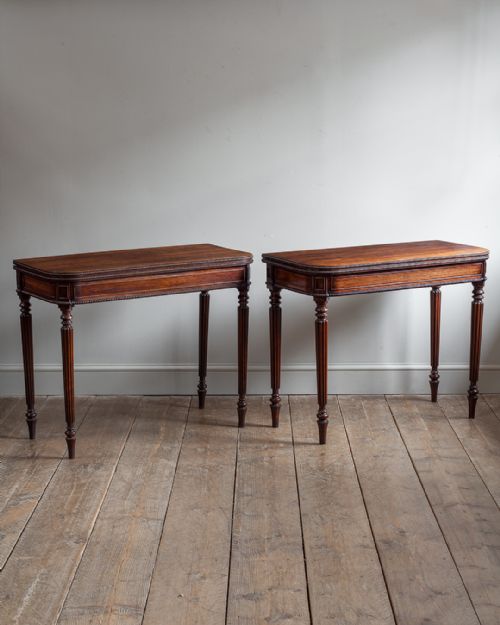
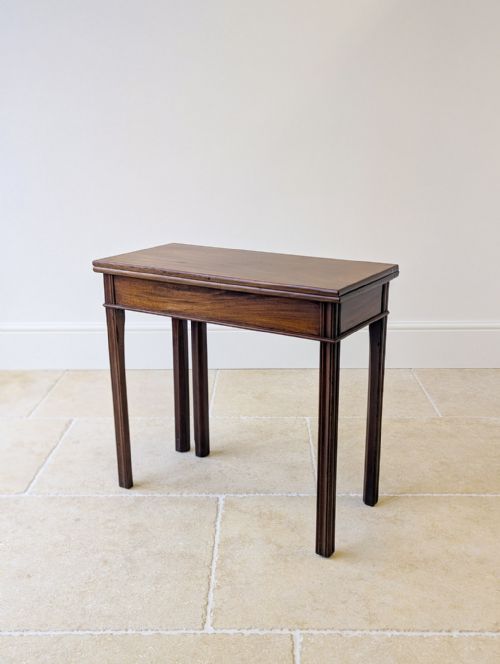
An antique wood card table offers a clever folding top that transforms a handsome console into a spacious surface for play.
Antique Wood Card Table
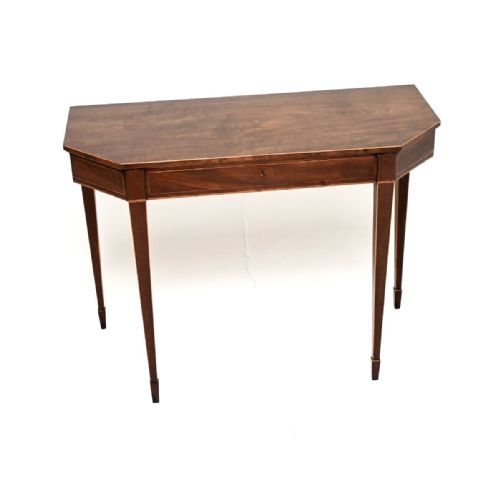
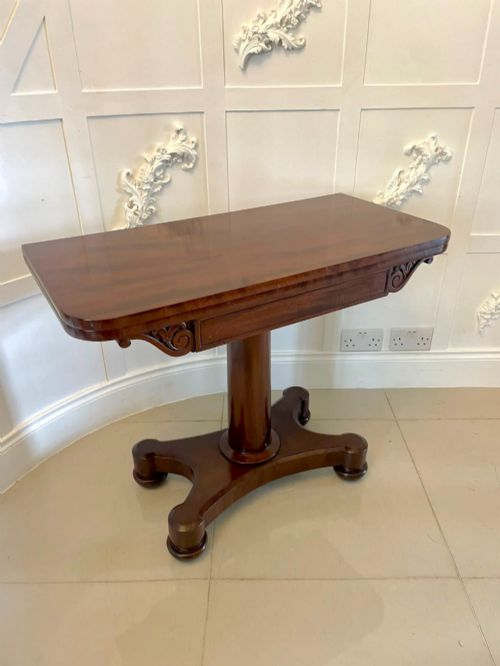
When you search for an antique wood card table, you encounter versatile folding furniture designed for social evenings and games throughout the Georgian, Regency, and Victorian eras. These pieces bridge the gap between formal parlour display and practical entertaining, functioning as console tables, side tables, or tea tables when closed.
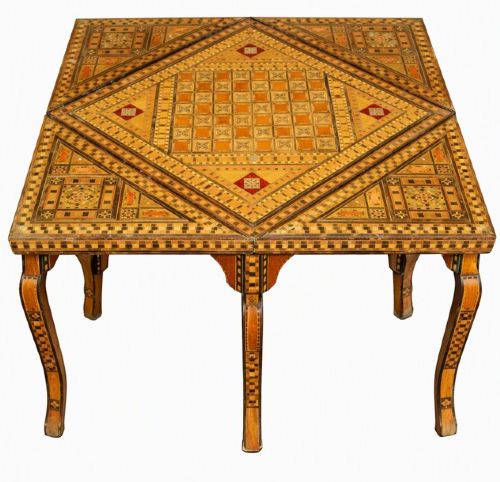
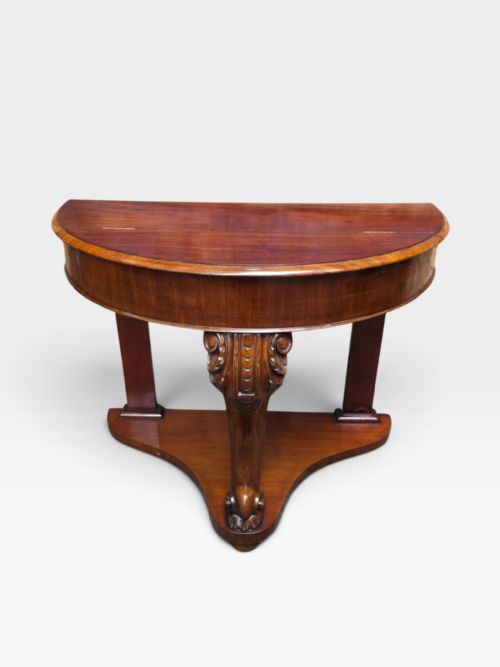
The most common formats on this page include the demi-lune or semi-circular folding top, the rectangular swivel-top table, and the sophisticated concertina-action frame. Many examples feature clever internal compartments for storing counters, cards, and dice beneath the folded leaves.
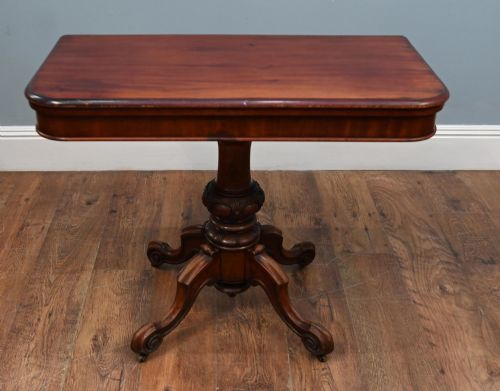
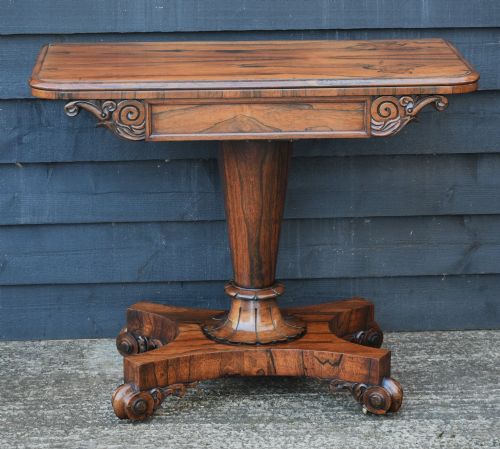
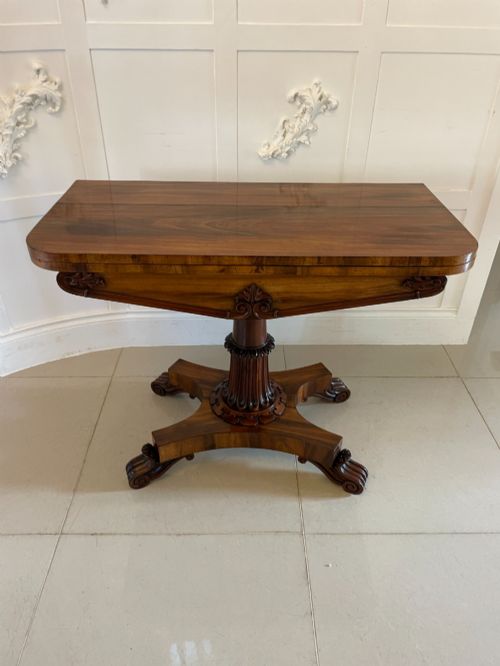
Originating primarily in British and continental workshops, these tables span the eighteenth, nineteenth, and early twentieth centuries. Surviving specimens show steady evolution from straight-legged Chippendale designs through curving Regency pedestals to heavily carved Victorian walnut bases.
Materials and construction
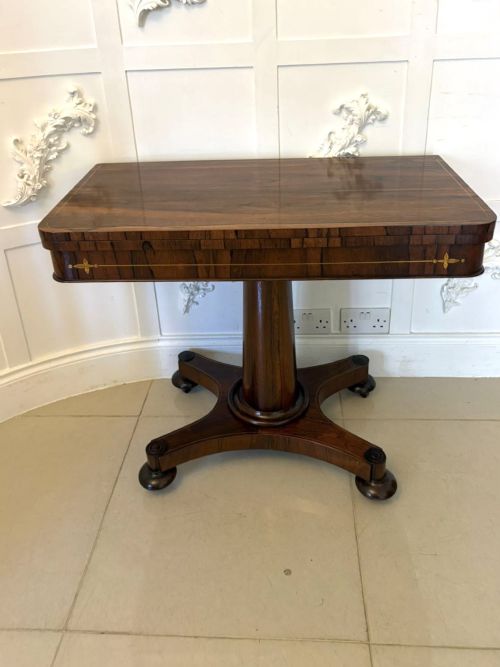
Cabinet makers utilised dense primary timbers such as mahogany, walnut, and rosewood for structural integrity and rich dark grain. Exotic veneers like satinwood, kingwood, and burr yew provided striking contrasting borders and geometric panels across the folding tops.
Brass inlay, ormolu mounts, and delicate stringing added refined metallic detail to Regency and Victorian surfaces. Frame construction relied on sturdy tenon joints, pivoting hinges, and sophisticated concertina mechanisms to support the heavy unfolding leaves safely.
The listings span multiple centuries, ranging from eighteenth-century George III mahogany pieces to Edwardian satinwood tables.
Distinctions in quality
The choice of timber grain defines the visual appeal, where highly figured burr walnut, matched rosewood veneers, and finely figured mahogany denote superior workshops. The crispness of hand-carved acanthus leaves, pedestal collars, and brass inlay reveals the skill of the artisan.
Mechanism engineering separates standard folding tables from exceptional ones, particularly the smooth action of concertina frames that maintain stability on all four legs when open. Superior examples retain original hinges, well-fitted interior compartments, and balanced proportions in both configurations.
George Bullock·James Shoolbred & Co.
The Antique Wood Card Table Glossary
- Demi-lune
- A half-moon shape used for table tops and frames. These tables sit flat against a wall when closed and unfold into a full circle for play.
- Concertina action
- An expanding frame mechanism that allows the table rails to pull outward with the opening top. This provides central support for the folded leaf without relying on a single swinging leg.
- Crossbanding
- A decorative border of veneer laid with the grain running perpendicular to the central panel. It frames the playing surface with a contrasting stripe of timber.
- Turnover top
- A hinged wooden surface that folds open to double the table area. The upper leaf often rests on a rotating swivel pivot or swings out to reveal a baize-lined interior.
- Ormolu
- Gilded bronze mounts applied to furniture edges and bases. Makers utilised these cast ornaments to highlight Regency and Victorian luxury styling.
Antique Wood Card Table: Frequently Asked Questions
How did people use antique card tables?
These tables served primarily for evening entertainment, hosting games like whist, quadrille, and chess in drawing rooms. During daytime hours, owners folded the tops down and placed them against parlour walls to hold lamps, tea caddies, or decorative ornaments.
When unexpected guests arrived for tea, the versatile top unfolded to create an extra serving surface. The concealed wells beneath the leaves kept gaming accessories tidy and out of sight when not in use.
How do I tell a Georgian card table from a Victorian one?
Georgian tables, particularly from the George III period, often display restrained elegance with straight or cabriole legs, delicate satinwood stringing, and rich mahogany surfaces. They favour crisp geometric lines and subtle brass accents.
Victorian pieces lean towards heavier proportions, featuring dark rosewood or burr walnut, elaborate pedestal bases, and carved basket motifs. The woodwork on nineteenth-century examples is typically more robust and heavily figured than earlier models.
Can I use an antique card table every day?
These tables adapt well to modern living as hallway consoles, desk surfaces, or lamp tables when kept in their closed position. The folding mechanisms remain sturdy enough for occasional opening, provided you handle the leaves with care and avoid placing excessive weight on the unsupported fold.
Placing the table away from direct sunlight and strong heat sources protects the fragile veneers and polished timber finishes. Regular dusting and occasional wax application maintain the historical sheen of the wood.