

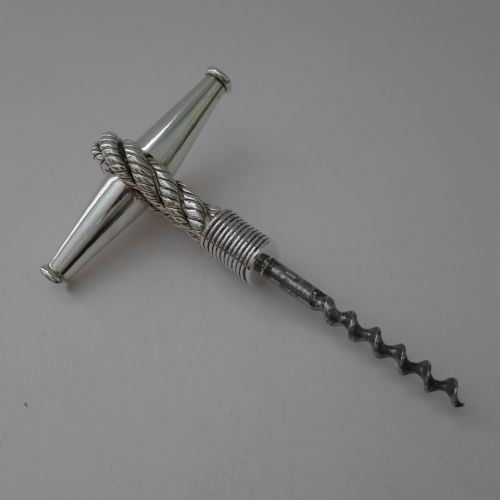
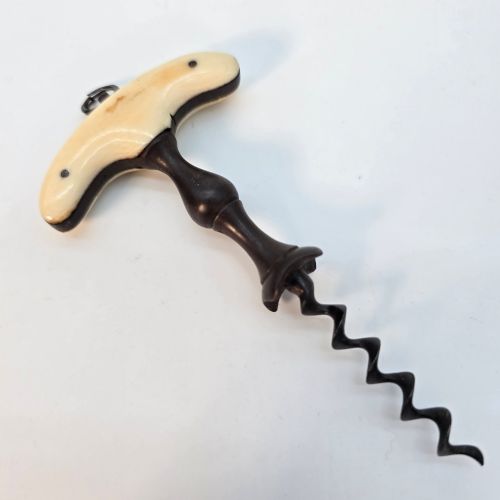


Antique Wine Opener
An antique wine opener is a small domestic instrument for drawing corks, offering a tactile connection to dining traditions of past centuries.
Antique Wine Opener
When you search for an antique wine opener, you encounter pocket devices, folding mechanisms and lever designs engineered to extract bottle closures with mechanical advantage. These objects form part of a broader category of barware and wine accessories designed for domestic hospitality.
The pieces you meet on this page span the Georgian, Regency, Victorian and Edwardian periods, alongside specific dates such as eighteen-ninety. They take the form of corkscrews, treen corkscrews and two-pillar variations.
Makers and inventors developed specific rack and barrel systems, such as the Thomason patent, to ease the extraction of corks from glass bottles. Such mechanical improvements distinguish domestic corkscrews from simple pocket folding variants.
How they were made
Makers utilised metals including steel, brass, bronze and sterling silver to forge the worms, frames and structural casings of these openers. Cast bronze and carved wood or bone provided durable housings and decorative handles.
Treen examples demonstrate hand-carving techniques applied to organic materials like rosewood and bone, frequently paired with integrated bristle brushes. Metal components involve casting, turning and threading to create operating mechanisms like the wide rack and folding joints.
Antique Wine Opener Retail Price Guide 2026
Typical asking prices for wine opener among the pieces listed under this phrase on Sellingantiques today, from the lower quarter to the upper quarter. They describe what is for sale here now, not the wider market.
Periods represented in the inventory span the Georgian, Regency, Victorian and Edwardian eras.
What varies in quality
Quality rests upon the precision of the mechanical engineering, visible in the smoothness of the rack action and the integrity of the worm. Patented designs by makers such as Thomason represent a higher degree of ingenuity than unmarked basic screws.
The choice of materials and the finesse of the hand-carving on treen or bone handles distinguish utilitarian pieces from decorative examples. Preservation of original finishes, such as bronzed patination or sterling silver hallmarks, determines the standing of an individual piece.
The Antique Wine Opener Glossary
- Corkscrew
- A domestic tool consisting of a helical metal worm attached to a handle, used for pulling corks from wine bottles.
- Treen
- Small domestic wooden objects made by turning or carving. This term applies to pocket corkscrews carved from dense woods like rosewood.
- Worm
- The spiral metal screw that pierces the cork. In older pieces, this is hand-forged from steel.
- Rack
- A toothed metal bar used in mechanical corkscrews to pull the worm upward in a straight line.
- Thomason Patent
- A double-action mechanism invented by Samuel Thomason that extracts a cork continuously without reversing the turn.
Antique Wine Opener: Frequently Asked Questions
How do I date an old corkscrew?
Dating relies on mechanical patents, material choices, and prevailing aesthetic styles. Georgian and Regency pieces often feature heavy steel framing and turned bone handles, whereas later Edwardian examples introduce folding mechanisms in sterling silver.
Examining the construction of the worm and any stamped patent marks helps narrow down the manufacturing window. Comparing the piece against known historical types provides a reliable chronological frame.
What is a Thomason patent corkscrew?
A Thomason patent corkscrew employs a double-action mechanism with a rack and barrel. Turning the handle drives the worm into the cork and then lifts the cork straight out without requiring a pull from the user.
These pieces represent significant engineering advancements in wine accessories. Their complex brass, bronze, and steel components demand careful handling during operation.
How were treen corkscrews used?
Treen corkscrews were portable wine openers housed within carved wooden protective sheaths or handles. Users unscrewed the wooden cover to reveal the steel worm for opening bottles at the dining table or while travelling.
These carved wooden pieces combine practical barware utility with folk art craftsmanship. Their survival depends heavily on the condition of the wooden threads securing the sheath.
Why do some corkscrews have brushes?
The small bristle brush attached to the side or top of certain Georgian and Victorian corkscrews served to sweep away dust, cork debris, or sealing wax fragments from the bottle neck before pouring.
This practical addition keeps loose particles out of the wine glass. The bristles are typically set into bone or metal mounts alongside the main operating frame.
Are antique corkscrews still usable?
Many antique corkscrews remain mechanically sound and capable of drawing modern corks. Solid steel worms and robust brass racks distribute stress effectively during extraction.
However, delicate treen handles or fragile folding silver joints require cautious handling to prevent structural strain. Collectors often reserve older mechanical pieces for display rather than daily service.