

Antique Windsor Seating
Antique windsor seating combines sturdy vernacular construction with comfortable timber seats, offering enduring utility for everyday domestic life.
Antique Windsor Seating
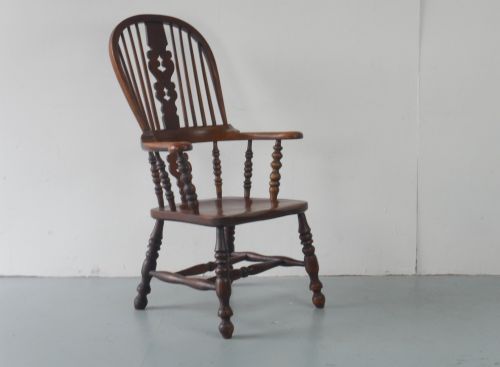
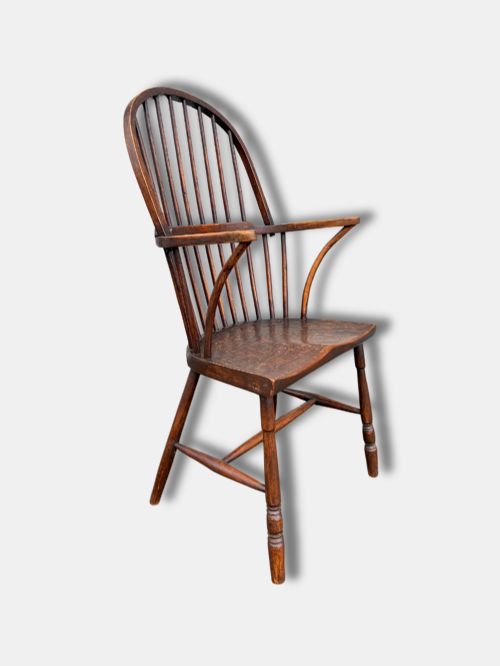
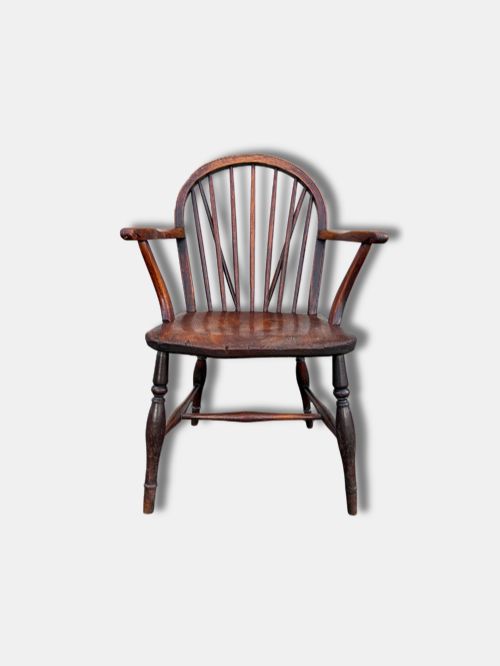
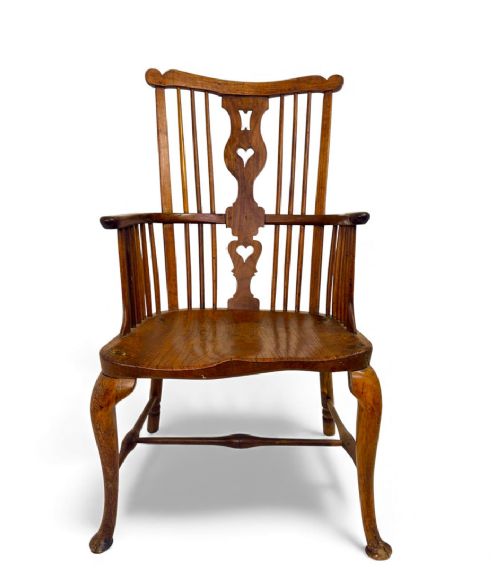
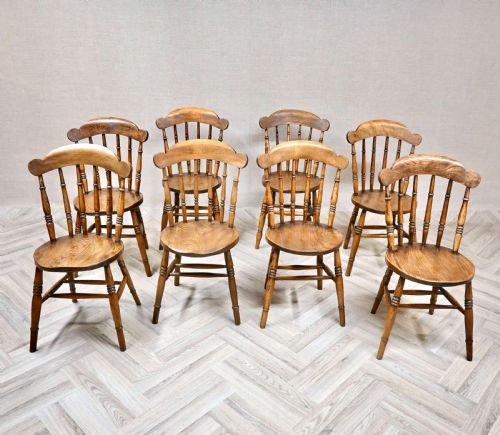
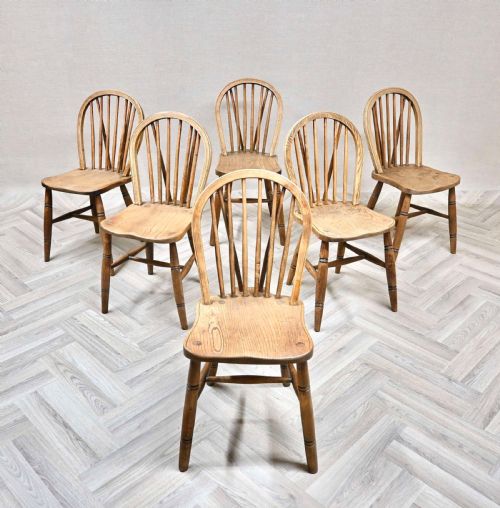
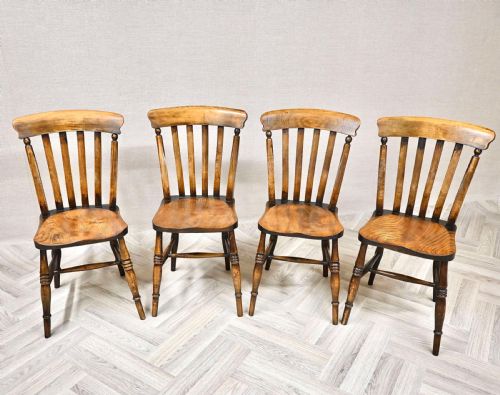
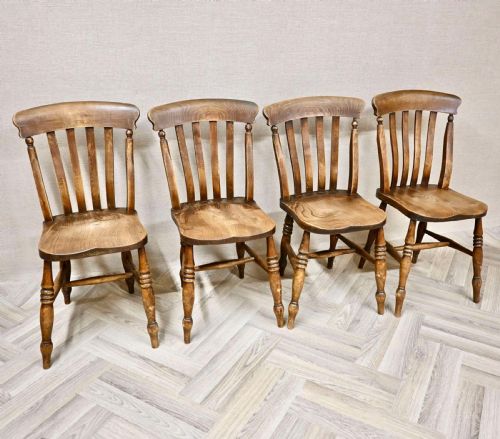
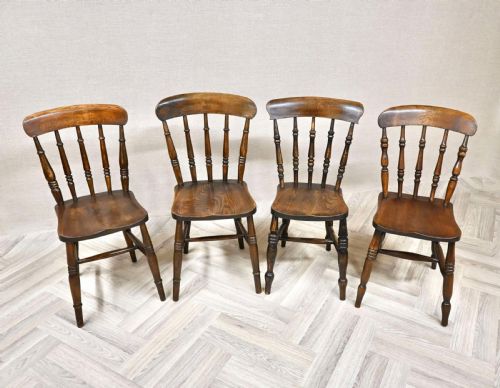
Antique windsor seating encompasses armchairs, dining chairs, stools, children's armchairs, and benches, spanning periods from the 18th century through the Victorian era and into the 20th century. These pieces originate primarily from English country traditions, embracing vernacular, farmhouse, and primitive styles.
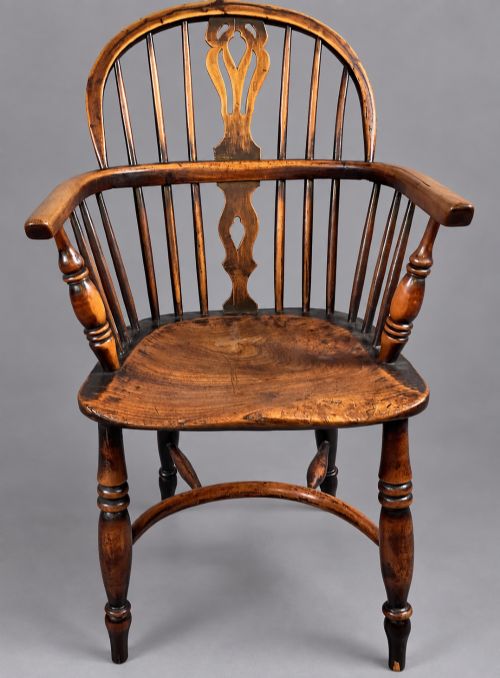
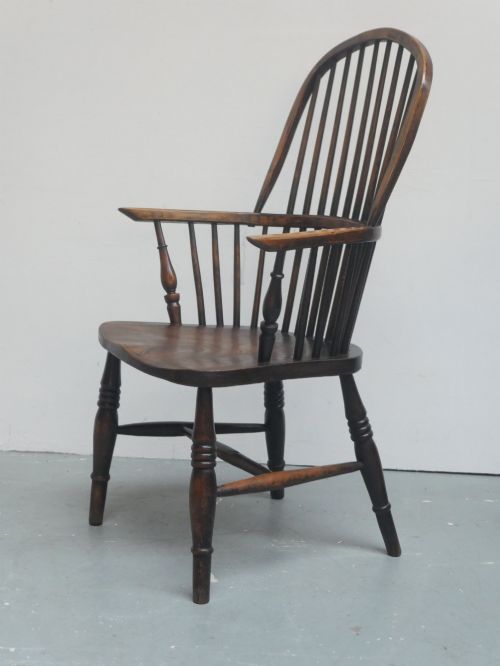
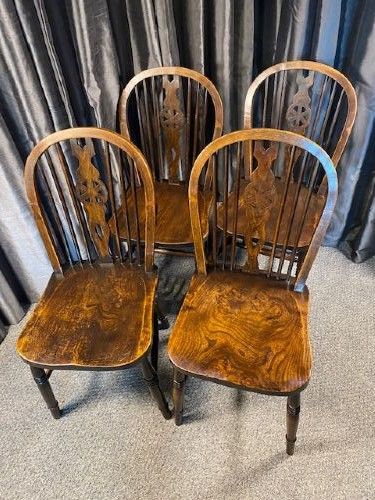
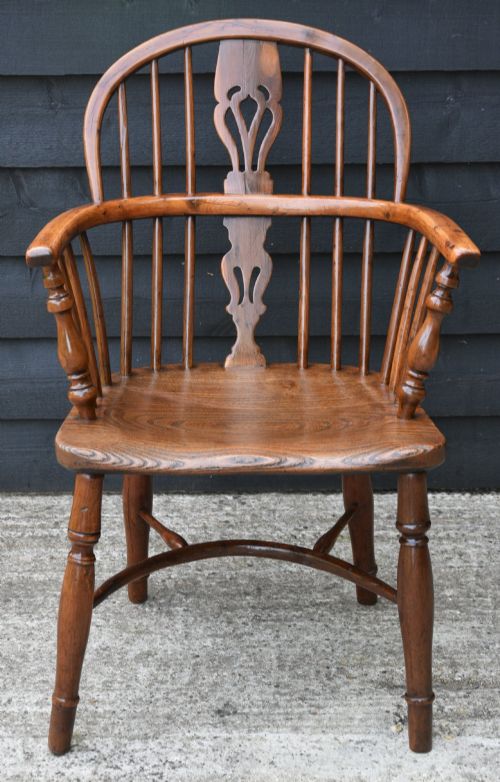
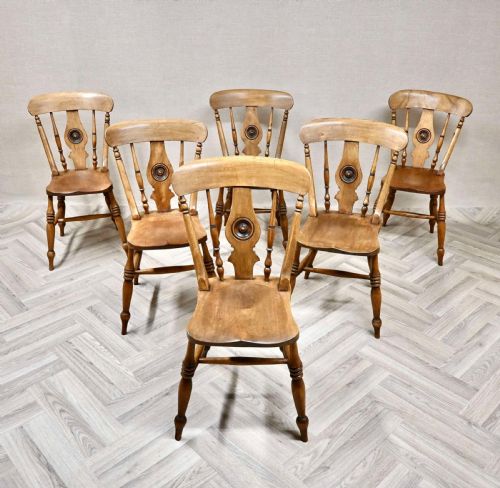
The most common examples on this page are kitchen and dining chairs, alongside high-back and low-back armchairs. Makers utilised regional designs, ranging from comb backs and hoop backs to wheelbacks and lathbacks, tailored for domestic and commercial utility.
Materials and Construction
Makers built antique windsor seating using a combination of native timbers, frequently pairing sturdy elm for the carved seats with ash, beech, or oak for the spindles, legs, and bentwood hoops. Yew wood also appears in finer regional armchairs, prized for its distinctive grain and resilience.
Construction relied on traditional joinery where individual spindles and legs are wedged directly into bored seats. Steam bending shaped the continuous hoops and bow backs, creating a resilient skeletal frame that absorbed daily stress.
Listings feature items spanning the 18th century, Georgian era, Victorian period, and early 20th century, constructed from elm, ash, beech, oak, and yew.
Craftsmanship and Proportion
Quality in these chairs rests upon the selection of timber and the harmony of proportion between the turned components and the sculpted seat. Superior examples display carefully contoured elm seats with generous proportions and balanced spindle turning.
Wear and replacement parts influence the integrity of older seating. Examples retaining their original timber surface, balanced stance, and tight joints represent the higher tier of surviving vernacular craftsmanship.
The Antique Windsor Seating Glossary
- Comb back
- A Windsor chair design where the vertical spindles extend upward to support a horizontal headrest piece resembling a traditional hair comb.
- Hoop back
- A continuous bentwood bow that forms both the armrests and the upper backrest of the chair in a single curved arc.
- Wheelback
- A chair back featuring a pierced wooden splat carved in the decorative shape of a carriage wheel.
- Smokers bow
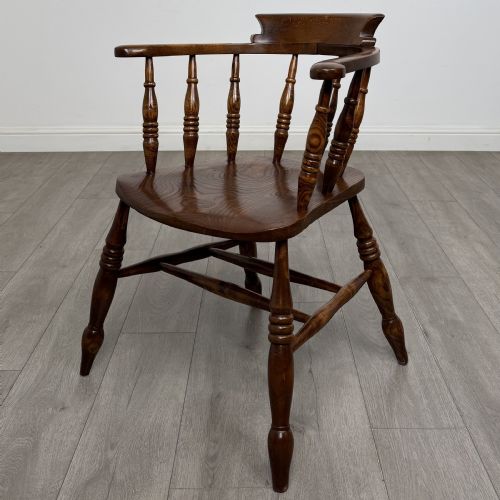
- A low-backed armchair, also known as a captain's chair, commonly found in taverns and farmhouse parlours.
- Vernacular
- Objects designed by local craftsmen using regional traditions and native materials rather than adhering to formal academic styles.
Antique Windsor Seating: Frequently Asked Questions
How do I date an antique Windsor chair?
Dating relies on examining the joinery, timber selection, and overall style of the backrest. Earlier 18th-century pieces often feature comb backs and heavy elm seats, while Victorian examples introduce wheelbacks and steam-bent hoops.
Undamaged tool marks and the method of wedging the legs through the seat give further clues to the age of manufacture.
What woods were used for Windsor seating?
Traditional makers selected native timbers based on their specific structural properties. Elm provided a tough, anti-splitting surface for the solid wooden seat.
Ash, beech, and oak formed the rigid spindles and undercarriages, while yew wood was reserved for high-status regional armchairs due to its decorative grain.
Are Windsor chairs comfortable for daily use?
The saddle-shaped wooden seats are carved to distribute weight evenly, making them surprisingly comfortable for dining or desk work. Adding loose squab cushions provides extra padding for extended sitting.
Their robust timber construction ensures they easily withstand the demands of everyday family life.
How do I care for antique wooden chairs?
Keep wooden seating away from direct heat sources and drastic humidity changes to prevent the timbers from drying out and splitting. Apply occasional applications of beeswax to nourish the historic surface.
Check the undercarriage wedging periodically to ensure the legs remain secure within the seat.