
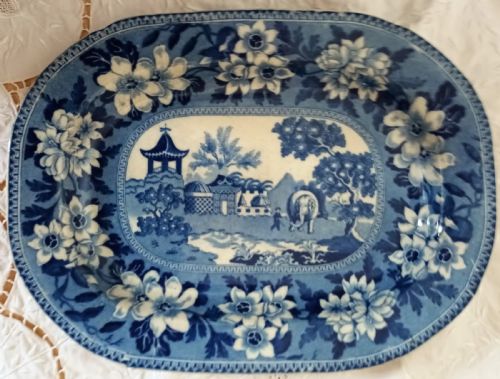


Antique Willow Pattern Dish
These antique willow pattern dish examples bring rich blue and white transfer printing to the table, offering classic narrative scenes that collectors prize.
Antique Willow Pattern Dish
An antique willow pattern dish represents a traditional ceramic form decorated with cobalt blue transfer print landscapes, most commonly found across nineteenth century earthenware productions. These pieces span Georgian and Victorian periods, capturing the enduring appeal of blue and white decoration on domestic tableware.
The selection here includes various forms such as plates, serving platters, and serving dishes, showing how potters applied scenic motifs to everyday dining vessels. Buyers encountering this phrase will find items ranging from standard tableware to larger platters featuring detailed Chinoiserie and related transfer printed scenes.
How they were made
Potters produced these ceramics using earthenware bodies, pearlware, and tin glaze, applying cobalt pigment to create the distinct blue designs before firing. The transfer printing technique allowed workshops to transfer complex engraved patterns onto ceramic surfaces with remarkable consistency.
A protective ceramic glaze sealed the pigment beneath a glossy finish, protecting the underlying transfer print from daily wear during centuries of use.
Listings feature earthenware, pearlware, and tin glaze materials spanning eighteenth century, Georgian, and Victorian periods.
What varies in quality
Quality depends upon the crispness of the cobalt pigment transfer and the registration of the engraved design across the ceramic surface. Finer examples display deep, uniform blue tones without blurring, alongside well-potted earthenware bodies that show careful attention to form.
The complexity of the border decoration and the overall preservation of the glaze further distinguish standard production items from superior pieces.
John Rogers & Son·Spode
The Antique Willow Pattern Dish Glossary
- Transfer printing
- A method of decorating ceramics by applying an engraved paper design coated in pigment onto a biscuit or glazed surface. This technique revolutionised pottery production in the eighteenth and nineteenth centuries.
- Pearlware
- A refined earthenware developed in the late eighteenth century featuring a subtle bluish glaze that pooled slightly in crevices. It bridged the gap between creamware and later white earthenware.
- Tin glaze
- An opaque white glaze containing tin oxide, used on early pottery to provide a smooth surface for painting or printing. It creates a characteristic soft finish.
- Chinoiserie
- European artistic style reflecting Chinese motifs and landscapes, frequently adapted by British potters for blue and white tableware. It dominated decorative arts during the Georgian period.
Antique Willow Pattern Dish: Frequently Asked Questions
What is an antique willow pattern dish?
An antique willow pattern dish is a ceramic plate or platter decorated with blue and white transfer printed scenes inspired by traditional Chinese imagery. These items served functional roles in historic dining rooms.
Today, collectors value them for their historical manufacturing techniques and decorative blue imagery.
How do I date these dishes?
Dating relies on examining the ceramic body, such as distinguishing early pearlware from later nineteenth century earthenware. The style of the transfer print and border also provides chronological clues.
Potters marks on the reverse, when present, help narrow down the period of manufacture.
Were these dishes used daily?
Many of these pieces were manufactured for everyday dining in Georgian and Victorian households. Their robust earthenware bodies and protective glazes suited them to regular meals.
Larger serving platters and tureens handled communal food at the table before becoming decorative display items.
How should I clean blue and white ceramics?
Cleaning requires gentle washing in warm water with mild soap using a soft cloth. Harsh abrasives can damage the historic glaze and soften the transfer print.
Avoid soaking antique earthenware for extended periods to protect the porous ceramic body beneath the glaze.