
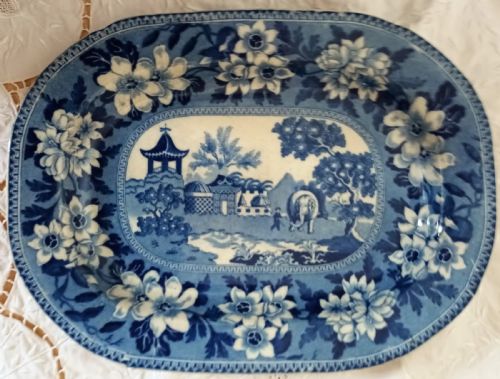


Antique Willow Pattern Ceramic
These antique willow pattern ceramic pieces bring iconic blue and white landscapes into the home.
Antique Willow Pattern Ceramic
When you search for antique willow pattern ceramic, you encounter blue and white transfer printed wares spanning the eighteenth, nineteenth, and early twentieth centuries. The selection on this page includes plates, serving platters, tureens, ladles, and chargers produced across Georgian and Victorian periods.
You are most likely to meet Victorian willow pattern plates alongside broader blue and white transfer printed earthenware from the Georgian era. Makers such as Spode and John Rogers & Son contributed to this tradition, alongside pearlware chargers and tin glazed examples.
How They Were Made
Potters shaped earthenware, pearlware, and tin glazed bodies before applying cobalt pigment to create the distinctive blue designs. Transfer printing allowed workshops to transfer intricate scenes from engraved copper plates directly onto the ceramic surface.
A protective ceramic glaze or pearlware glaze was then applied over the transfer print before firing in the kiln. This locked the cobalt pigment beneath the glassy surface, ensuring durability and depth in the final blue and white decoration.
Bird claws hide secretly on the reverse of certain nineteenth century soup ladles.
What Varies in Quality
The clarity and registration of the cobalt pigment transfer printing set better examples apart from blurred or smudged production. Crisp lines in complex pictorial scenes indicate careful engraving and skilled application at the pottery.
The choice of body material also influences character, with early pearlware and tin glazed chargers showing subtle surface variations compared to later Victorian earthenware. Completeness of forms, such as retention of matching ladles with tureens, defines the standard.
John Rogers & Son·Spode·Caughley
The Antique Willow Pattern Ceramic Glossary
- Pearlware
- A refined earthenware developed in the late eighteenth century featuring a subtle bluish glaze that pooled in recesses to mimic Chinese porcelain.
- Transfer Printing
- A technique using an engraved copper plate to transfer inked patterns onto paper and then onto ceramic biscuit before glazing.
- Tin Glaze
- An opaque white pottery glaze containing tin oxide that accepts painted or printed decoration directly on the surface.
- Cobalt Pigment
- A metallic colourant used beneath the glaze to produce the deep blue tones characteristic of traditional oriental and domestic landscape scenes.
- Tureen
- A deep covered serving bowl designed for soups or stews, frequently accompanied by matching ladles and platters.
Antique Willow Pattern Ceramic: Frequently Asked Questions
What is antique willow pattern ceramic?
Antique willow pattern ceramic refers to blue and white transfer printed earthenware, pearlware, and pottery produced during the Georgian and Victorian periods.
These domestic tablewares depict traditional oriental landscapes and architectural motifs derived from Chinese porcelain designs.
How do I date these ceramics?
Dating relies on body material, such as early pearlware versus later Victorian earthenware, alongside potting techniques and maker marks.
Stylistic shifts between eighteenth century tin glazed chargers and nineteenth century transfer printed plates also help establish age.
Can I use these plates daily?
While durable, antique blue and white ceramics benefit from gentle hand washing rather than modern dishwasher cycles.
Careful handling preserves the historic glaze and prevents crazing or staining on pieces dating back to the Georgian era.
What causes the blue colour variation?
Variations in the blue colour arise from the purity of the cobalt pigment and the thickness of the surrounding glaze layer.
Different kilns and firing temperatures across eighteenth and nineteenth century potteries also created distinct shades of blue.
Are all blue and white patterns willow?
Not all blue and white transfer printed wares feature the canonical willow pattern, as potteries produced diverse pictorial designs.
Examples include named topographical scenes, animal subjects, and botanical motifs alongside standard landscape compositions.