






Antique Wildlife Landscape Painting
These antique wildlife landscape painting selections combine natural environments with animals, offering a direct view into historical artistic portrayals of nature.
Antique Wildlife Landscape Painting
When you search for an antique wildlife landscape painting, you encounter works spanning the eighteenth, nineteenth, and twentieth centuries. These pieces integrate natural scenery with depictions of animals, birds, and sporting subjects.
The selections on this page range from Victorian sporting art and nineteenth-century realism to Dutch and Flemish influenced compositions. You will find oil paintings, watercolours, pastels, and gouache works created across various European and British traditions.
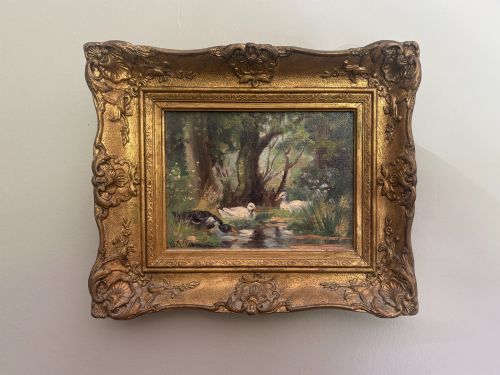
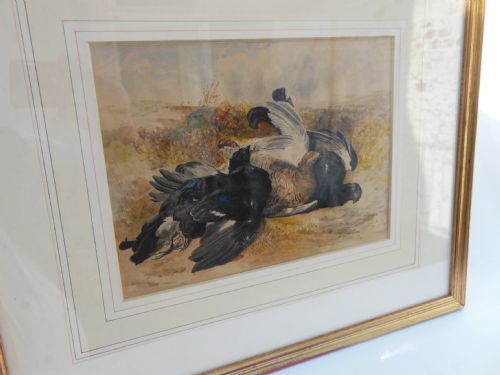
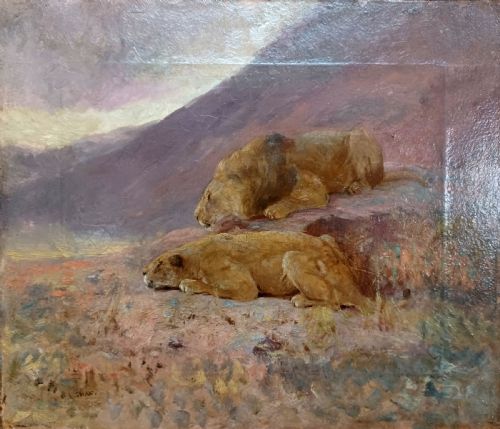
Subjects vary from deer on moorlands and foxes in country settings to exotic birds, ducks on river banks, and big cats stalking prey. Formats range from large wall art to smaller framed watercolours on paper and canvas.
Materials and techniques
Artists utilised oil on canvas, pastel, and gouache applied to canvas or paper as the primary mediums for these works. Canvases and papers are typically housed within traditional wooden frames, often accented with gilt or gilded wood.
The techniques reflect distinct periods, from eighteenth-century old master animal painting styles to nineteenth-century naturalism and twentieth-century pastoral views. Pigments were worked onto prepared surfaces to capture the varied textures of animal pelts, plumage, and surrounding landscapes.
Listings feature works spanning the eighteenth, nineteenth, and twentieth centuries, executed in oil, watercolour, pastel, and gouache on canvas and paper.
What varies in quality
Quality rests upon the handling of anatomy, light, and the integration of the animal subject within its landscape. Superior works demonstrate precise observation in the rendering of creatures, whether birds in flight or stags in highland settings.
The calibre of framing and the preservation of the original canvas, paper, and pigment layers also distinguish the pieces. Finer examples maintain the clarity of brushwork or pastel application without excessive deterioration.
Joseph Knight·George Armfield·Marmaduke Cradock·Jacob Bogdani·Cuthbert Edmund Swan·Constant Ludovic Artz·Godfrey Douglas Giles·William Crampton·Stephen Elmer
The Antique Wildlife Landscape Painting Glossary
- Oil on canvas
- Pigments bound in a drying oil, usually linseed, applied to a stretched fabric support. This medium allowed artists to achieve rich colour depths and subtle tonal gradations in landscapes.
- Gouache
- An opaque water-based paint that dries to a matte finish, frequently combined with pastel in nineteenth-century works. It provides solid areas of colour and highlights.
- Victorian Sporting Art
- A genre popular during the nineteenth century focusing on hunting scenes, game, and rural pursuits. These works often document countryside traditions and animal behaviour.
- Naturalism
- An artistic movement aiming for a realistic and unidealised depiction of the natural world. Artists working in this style observed wildlife and environments with botanical and zoological accuracy.
Antique Wildlife Landscape Painting: Frequently Asked Questions
How do I care for an oil painting?
Keep the canvas away from direct sunlight and steady temperature fluctuations to prevent cracking of the paint layer. Dust the surface gently with a soft, dry brush without applying pressure.
Avoid using liquid cleaners or water on the canvas or the gilt wood frame. Professional conservation is recommended if structural repairs are needed.
What periods do these paintings cover?
The works span from the eighteenth century through the nineteenth and twentieth centuries. Styles range from Baroque and Dutch influences to Victorian naturalism and mid-century watercolours.
Dates are indicated by the recorded periods of the artists and the stylistic traits of each composition.
Are watercolours framed differently from oils?
Watercolour and pastel works on paper require glass protection to shield the delicate pigments from moisture and atmospheric dust. They are typically mounted behind paper mats within wooden frames.
Oil paintings on canvas are exposed directly to the air, relying on the varnish layer for protection rather than glass.
How can I tell a pastel from an oil painting?
Pastels and gouache have a chalky, matte appearance and are executed on paper support, necessitating protective glass. Oil paintings exhibit a textured brushwork on canvas with a varying degree of surface sheen.
Examining the support material under magnification reveals whether the medium rests on woven fabric or paper.