

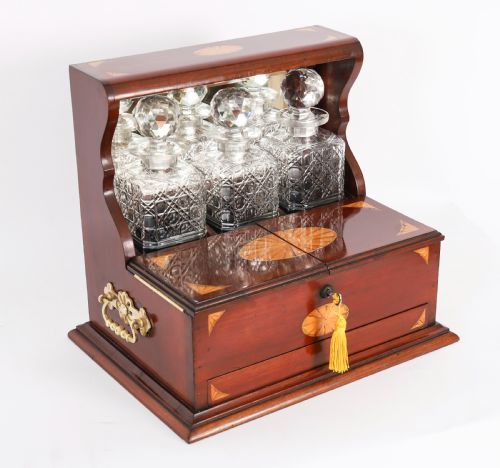


Antique Whisky Decanter Box
An antique whisky decanter box secures spirits behind wood and brass, offering the heavy-set utility of a traditional drinking cabinet.
Antique Whisky Decanter Box
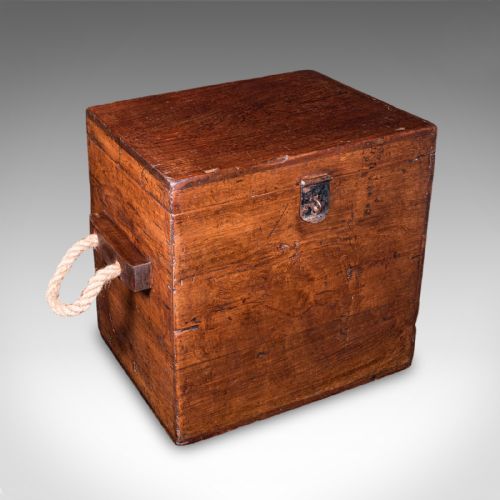
An antique whisky decanter box gathers crystal bottles within a fitted wooden case, functioning either as a portable chest or a locking tantalus. These pieces range from George III and Georgian examples to Victorian and Edwardian iterations, encompassing styles such as Victorian Gothic Revival.
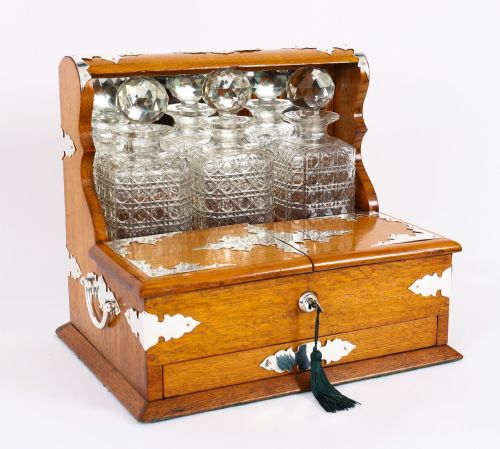
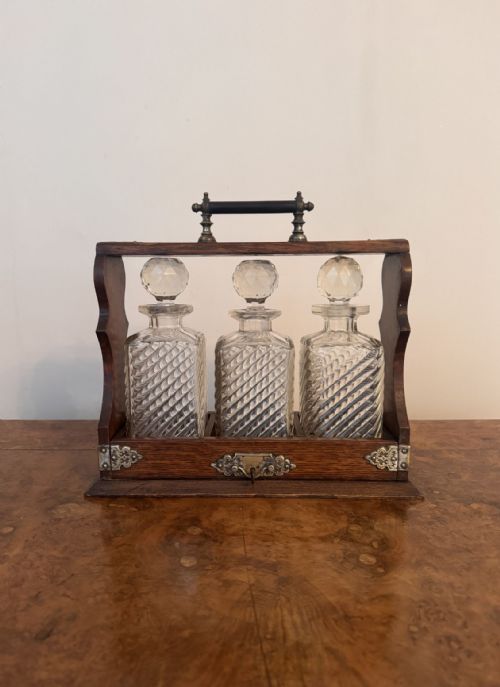
The version most commonly encountered on this page is the Victorian oak three-bottle tantalus or games compendium, often reinforced with brass mounts. Buyers also find walnut, mahogany, satinwood, blonde oak, and coromandel boxes housing cut glass and cut crystal decanters alongside spirit storage.
Forms vary from single-bottle oak cases to large three-bottle dry bars integrating games equipment. English manufacturing traditions dominate the selection, spanning periods from the late eighteenth century through to nineteen hundred.
How they were made
Carpenters constructed the primary frames from hardwoods such as oak, walnut, mahogany, satinwood, and coromandel, frequently incorporating inlaid veneers. Brass mounts, hinges, and lockplates reinforced the corners and edges of the wooden housings.
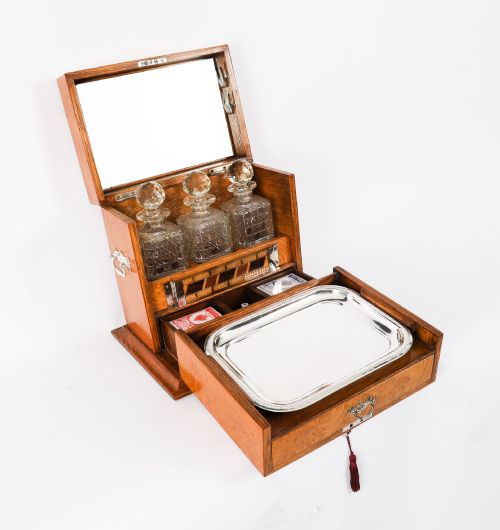
Makers fitted the interiors with mirror panels and partitioned slots designed to secure cut glass and cut crystal decanters safely. Silver plated hardware often completed the locking mechanisms and handles of the later Victorian and Edwardian examples.
Antique Whisky Decanter Box Retail Price Guide 2026
Typical asking prices for whisky decanter box among the pieces listed under this phrase on Sellingantiques today, from the lower quarter to the upper quarter. They describe what is for sale here now, not the wider market.
Objects include single and three-bottle tantalus sets, dry bars, and integrated games compendiums with cut crystal.
What varies in quality
The selection of timber grain and the precision of the woodwork establish the foundational tier of a piece. Finer examples display figured or blonde oak, satinwood inlay, and substantial coromandel housings rather than plain construction.
Integrated mechanisms, such as locking tantalus bars and multi-use games compendiums, separate standard storage chests from elaborate social cabinets. The clarity, cut, and completeness of the matching crystal decanters further differentiate individual pieces.
The Antique Whisky Decanter Box Glossary
- Tantalus
- A locking drink cabinet that restrains decanter stoppers until a key releases the security bar. This mechanism keeps contents secure while displaying the cut crystal within.
- Decanter box
- A wood-cased container fitted internally to hold glass spirit bottles safely during transport or stationary use. These boxes frequently feature brass carrying handles.
- Games compendium
- A combination box housing gaming equipment alongside spirit decanters and glasses. Such pieces unite social leisure and barware in a single oak or walnut case.
- Silver plate
- A thin layer of silver fused to a base metal, commonly utilised for the handles, lockplates, and locking arms of Edwardian and Victorian frames.
- Coromandel
- A dense, heavy tropical timber with dark figuring, selected by makers for high-status nineteenth-century drinks boxes.
Antique Whisky Decanter Box: Frequently Asked Questions
What is a tantalus?
A tantalus is a locking bar frame that prevents the removal of decanter stoppers without a key. It displays the bottles while keeping the contents secure.
Most examples on this page date from the Victorian and Edwardian periods, constructed in oak or walnut with brass mounts.
How do I date a decanter box?
Dating relies on timber choices, brass hardware styles, and general cabinet construction methods. Georgian pieces tend to show mahogany frames, while Victorian and Edwardian versions favour oak, walnut, and silver-plated fittings.
Listing details such as a George III attribution or a nineteen-hundred manufacture date help confirm the exact era.
Can I travel with these boxes?
While early Georgian maritime boxes were built for transit, most nineteenth-century tantalus frames and dry bars function as stationary furniture. The heavy glass decanters and locking mechanisms are designed for home display rather than frequent travel.
Moving a loaded box requires securing the internal bottles to prevent glass breakage.
What fits inside a games compendium?
These combination pieces incorporate storage compartments for playing cards, boards, and gaming pieces alongside three cut crystal decanters. The internal layout merges barware storage with social entertainment facilities.
Such multi-use boxes typically appear in figured oak, blonde oak, or satinwood from the late nineteenth century.