

Antique Wellington Cabinet
An antique wellington cabinet offers slim proportions and a locking side stile, making it a practical choice for storing papers or jewellery.
Antique Wellington Cabinet
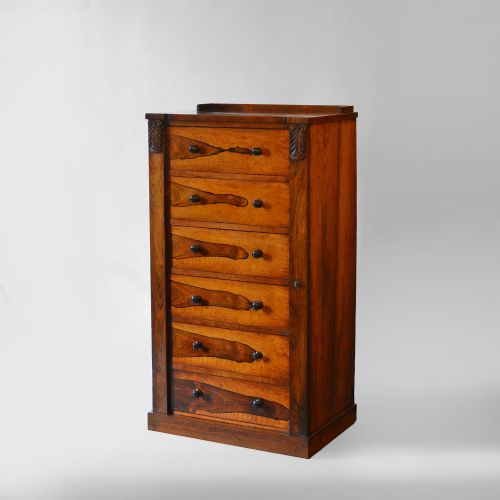
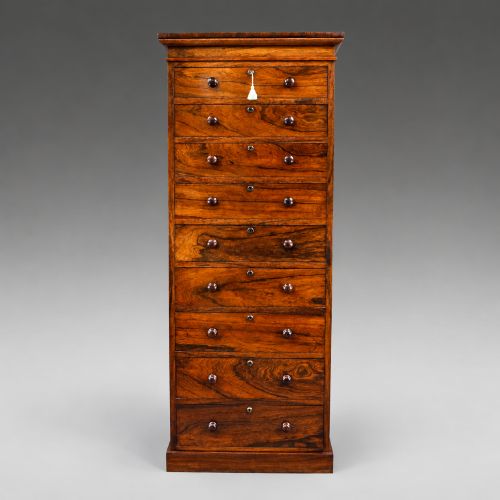
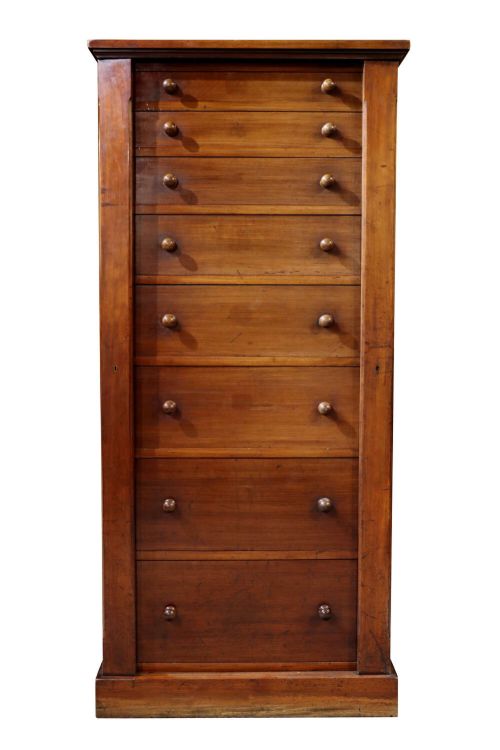
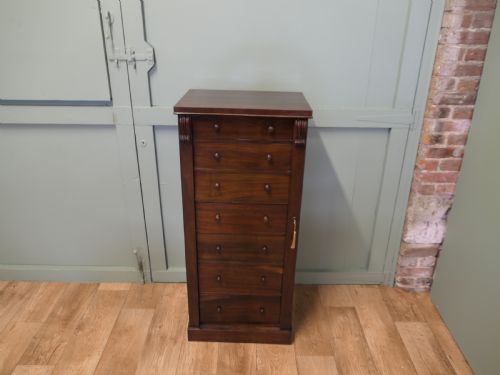
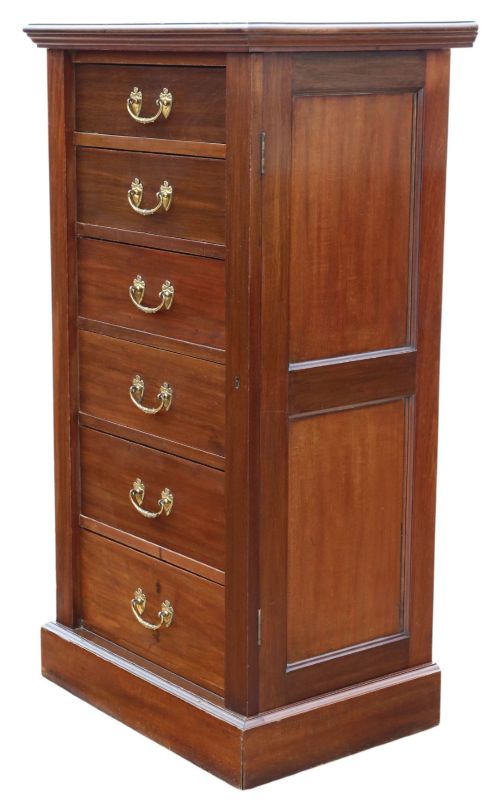
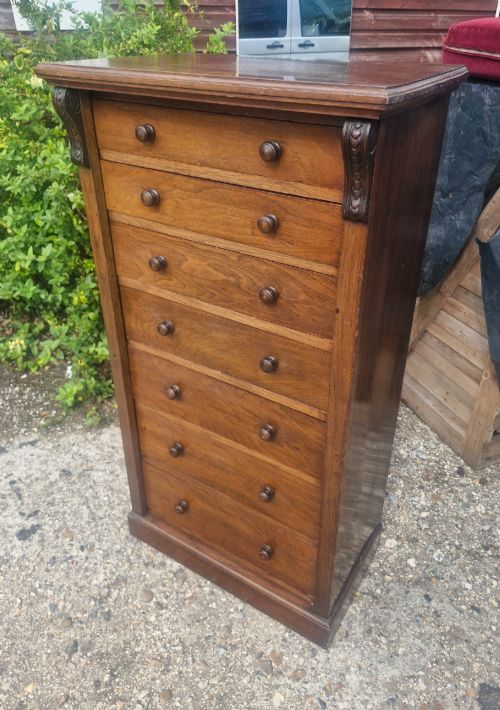
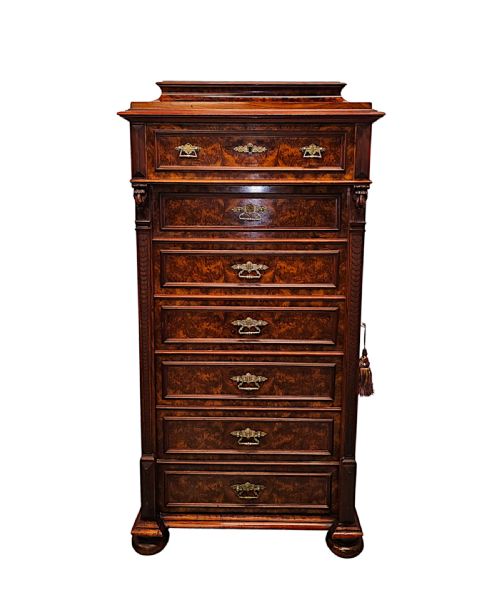
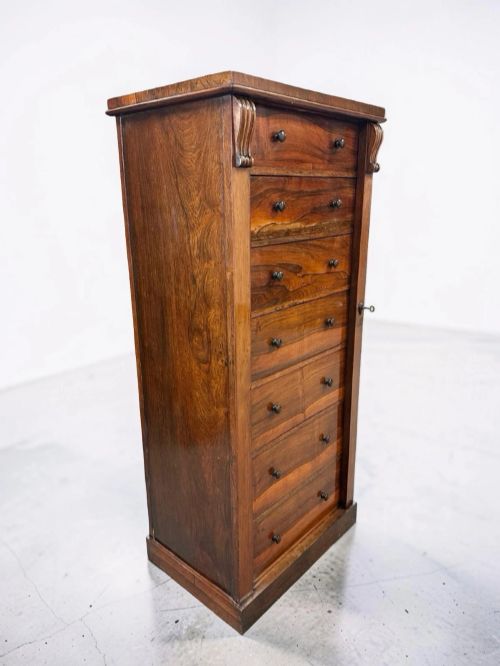
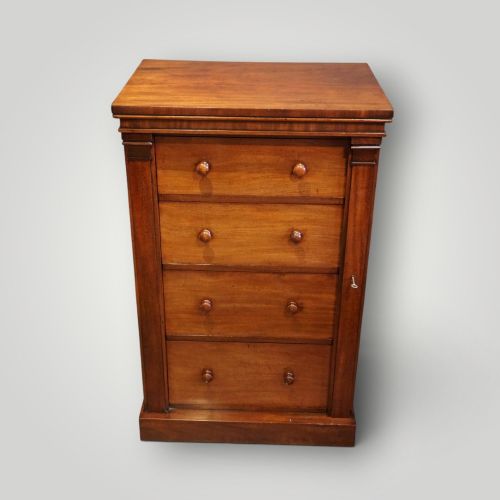
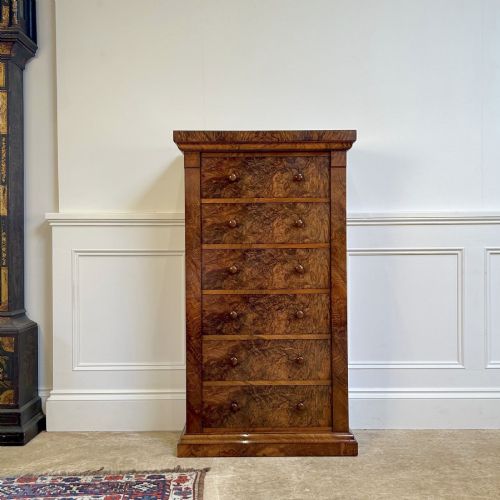
When searching for an antique wellington cabinet, buyers encounter tall, narrow chests characterised by multiple drawers secured behind a hinged locking pilaster on one side. These pieces typically originate from the nineteenth century, spanning the Regency and Victorian periods through to around nineteen hundred.
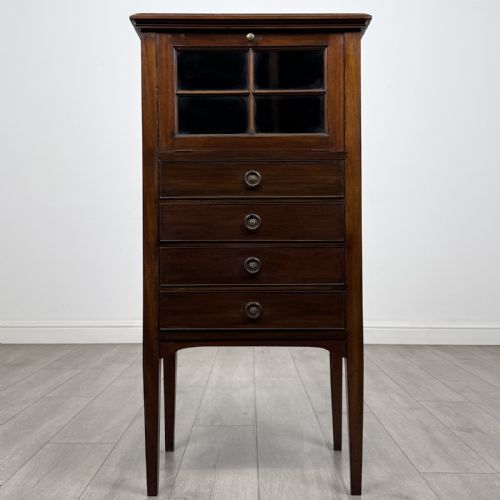
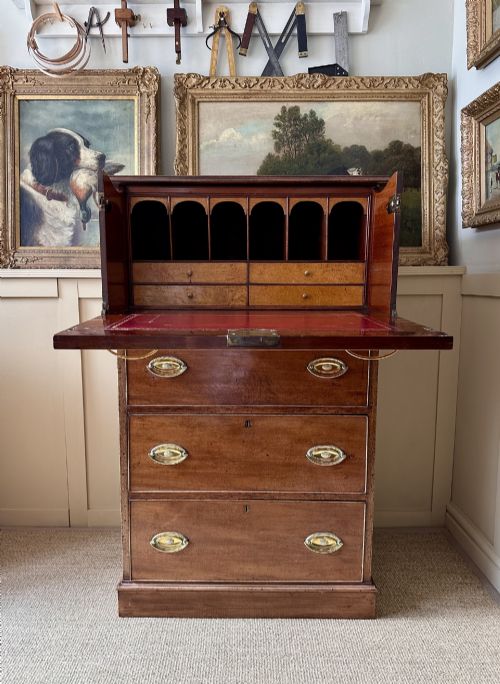
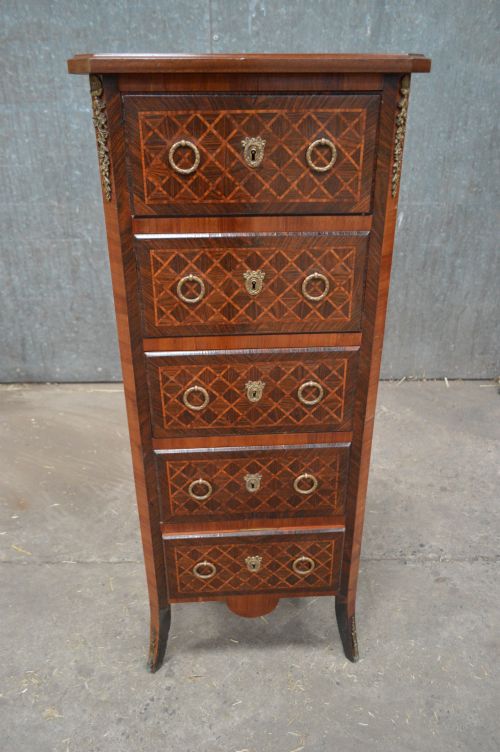
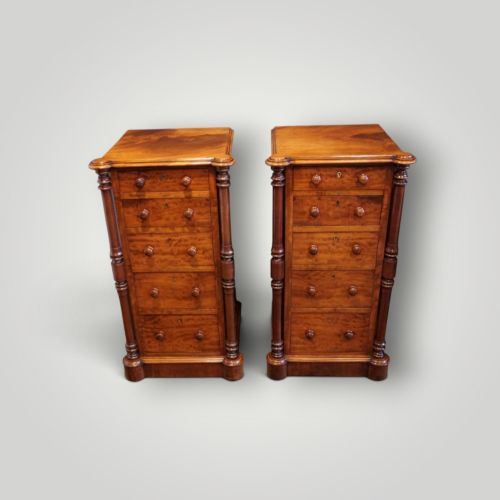
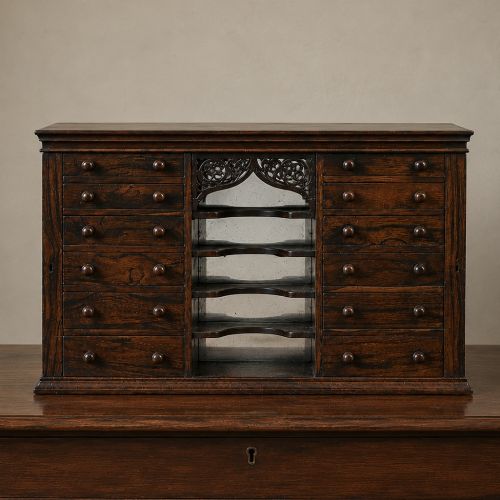
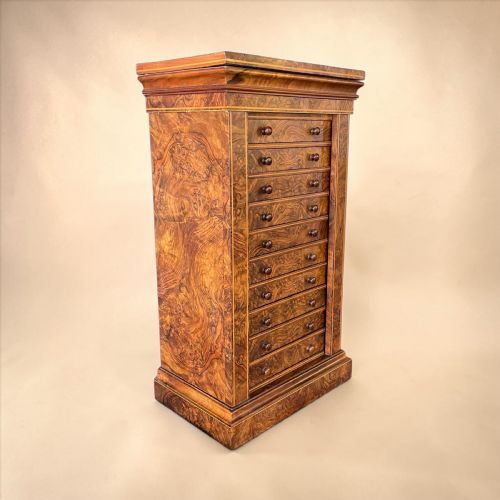
The format appears in several forms, ranging from standard six or eight drawer tall chests to secretaire variations with drop-down writing surfaces, collector cabinets, and bedside pedestals. Mahogany and rosewood form the traditional carcass woods, alongside walnut, burr walnut, and occasional examples in pine or oak.
Makers adapted the design into smaller bedside chests and narrow library pieces, though the tall upright chest remains the defining shape. These items served functional storage needs in studies and bedrooms, designed to fit wall spaces where wider chests could not go.
Materials and Construction
Cabinetmakers utilised dense timbers such as mahogany, rosewood, and walnut for the structural carcass and drawer fronts, often selecting figured veneers to catch the light on the primary surfaces. Brass hardware appears on drawer pulls and locks, while leather lines writing surfaces within secretaire variants.
The distinctive locking mechanism relies on a hinged right-hand pilaster that swings outward only when the top drawer is unlocked, securing the entire stack of drawers beneath it. Drawer construction involves hand-cut dovetails and turned wooden knobs or brass handles depending on the period.
Antique Wellington Cabinet Retail Price Guide 2026
Typical asking prices for wellington cabinet among the pieces listed under this phrase on Sellingantiques today, from the lower quarter to the upper quarter. They describe what is for sale here now, not the wider market.
The inventory spans the Regency era through to the Edwardian period, with the majority originating in the nineteenth century.
Assessing the Craftsmanship
Quality rests in the selection of timber veneers, the tightness of the drawer dovetails, and the smooth operation of the locking side pilaster. Finer examples display symmetrical burr walnut or figured mahogany grains across the entire drawer front facade rather than mismatched panels.
The crispness of turned wooden knobs, the integrity of the original brass locks, and the precision with which the locking bar meets the drawer margins separate standard production pieces from workshop commissions by makers such as Gillows or Holland and Sons.
Warings Liverpool·Gillows·Maple and Co·Holland and Sons
The Antique Wellington Cabinet Glossary
- Wellington chest
- A tall, narrow chest of drawers featuring a hinged locking pilaster down one side that secures all drawers simultaneously when padlocked or keyed. This distinctive locking bar swings free only after the top drawer is opened.
- Secretaire
- A cabinet or chest incorporating a fitted writing drawer with a drop-down front, concealing small compartments and pigeonholes inside. It combines desk functionality with standard drawer storage.
- Pilaster
- A vertical architectural member projecting from the cabinet side, functioning here as the locking bar that holds the drawer stack shut.
- Fiddleback mahogany
- Mahogany timber exhibiting a rippled, undulating grain pattern that resembles the back of a violin, prized for its optical depth under polish.
- Marquetry
- Decorative inlay work using various coloured woods, ivories, or metals fitted into a veneer background to form pictorial or geometric designs.
Antique Wellington Cabinet: Frequently Asked Questions
What is a wellington cabinet used for?
These cabinets serve as tall, space-saving storage units originally designed for linen, papers, or personal valuables in domestic chambers and studies.
The narrow footprint allows them to fit into tight alcoves while offering substantial vertical drawer capacity.
How does the locking mechanism work?
A hinged wooden stile on the right side of the cabinet frame blocks the drawer edges from opening.
Lifting this locking bar requires the top drawer to be unlocked and pulled open first, freeing the tongue that restrains the lower drawers.
Where should I place one at home?
They suit narrow hallways, bedside spaces, or home studies where floor area is limited but vertical storage is required.
The slim profile prevents the cabinet from dominating smaller room layouts.
How do I identify a Regency period piece?
Regency examples display classical restraint, often featuring dense rosewood veneers, brass stringing, and restrained architectural mouldings.
Cabinets from this era usually date from the early nineteenth century and pre-date the heavier ornamentation of the late Victorian period.