





Antique Waterfall Painting
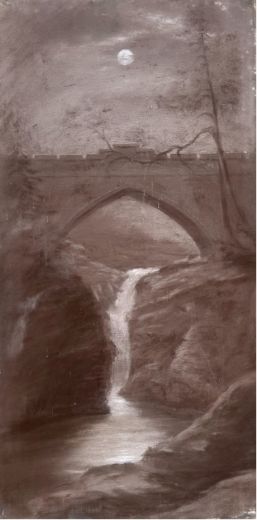
An antique waterfall painting captures cascading water within British, European, and alpine landscapes, offering buyers a romantic window into nineteenth-century nature.
Antique Waterfall Painting
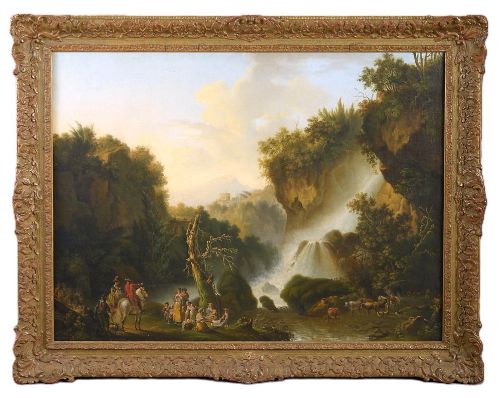
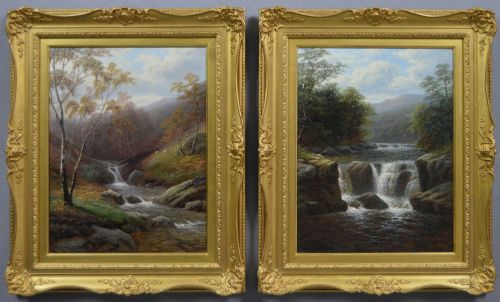
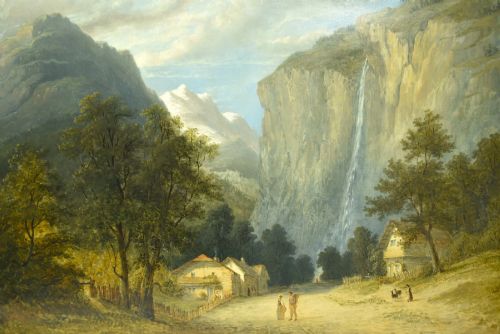
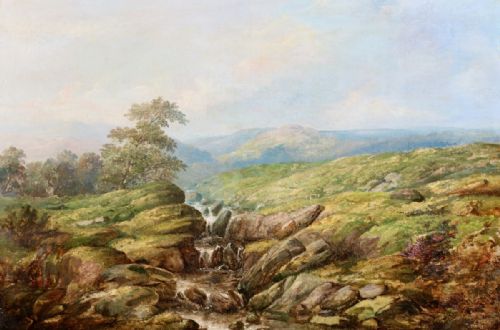
An antique waterfall painting typically depicts rivers, mountain streams, and roaring cascades set within nineteenth-century landscapes. Buyers encounter works ranging from intimate watercolours to large oil paintings on canvas, often framed in original gilt wood.
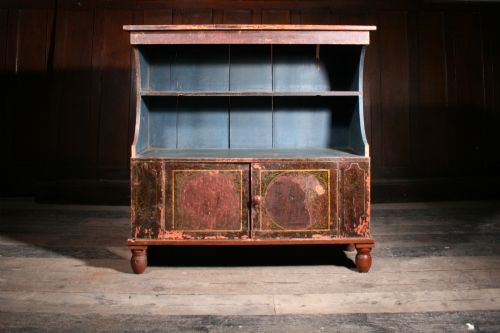
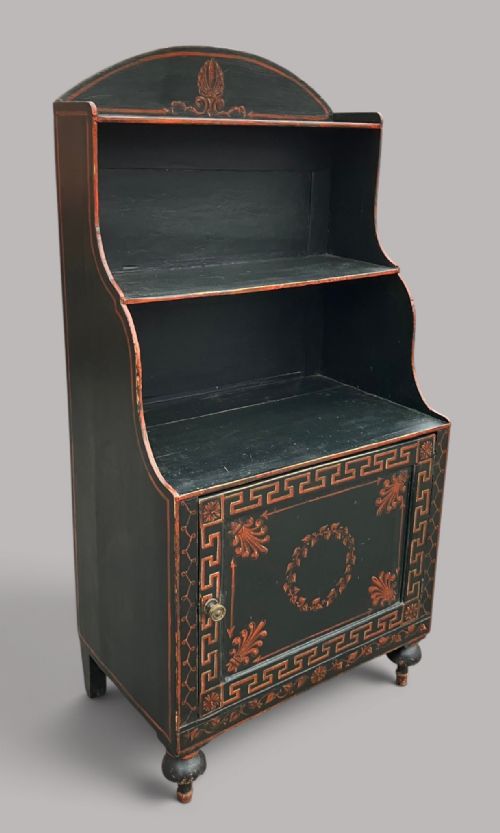
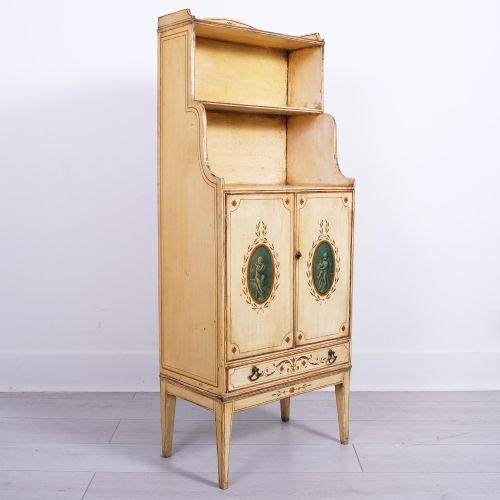
The selections span the Georgian, Victorian, and Edwardian eras, encompassing British scenes from North Wales, Scotland, and the Lake District alongside continental views of Swiss and Austrian falls. While landscapes dominate, the phrase also surfaces amidst painted bookcases and decorative plates sharing similar motifs.
Makers and schools represented include regional British painters, continental artists, and unassigned works by anonymous hands. These pieces reflect prevailing nineteenth-century fascinations with naturalism, romanticism, and topographical accuracy.
Materials and Technique
Artists painted primarily in oil or watercolour, applying pigment to stretched canvas, wooden boards, or heavy paper. Canvases frequently sit within original gilded wooden frames or solid wood surrounds that complement the pastoral subject matter.
Surface finishes include varnishes applied to oil mediums to preserve depth in turbulent water and dark foliage. Underlying supports utilise pine stretchers and occasionally brass fittings on associated furniture pieces.
Antique Waterfall Painting Retail Price Guide 2026
Typical asking prices for waterfall painting among the pieces listed under this phrase on Sellingantiques today, from the lower quarter to the upper quarter. They describe what is for sale here now, not the wider market.
Listings feature works spanning the eighteenth century through to the early twentieth century, utilising oil and watercolour on canvas, board, and paper.
Assessing the Range
Quality rests upon the artist's ability to render the motion, transparency, and force of falling water against fixed geological forms. Superior examples demonstrate confident brushwork in handling light on spray and rock, whereas lesser works rely on repetitive formulae.
Condition of the original paint layer and the survival of the period frame heavily influence the standing of a piece. Works retaining undisturbed original gilt wooden frames command greater attention from collectors.
Alexandre Le Bihan·Clarence Henry Roe·William Mellor·John Syer Junior·Frederick Richard Lee·James Poole·Peter de Wint·John Sowden·Axel Nordgren·Henrietta Elizabeth Howard·Thomas Creswick·William James Smith Crampton·John Arthur Dees·John Pearson
The Antique Waterfall Painting Glossary
- Oil on Canvas
- Pigment mixed with drying oil applied to a woven fabric stretched across a wooden frame. This medium allowed artists to build rich textures in turbulent water.
- Gilded Wood
- Timber coated with a thin layer of gold leaf or gilt paint. Frames finished in this manner were designed to catch ambient light and enhance the painting.
- Watercolour
- Paint consisting of water-soluble pigments suspended in a water-based solution. It was frequently utilised for rapid sketches and finished landscapes on paper.
- Victorian Naturalism
- An artistic approach focusing on the accurate, unidealised depiction of the natural world. Painters in this style observed light and geology with close fidelity.
- Continental School
- A broad designation for artists trained in mainland European academies rather than Britain. These works often depict dramatic alpine topography.
Antique Waterfall Painting: Frequently Asked Questions
Where were most of these landscapes painted?
The subjects concentrate heavily on British beauty spots including North Wales, Scotland, and the Lake District. Continental locations such as Swiss and Austrian alpine falls also appear frequently.
Artists travelled extensively to sketch rushing rivers and mountain vistas directly from life before completing larger compositions in their studios.
How should I care for an antique canvas?
Keep paintings away from direct sunlight, radiators, and damp environments to prevent the canvas from sagging and the paint from cracking. Stable indoor temperatures preserve both the pigments and the wooden stretcher.
Dust the surface gently with a soft, dry brush and avoid using liquid cleaners or chemical solvents on the paint layer.
Are these paintings usually signed?
Many works bear signatures or initials from known nineteenth-century painters, while a significant portion remain entirely unsigned. Unsigned pieces are often attributed to regional British or continental schools based on style and technique.
Documentation on the reverse or family provenance sometimes aids in identifying the hand behind an unsigned mountain or river scene.
What framing is typical for these works?
Original gilt wood frames are common companions to nineteenth-century oil paintings, designed to complement the rich tones of the landscape. Some pieces survive in heavy solid wood frames or simple period moulds.
Retaining the original frame adds historical context, even when minor wear shows the passage of time.