

Antique Wardrobe with Mirror
An antique wardrobe with mirror brings full-length reflection and substantial timber storage into a bedroom, combining practical function with period craftsmanship.
Antique Wardrobe with Mirror
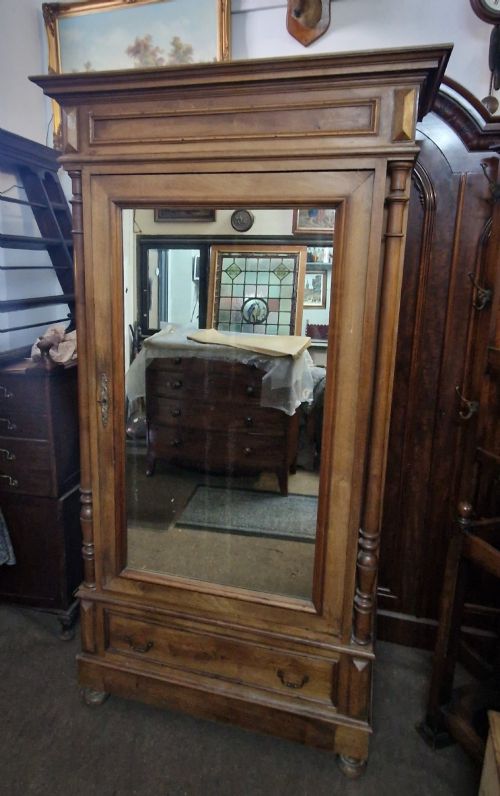
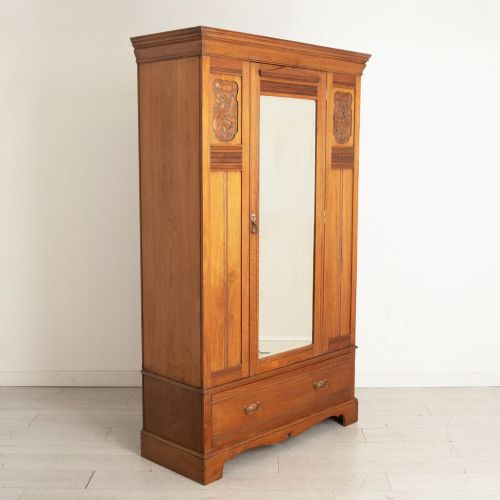
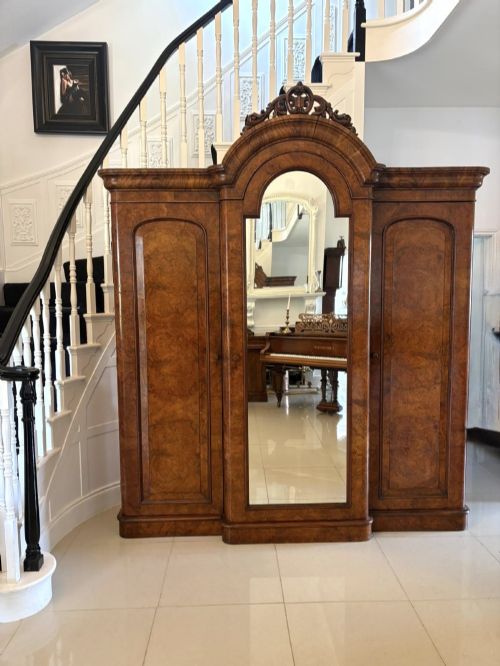
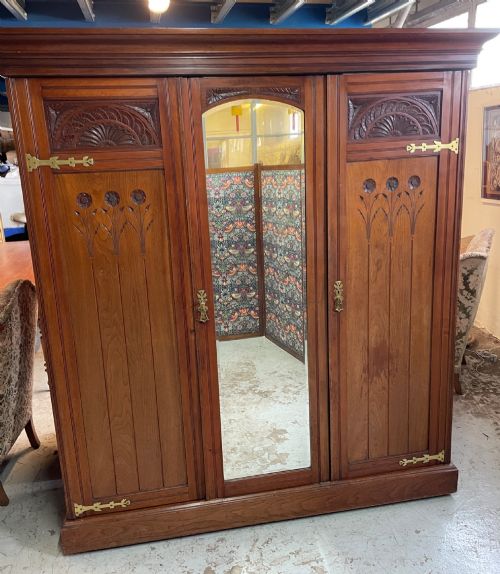
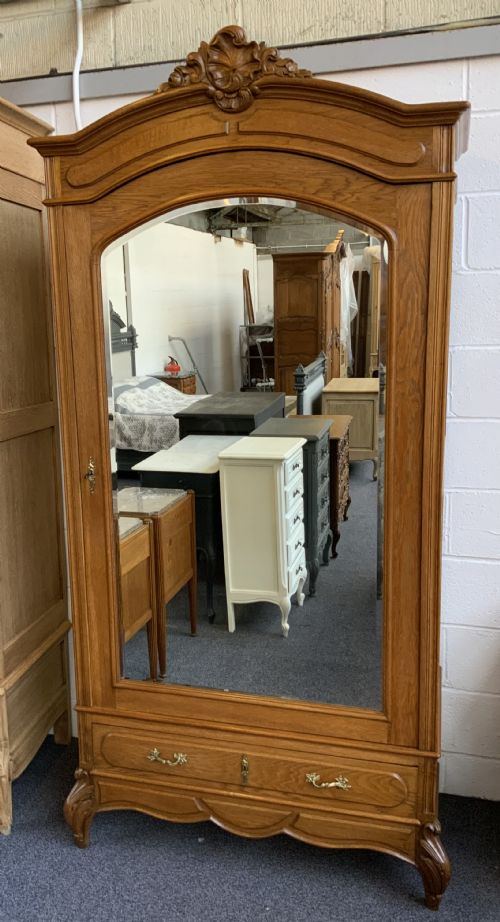
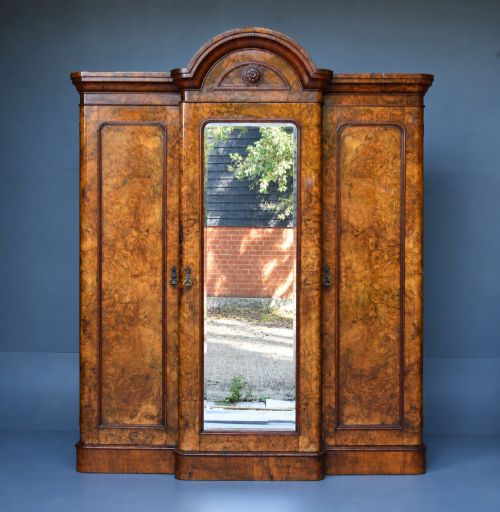
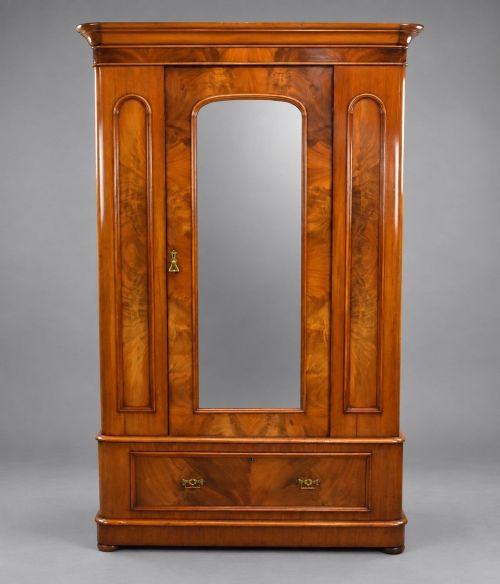
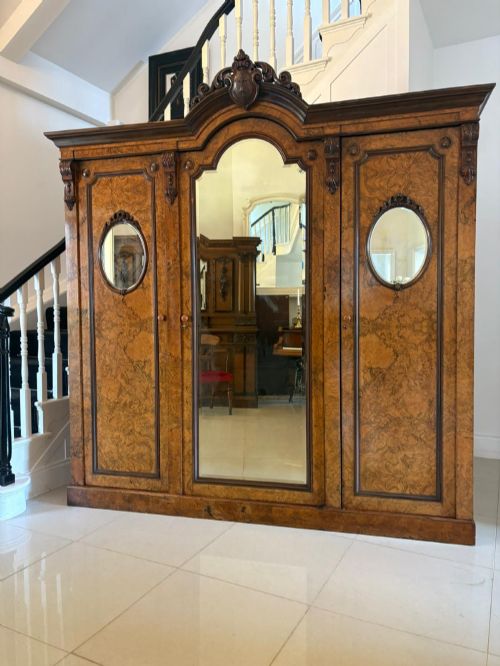
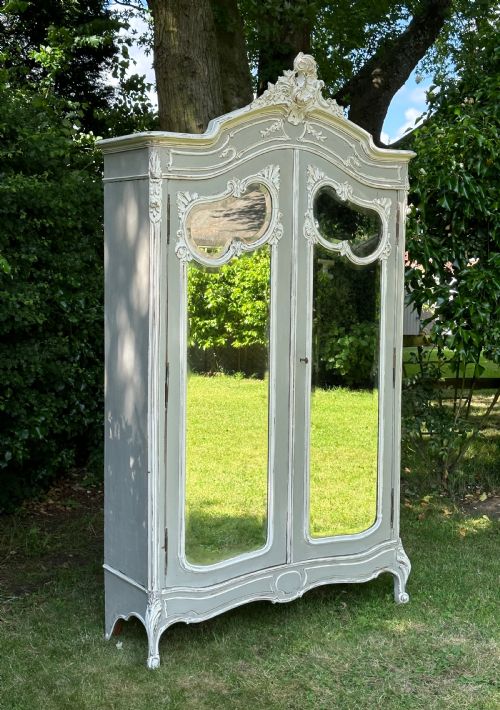
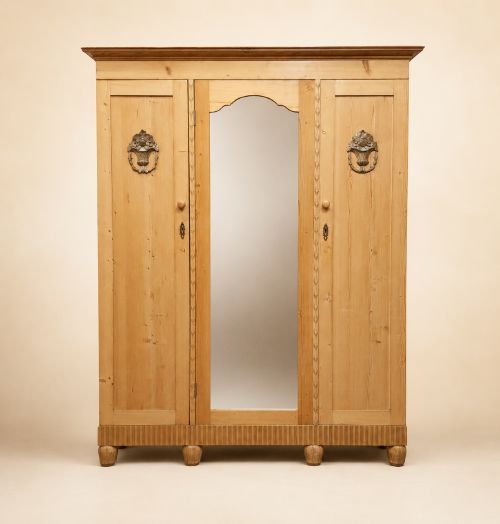
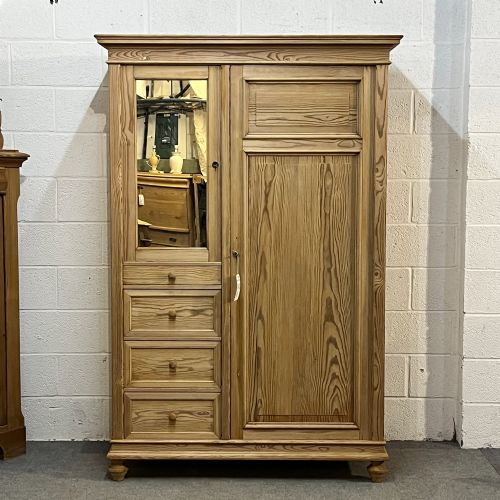
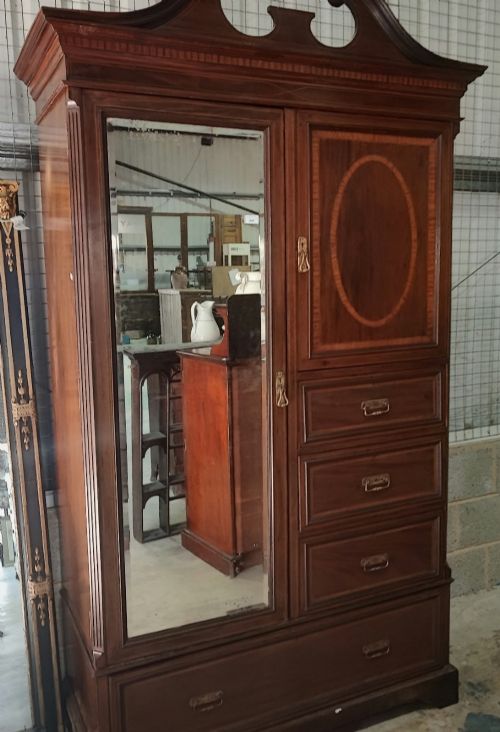
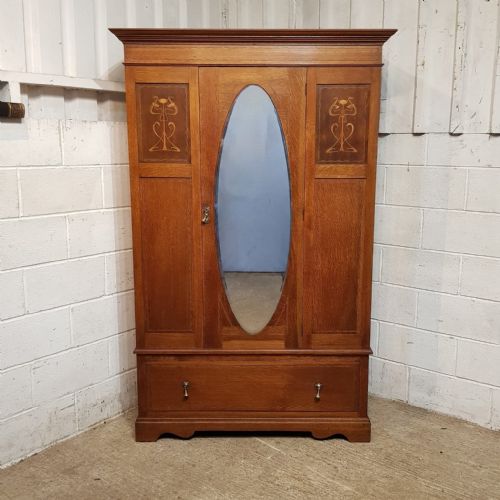
An antique wardrobe with mirror is a large bedroom storage piece designed to hang garments and often incorporate interior drawers or shelving alongside a mirrored door. These pieces span several decades, appearing frequently in Victorian, Edwardian, and early twentieth-century forms.
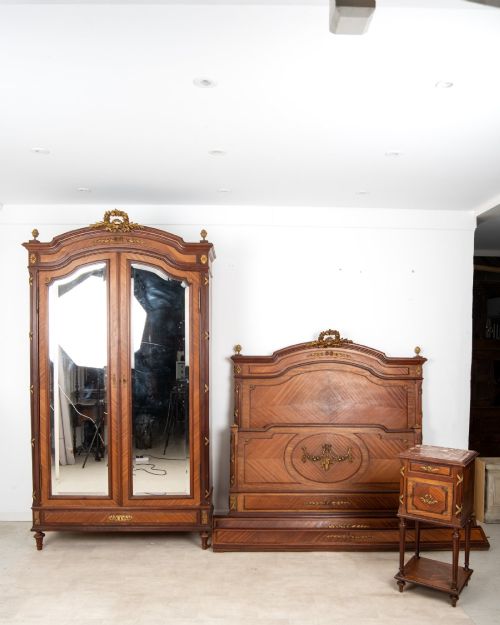
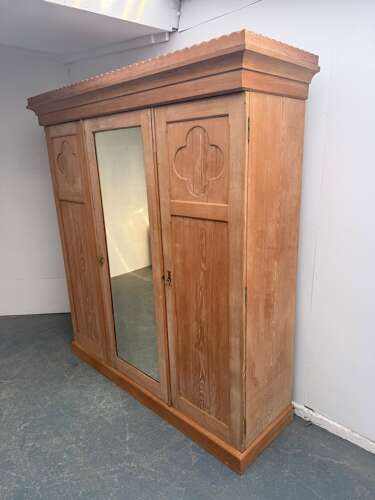
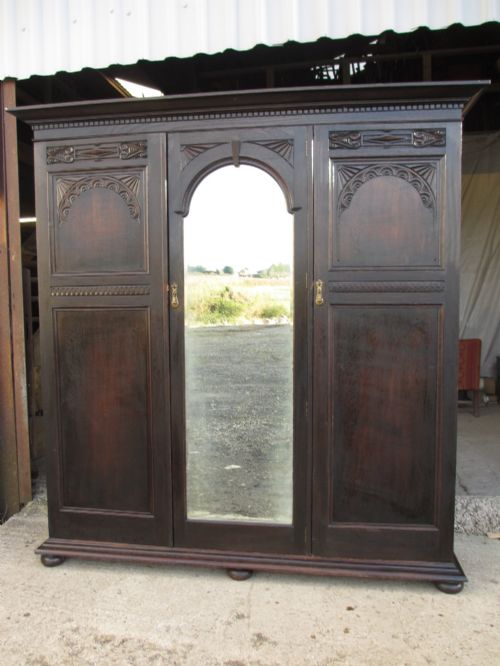
Buyers encounter single, double, and triple configurations, as well as compactum designs that integrate multiple internal compartments. Timbers such as mahogany, pine, and oak dominate the selection, often shaped in Victorian, Edwardian, Arts and Crafts, or Louis XVI Revival styles.
How They Were Made
Cabinet makers utilised solid timbers and selected veneers such as mahogany, oak, walnut, and pine for the carcass and panelling, frequently securing joints with traditional dovetailing. Large pieces were engineered to dismantle into sections to permit transport into domestic rooms.
Mirror glass, often bevelled, was fitted into door frames using timber beads or secured behind brass hardware. Details such as gilt bronze ormolu mounts, inlaid woodwork, and lead light panels completed the construction of finer examples.
Antique Wardrobe with Mirror Retail Price Guide 2026
Typical asking prices for wardrobe with mirror among the pieces listed under this phrase on Sellingantiques today, from the lower quarter to the upper quarter. They describe what is for sale here now, not the wider market.
Some single pine wardrobes were built narrow enough to fit tight cottage hallways, doubling as child-sized closets.
What Varies in Quality
The integration of the mirror glass and the stability of the large doors indicate the standard of construction. Superior pieces maintain alignment in heavy triple configurations and retain their original hardware and internal fittings.
Maple & Co.
The Antique Wardrobe with Mirror Glossary
- Compactum
- A multi-functional wardrobe that combines hanging space with banks of internal drawers and linen shelves. This design maximises storage within a single timber frame.
- Armoire
- A large freestanding cupboard used traditionally for storing clothing. French iterations often showcase carved details and prominent cornices.
- Bevelling
- The practice of sloping the outer edges of a mirror glass pane to create a decorative angled border. This technique reflects light at varied angles.
- Ormolu
- Gilt bronze mounts applied to furniture for decorative effect, common in revival styles. The metal is cast and then finished with gold leaf or mercury gilding.
- Marquetry
- Inlaid patterns created by fitting thin pieces of wood veneer into a prepared surface. Craftsmen utilise contrasting tones of timber to form geometric or floral designs.
Antique Wardrobe with Mirror: Frequently Asked Questions
How do I dismantle a large wardrobe?
Most large wardrobes and armoires from the nineteenth and twentieth centuries were built to dismantle into a cornice, base, sides, and doors for ease of movement. Screws, bolts, or wooden pegs hold the main frame together internally.
Mark each component before taking the piece apart to ensure correct reassembly in a new room. Having two people manage the heavy mirrored doors prevents damage to the glass and hinges.
Will a triple wardrobe fit my room?
Triple wardrobes and large compactums offer extensive hanging space and drawers but require significant floor area and ceiling height. Measure both the clearance needed to swing the large doors open and the vertical space required to stand the assembled carcass upright.
Consider the modular nature of the piece when planning placement, as many large wardrobes include removable internal hanging rails and modular shelving units.
How do I clean antique mirror glass?
Antique mirror glass frequently exhibits foxing, which appears as small dark spots or a mottled grey haze behind the glass. This ageing process results from the breakdown of the backing silver over decades.
Clean the glass surface gently using a soft cloth and a mild glass cleaner, avoiding harsh chemicals that might seep behind the edges. Preserve the original mirror plate rather than attempting to resilver it, as the authentic patina is part of the piece's history.
What is the difference between an armoire and a wardrobe?
Armoire is a traditional French term for a large cupboard or wardrobe, typically featuring deeper proportions and decorative carved panels or painted finishes. Wardrobe is the more common British term for tall clothing storage furniture.
Both terms describe freestanding furniture designed for hanging garments, though armoires often lean towards continental revival styles while British wardrobes follow regional Victorian and Edwardian cabinet-making traditions.