



Antique Walnut Pier Cupboard
An antique walnut pier cupboard brings refined display space to a narrow wall, holding cherished collections behind glass.
Antique Walnut Pier Cupboard
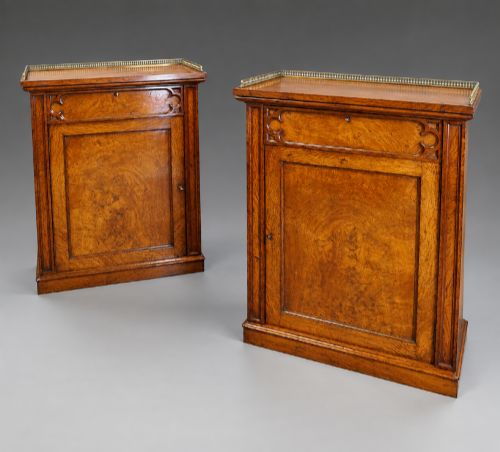
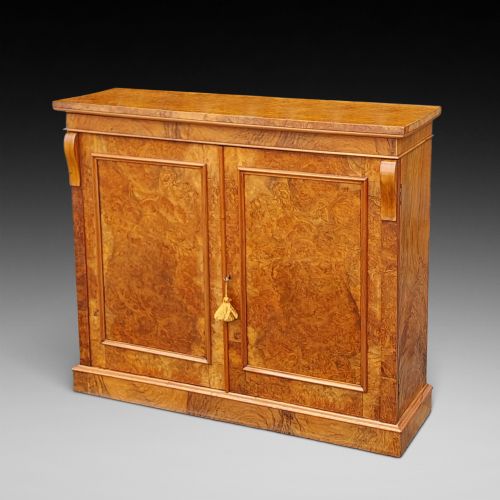
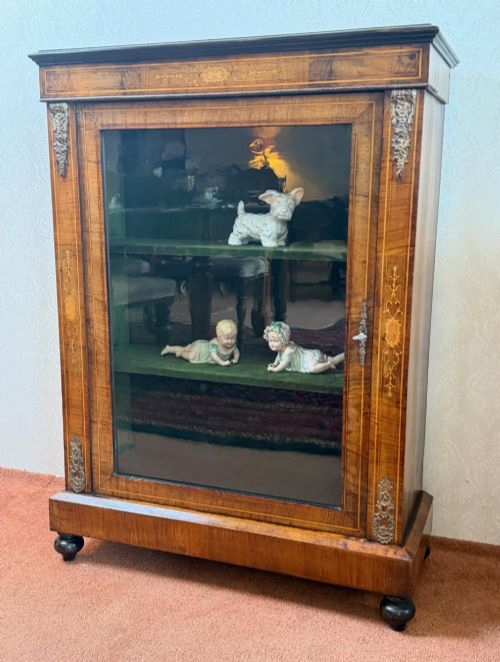
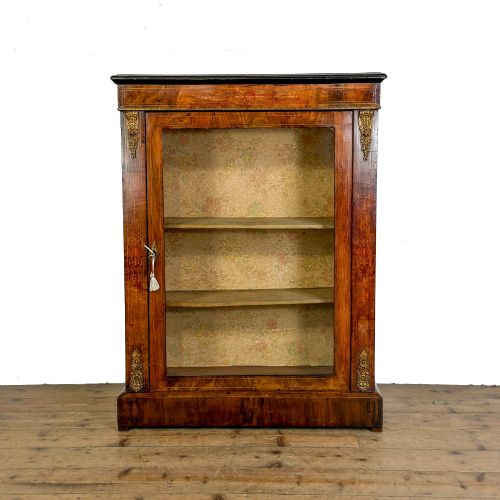
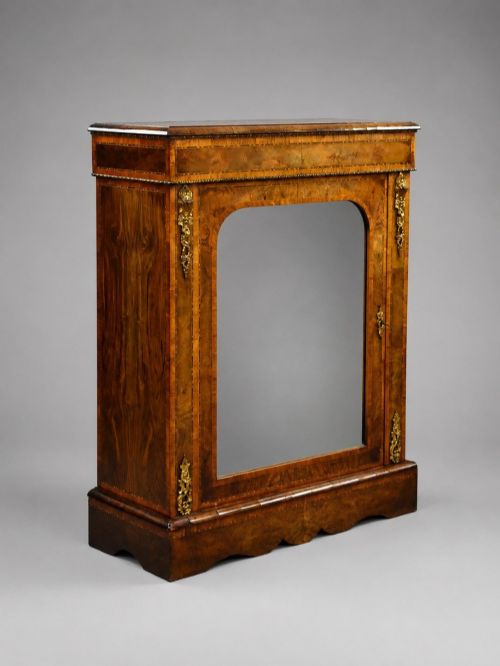
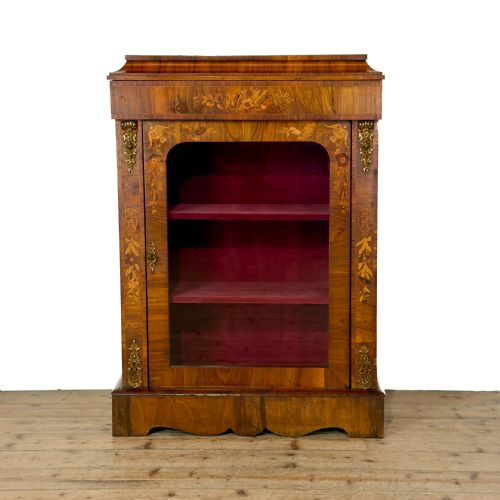
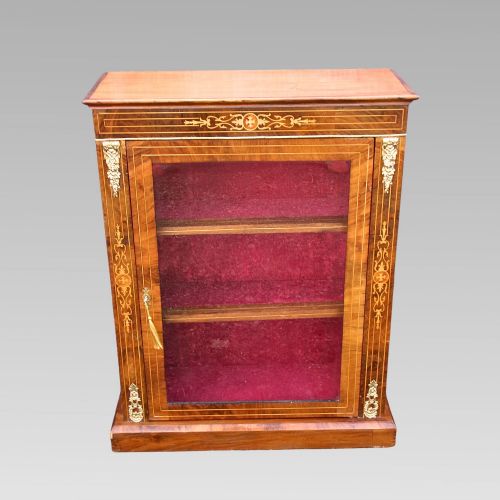
An antique walnut pier cupboard is a slender display cabinet designed originally to fit the wall space between two windows. Most examples encountered on this page belong to the Victorian era, spanning figured and burr timbers.
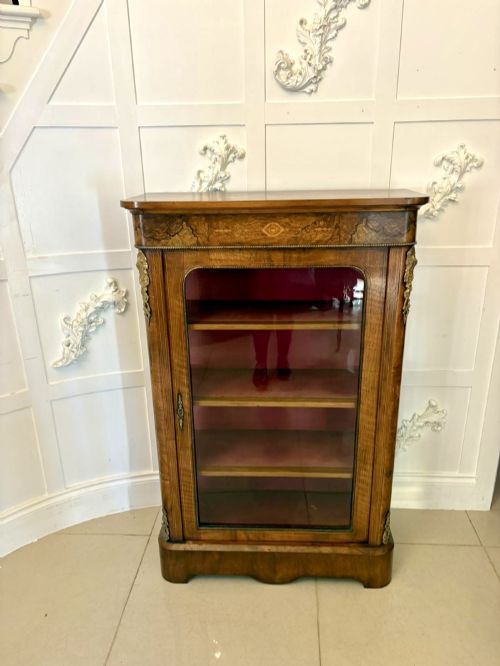
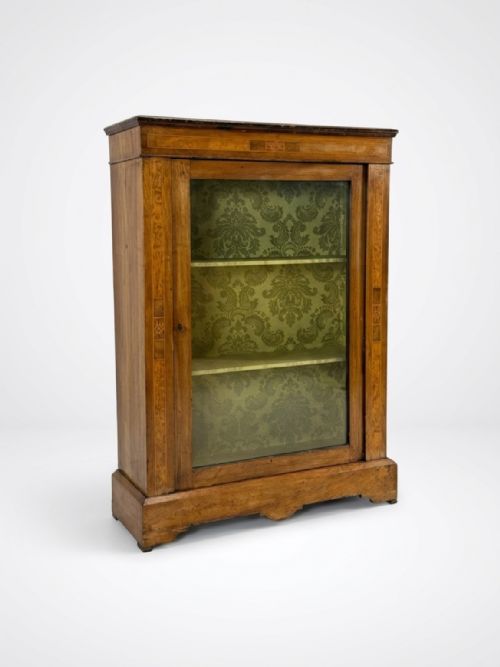
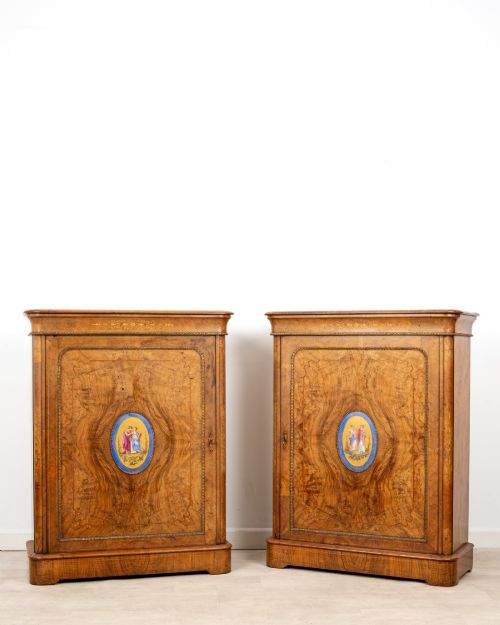
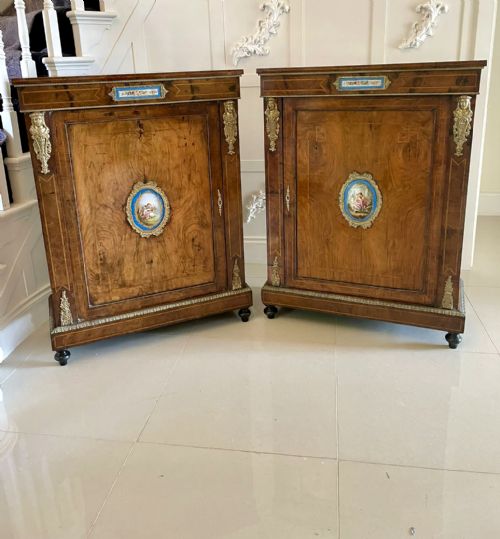
Makers shaped these pieces as glazed display cabinets and side cabinets, frequently incorporating marquetry, boxwood inlay, and porcelain plaques. The form includes freestanding single cupboards as well as matched pairs suitable for a grand salon.
How they were made
Cabinetmakers selected choice walnut veneers, particularly burr and figured variations, laid over solid foundational timbers to create rich grain patterns across the front doors and top surfaces. Inlay work in boxwood and marquetry motifs added contrasting detail to the timber panels.
Gilding, ormolu mounts, and ceramic elements were integrated into the carcass construction, particularly on French Revival and late nineteenth-century examples. Glazed doors utilised clear glass to protect the interior shelves while offering full visibility for displayed objects.
Listings feature burr walnut, figured walnut, and mahogany timbers combined with glass, ormolu, and porcelain elements across Victorian and Regency periods.
What varies in quality
Quality rests upon the selection of the veneer, where dense burr walnut and crisp marquetry distinguish superior examples from plain timber carcasses. The precision of the boxwood inlay and the refinement of cast bronze or ormolu mounts also set exceptional pieces apart.
Structural integrity, including the matching of timber grains across the door panels and the inclusion of original glazed doors with hand-blown glass, marks the difference between standard production and master cabinetmaking.
Druce & Co
The Antique Walnut Pier Cupboard Glossary
- Burr walnut
- A distinctive timber cut from tree growths, producing swirling, knotty grain patterns highly prized for cabinet facades.
- Pier cabinet
- A narrow display piece built to occupy the wall space between windows.
- Marquetry
- Decorative patterns formed by fitting together thin slices of different coloured woods.
- Ormolu
- Gilded bronze ornamentation applied to furniture mounts and corners.
- Biedermeier
- A Central European style emphasising clean lines and domestic comfort without excessive ornamentation.
Antique Walnut Pier Cupboard: Frequently Asked Questions
What is an antique walnut pier cupboard?
An antique walnut pier cupboard is a narrow display cabinet historically placed in the architectural wall space between tall windows. These pieces combine glazed doors with wooden shelving to showcase porcelain and small collectibles.
Most surviving examples date from the Victorian period and utilise figured or burr walnut veneers. They function today as versatile display units in compact rooms.
How do I date a pier cabinet?
Dating relies upon stylistic markers such as neoclassical revival motifs, boxwood inlay patterns, and the choice of timber veneer. Victorian pieces frequently feature elaborate marquetry and porcelain plaque mounts.
Earlier Regency examples tend toward simpler architectural lines, while later Edwardian variants show simpler banding and lighter construction. Examining the interior woodwork and hinge types helps confirm the era.
Where should I place a pier cabinet?
These cabinets suit narrow wall spaces, hallways, or corners where standard wide furniture cannot fit. Their shallow depth allows them to sit comfortably without dominating a room.
They pair well with console tables and salon seating, serving as focal points for curated collections of ceramics and small antiques.
How are burr walnut and figured walnut different?
Burr walnut derives from a tree growth or burl, creating dense, swirling clusters of knots across the veneer. Figured walnut displays natural wavy or striped grain patterns without the swirling knot formations.
Both materials were selected by cabinetmakers to create highly decorative surfaces on the primary doors of display furniture.