


Antique Walnut Piano Seat
An antique walnut piano seat offers a solid timber frame and a swivel or adjustable mechanism designed for the Victorian parlour.
Antique Walnut Piano Seat
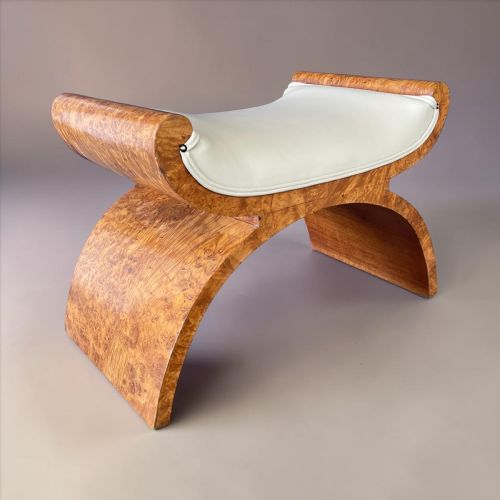
An antique walnut piano seat is a sturdy timber stool or bench built to support a musician at the keyboard, frequently featuring a revolving or height-adjustable mechanism. When you search for this phrase, you will most commonly encounter Victorian examples from the nineteenth century alongside occasional Art Deco pieces from the nineteen-thirties.
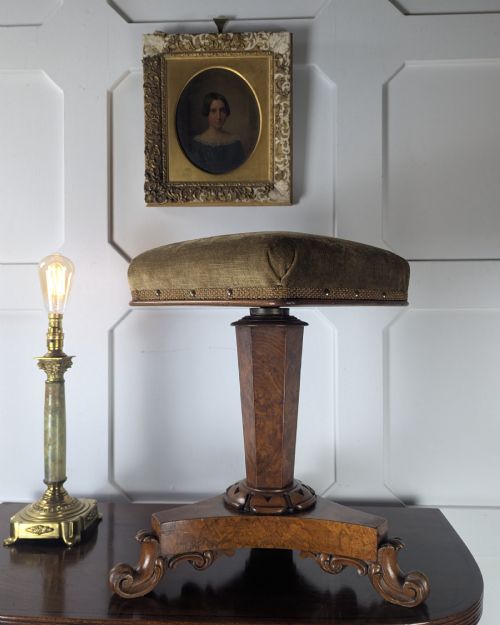
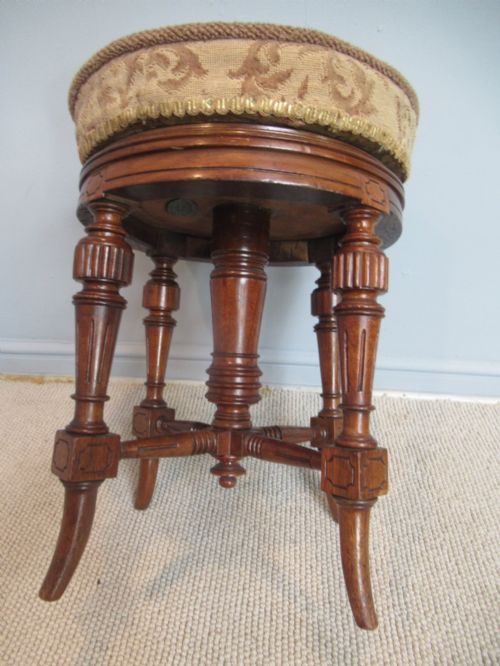
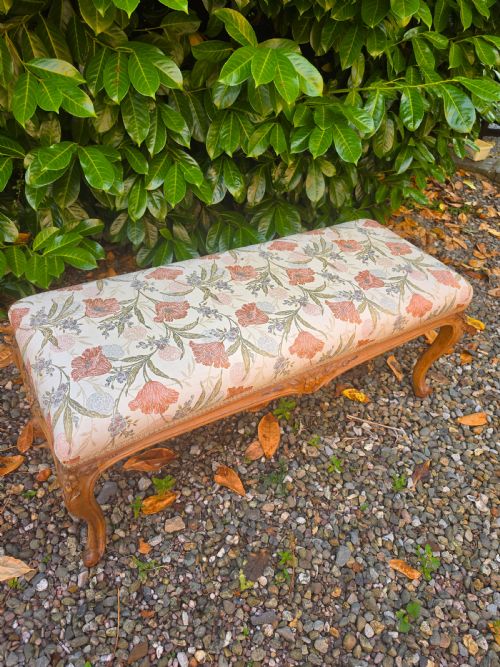
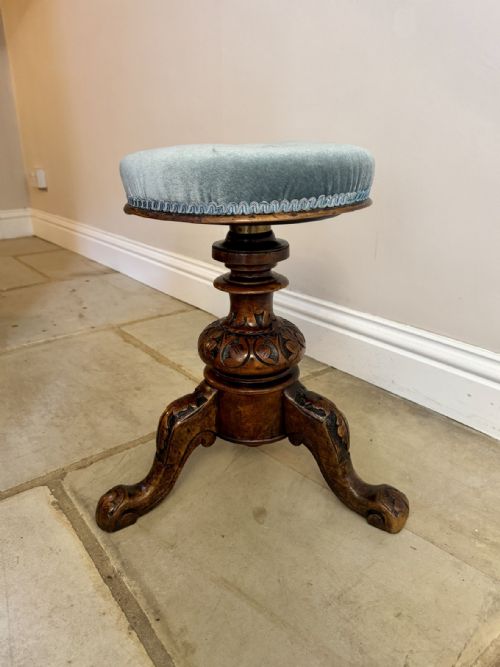
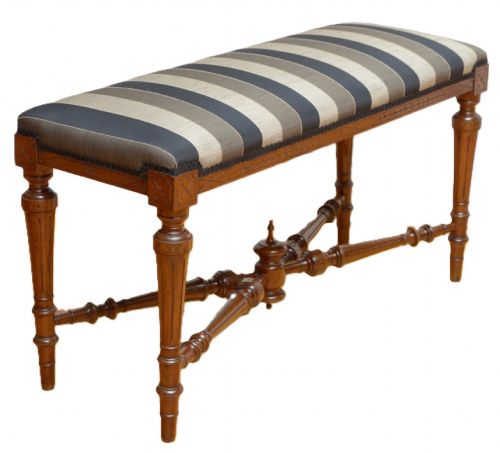
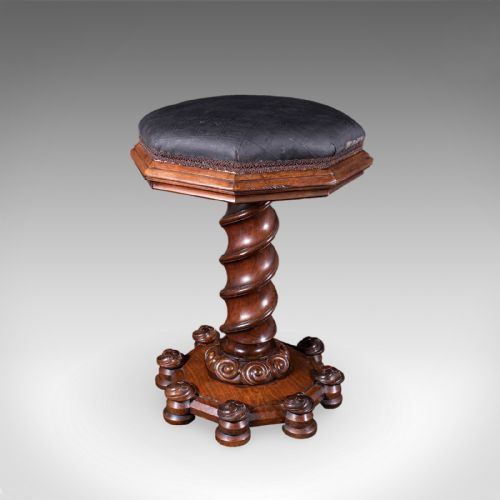
The forms range from simple round revolving tops on carved pedestals to larger duet benches, window seats, and storage stools with fall-front cabinets or music lockers. Walnut is the primary timber across these variations, paired with carved cabriole legs, tripod bases, or straightforward rectilinear frames.
Many of these seats double as dressing table stools or small occasional benches, reflecting how domestic furniture was repurposed over time. The selection spans straightforward nineteenth-century seating to revival styles such as Queen Anne, Georgian, and Rococo.
How they were made
Makers utilised solid walnut for the structural frames and turned columns, often employing rich figured veneers on larger surfaces and panels. Carved details on cabriole legs and borders required seasoned timber that could take deep relief without splitting.
Upholstery materials include leather, velvet, textile, and needlepoint, secured over stuffing and webbed bases within the seat frames. Mechanical elements relied on brass screws, iron spindles, and swivel pivots to provide the adjustable height function required by players.
Organists needed sturdy walnut benches with music risers to survive rigorous Sunday hymn practice.
What varies in quality
The standard of carving and the crispness of the turned walnut components define the finer examples from simpler production pieces. A heavier gauge of brass and iron in the adjusting mechanism ensures smoother operation and greater durability over time.
The integrity of the original wood finish and the quality of secondary upholstery materials, such as heavy leather or patterned textiles, separate standard utilitarian seating from pieces made for formal reception rooms.
Harry and Lou Epstein
The Antique Walnut Piano Seat Glossary
- Revolving stool
- A seat with a top that turns on a central wooden or metal screw to alter the height.
- Cabriole leg
- A furniture leg that curves out in a convex shape and then bends in to a concave taper, ending in a pad or foot.
- Music locker
- A concealed storage compartment beneath the seat lid designed for holding sheet music.
- Fall-front stool
- A seating form featuring a hinged front panel that drops forward to reveal interior shelves or storage space.
- Needlepoint
- Hand-stitched textile work used to cover the upper surface of the seat.
Antique Walnut Piano Seat: Frequently Asked Questions
How do you adjust the height on these seats?
Most adjustable piano seats rely on a central threaded spindle that raises or lowers the circular top when turned.
Some Edwardian or Art Deco variants use side levers or mechanical screw systems hidden beneath the upholstered box frame.
Can I use a piano stool at a dressing table?
Yes, many compact revolving or rectangular stools share dimensions and upholstery styles suitable for modern dressing tables.
Their adjustable height function makes them practical alternatives to fixed low chairs.
What is a music locker?
A music locker is an integrated cabinet space built directly underneath the seat cushion for storing sheet music.
These compartments often feature hinged lids or fall-front doors opening toward the front or side.
How do I distinguish Victorian from Art Deco walnut seats?
Victorian walnut seats generally feature dark timber, rich carved ornamentation, cabriole legs, and tufted or needlepoint upholstery.
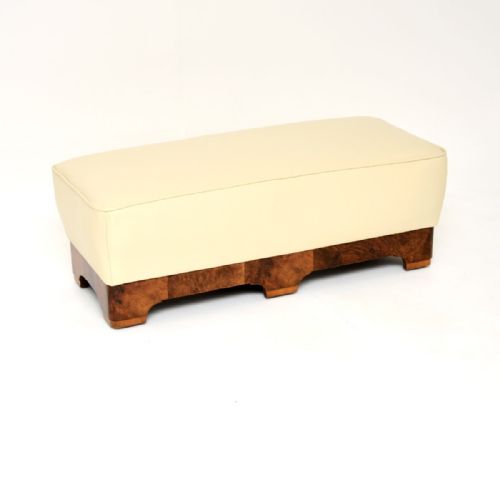
Art Deco pieces from the nineteen-thirties display cleaner geometric lines, smooth rectangular profiles, and simpler cream leather or fabric coverings.