
Antique Wall Needlepoint
Antique wall needlepoint brings historical textile art into interior spaces through framed panels, samplers and tapestries worked in wool, silk and linen.
Antique Wall Needlepoint
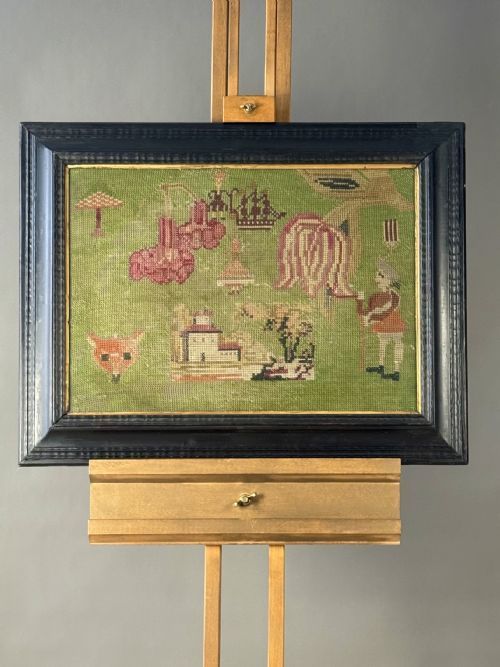
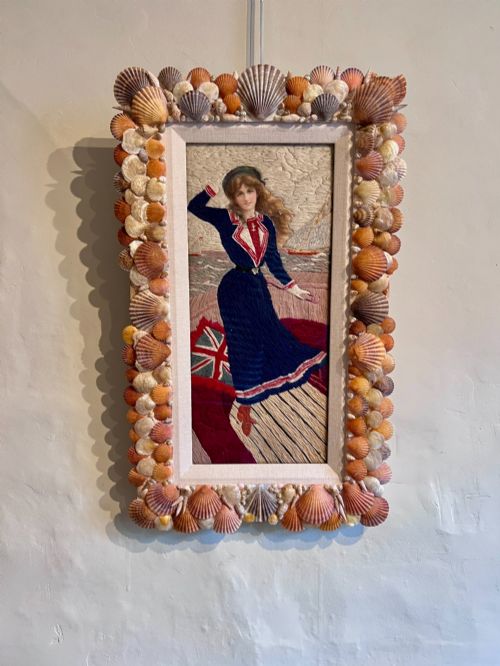
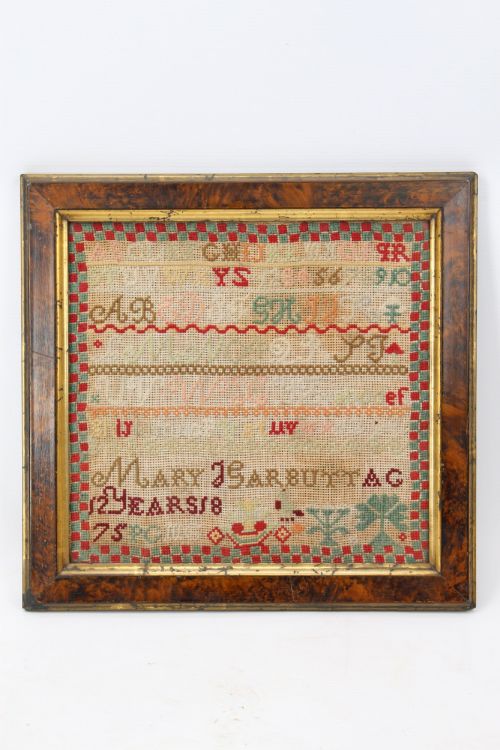
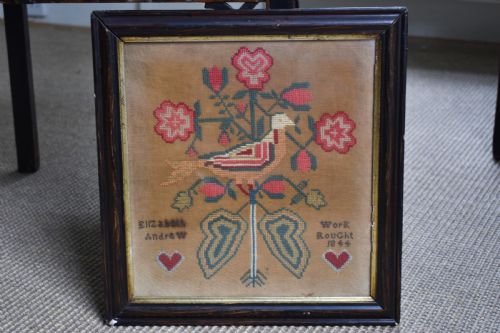
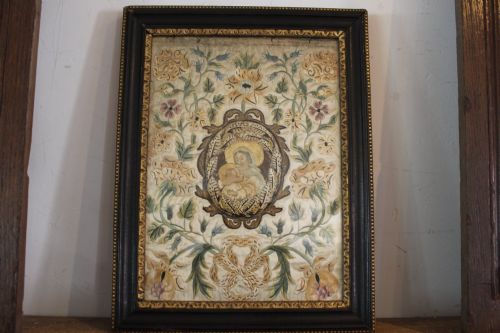
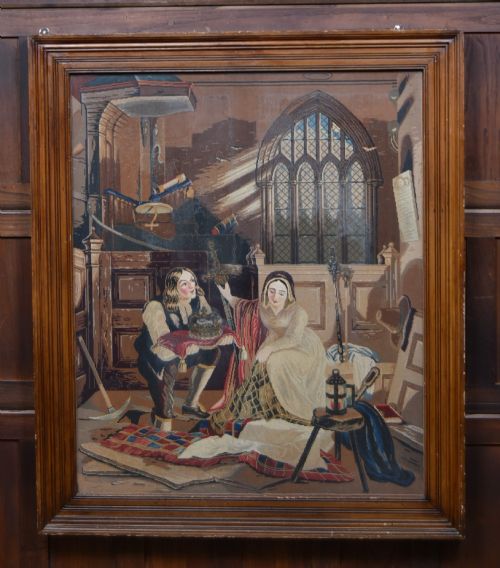
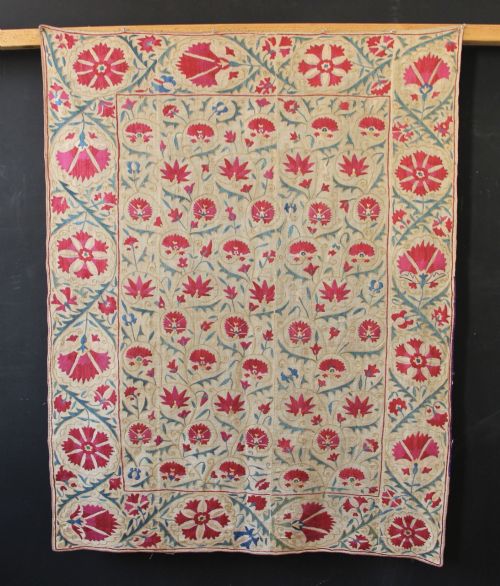
Antique wall needlepoint encompasses framed textile wall art, samplers and embroidered panels originating from the seventeenth century through to the Victorian era. These pieces function primarily as decorative wall art, preserving historical stitchwork and pictorial scenes intended for domestic display.
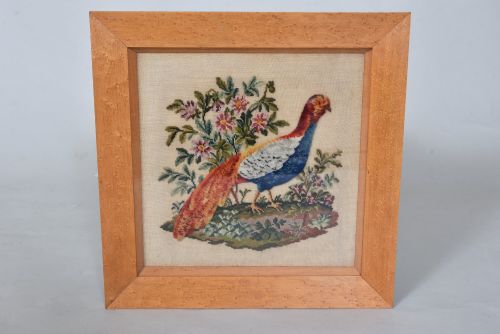
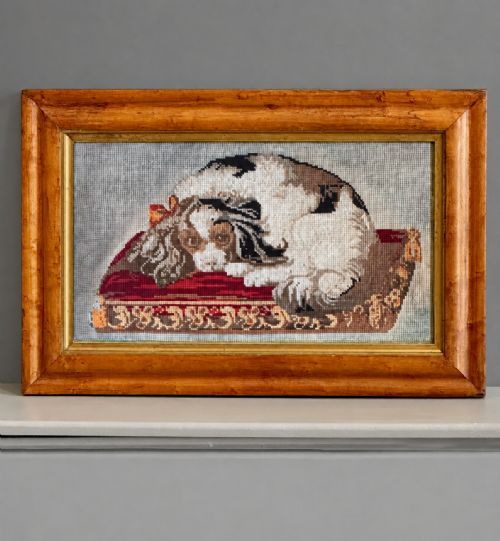
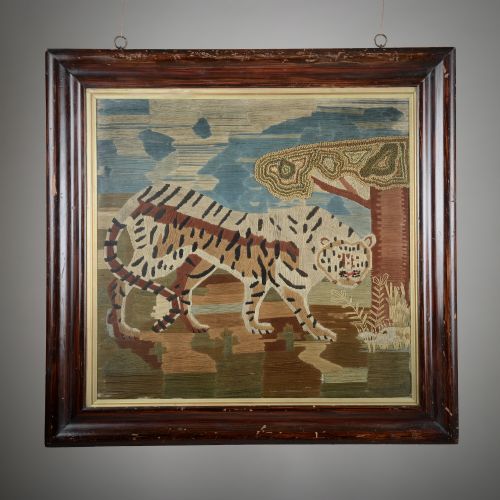
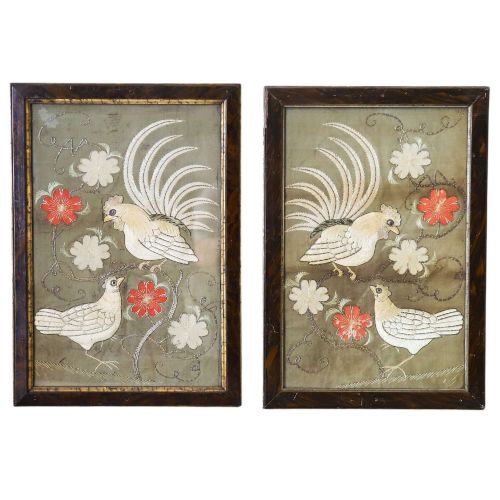
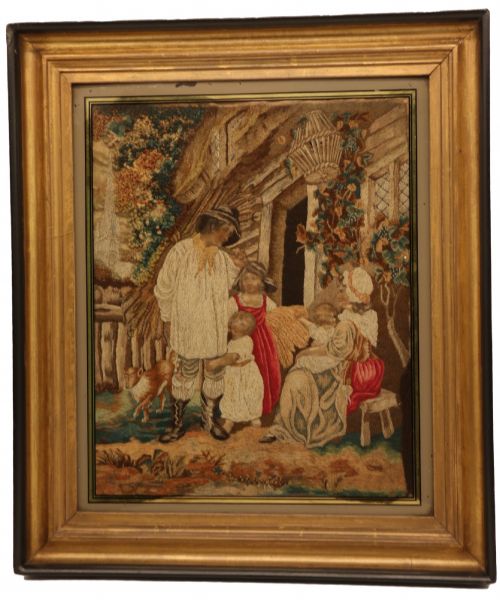
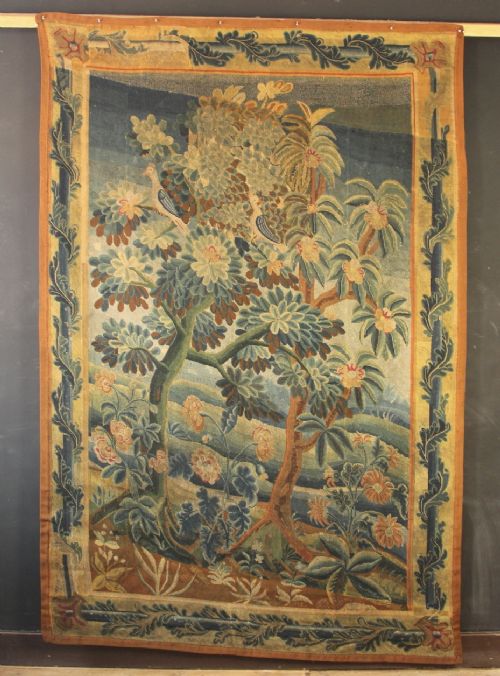
The selection frequently encounters nineteenth-century woolwork pictures, Victorian Berlin work and eighteenth-century samplers. Examples range from small framed portraits and animal studies to large European tapestries and embroidered panels.
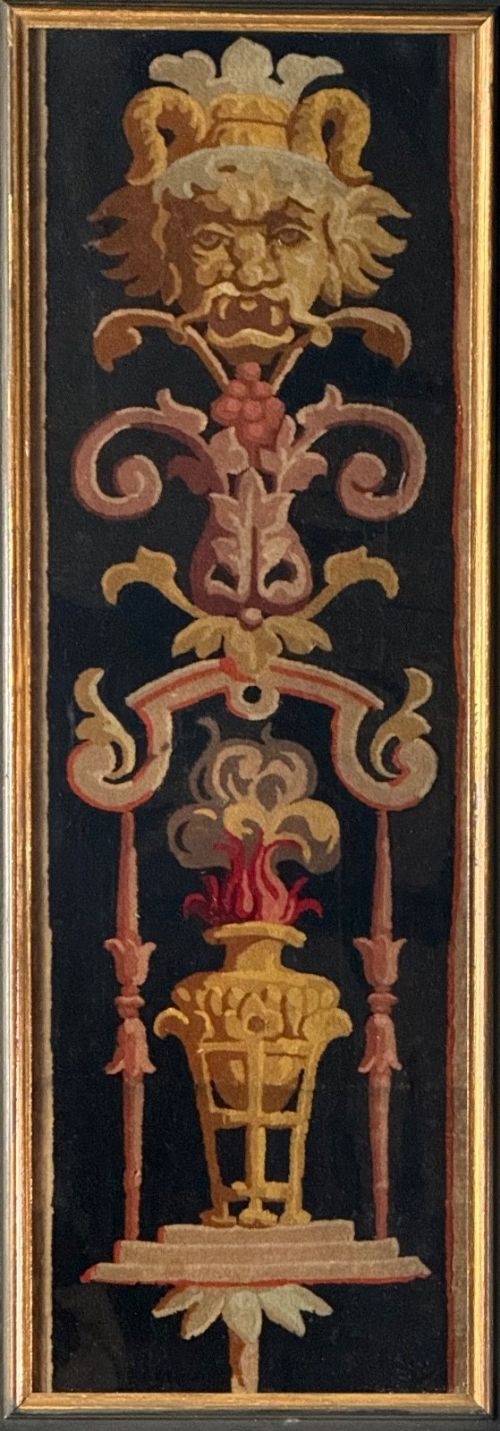
Origins span English, French, Italian and Scottish workshops, often reflecting domestic handwork alongside formal classical designs. Pieces appear mounted in period frames made of giltwood, burr maple, oak or faux tortoiseshell.
How they were made
Makers utilised wool, silk and linen threads worked onto woven canvas or linen foundations. Ground fabrics support various stitching methods, including long stitch, woolwork, silk floss embroidery and plushwork.
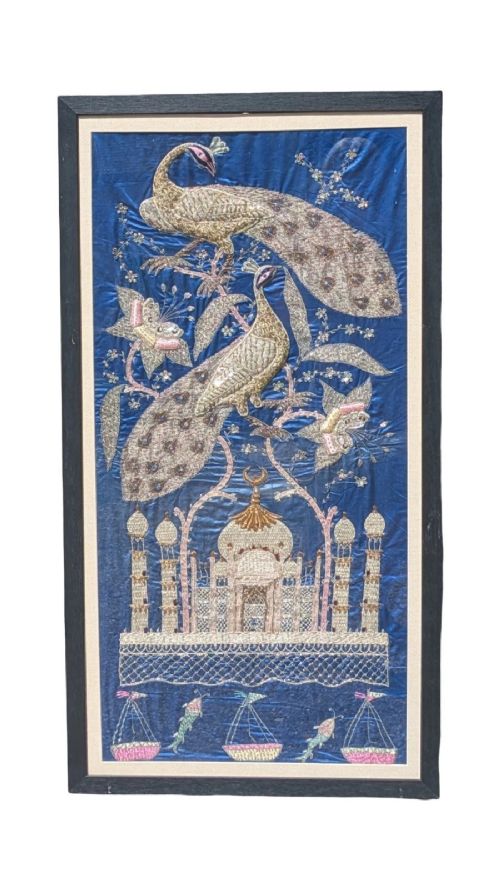
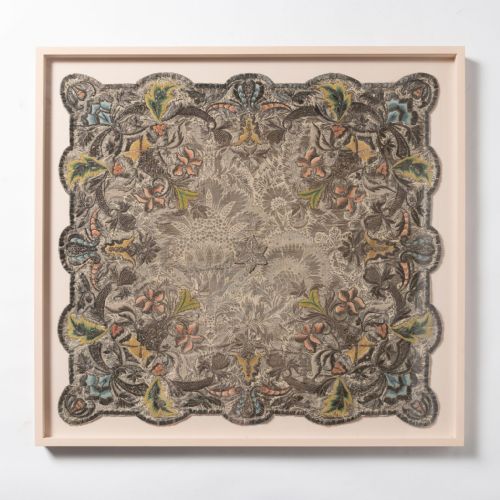
Advanced panels combine hand-painted silk sections with detailed needlepoint or incorporate beadwork and metal threads. Finished textiles are typically stretched over wooden panels or secured behind glass within protective frames.
Object forms include framed samplers, silk pictures, embroidered panels and large European tapestries.
What varies in quality
Execution and precision of the stitchwork distinguish finer examples from standard domestic pieces. The complexity of the pictorial composition, shading of silk and wool threads, and the survival of vibrant original colour determine the standing of an individual textile.
The character and originality of the surrounding frame influence the overall integrity of the piece. Contemporary framing or replacement mounts alter the historical presentation compared to works retained in original burr maple or giltwood surrounds.
The Antique Wall Needlepoint Glossary
- Sampler
- A piece of canvas or linen worked with various stitches and alphabets to demonstrate needlework skill. These often include dates, maker names and pious verses.
- Berlin Work
- A style of counted-thread embroidery popular during the nineteenth century using brightly coloured wools on canvas. Charts printed in Berlin guided the stitcher through complex pictorial designs.
- Verre Églomisé
- A process of applying gold or silver leaf to glass combined with engraving and painting. Frames utilising this technique feature decorated glass mats surrounding the central textile.
- Plushwork
- An embroidery technique featuring raised, cut-pile loops that create a tactile, velvety surface. This method frequently appears on nineteenth-century animal subjects.
- Tapestry
- A heavy hand-woven or needle-worked textile depicting figurative scenes or foliage. Large-scale versions often served as wall coverings in substantial residences.
Antique Wall Needlepoint: Frequently Asked Questions
How do I hang antique needlepoint safely?
Support heavy framed tapestries and panels securely from wall studs using appropriate fixings rather than standard picture hooks. Ensure the piece hangs away from direct sunlight and damp walls to protect fragile silk and wool fibres.
Keep textiles out of direct heat sources such as radiators to prevent the canvas foundation and wooden frames from drying out and warping over time.
How are different periods identified?
Dating relies on a combination of stitch types, thread materials, subject matter and framing styles. Seventeenth-century panels often display stumpwork or silk embroidery with classical motifs, while eighteenth-century pieces frequently present pastoral scenes and detailed samplers.
Victorian works are commonly characterised by bright Berlin woolwork, plushwork animals and moral narratives. Examining the reverse of the panel often reveals period canvas types and hand-hewn stretcher frames.
Were these always framed?
Many smaller samplers, woolwork pictures and silk embroideries were framed soon after completion to protect the delicate threads from dust and handling. Larger tapestries and wall hangings were historically suspended directly from walls or wooden battens before later being mounted behind glass.
Current presentation depends largely on past conservation choices and the scale of the specific textile art.
What is the difference between needlepoint and tapestry?
Needlepoint is stitched onto an existing open-weave canvas foundation by hand, using a needle to cover the grid with decorative patterns. Traditional tapestry is woven on a loom where the design is built into the fabric structure during creation.
Many antique wall pieces described as tapestries are actually large-scale needlepoint panels worked by hand on heavy canvas.