


Antique Wall Hung Clock
An antique wall hung clock brings reliable movement and architectural presence to a room, turning practical timekeeping into a focal point.
Antique Wall Hung Clock
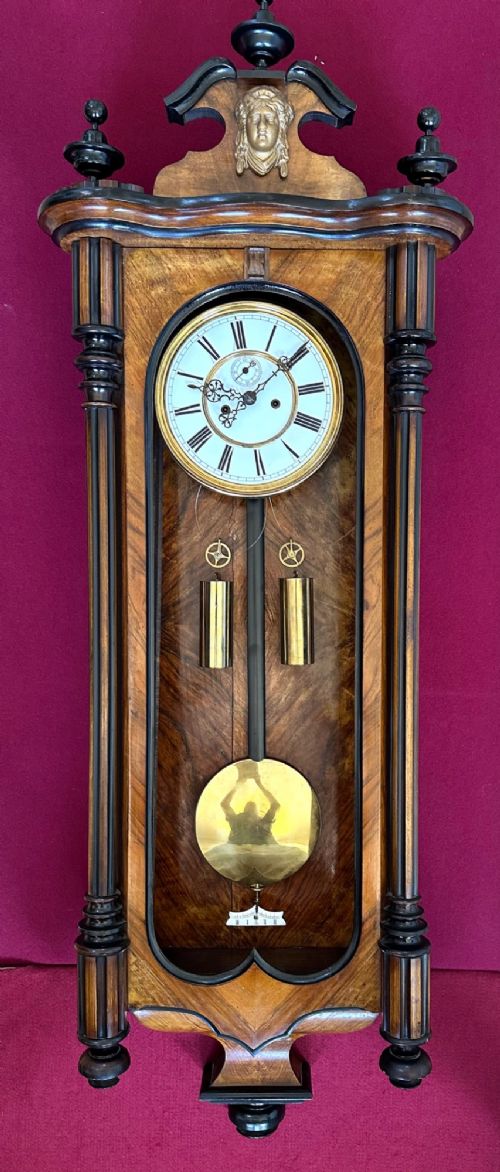
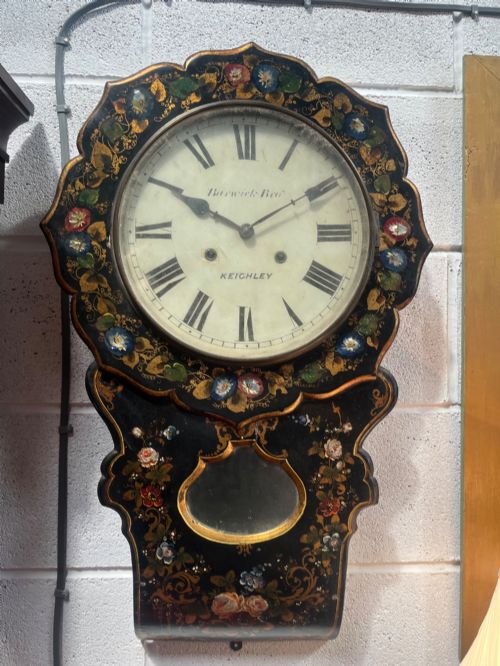
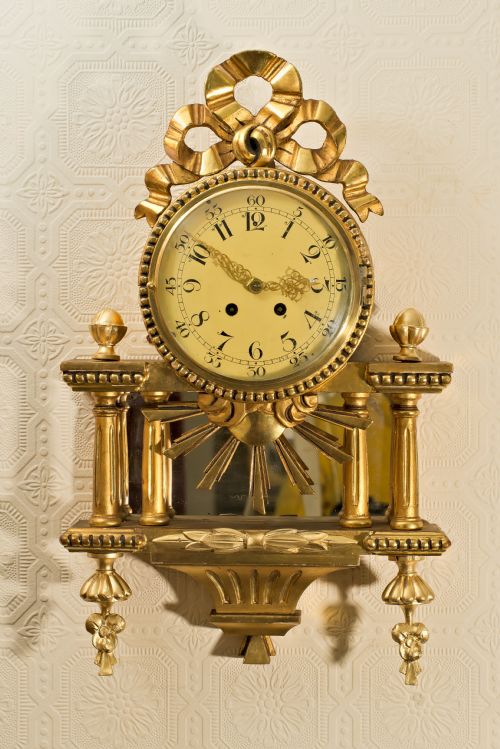
An antique wall hung clock serves as both a functional timepiece and a decorative fixture, originating from various periods such as the nineteenth century and the Victorian era. These pieces range from restrained school clocks to ornate cartel designs and weight-driven Vienna regulators.
The selections available span multiple stylistic traditions, including English mahogany drop-dial designs, French carved oak cases, and giltwood cartel forms. Buyers frequently encounter domestic timepieces housed in walnut, oak, and ebonised wood alongside specialised workshop instruments.
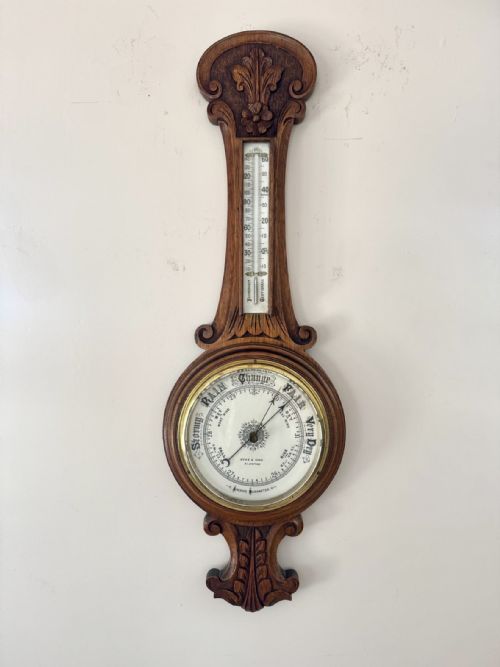
Beyond standard timekeeping, the category encompasses related wall instruments such as aneroid barometers and trade signs shaped like pocket watches. These functional objects reflect the domestic and commercial interior requirements of their respective eras.
Materials and construction methods
Cabinetmakers utilised timber veneers and solid woods such as mahogany, walnut, and oak to construct durable clock housings. Carved ornamentation, ebonised detailing, and giltwood applications frequently enhanced the exterior presentation of the timber cases.
Dials incorporated materials such as painted metal, white enamel, and brass, protected behind glazed hinged doors. Mechanical movements relied on brass gears and steel arbors, often driven by weighted cords, springs, or fusee mechanisms that regulated the pendulum swing.
The documented periods span from the mid-nineteenth century through the Edwardian era and into the Art Deco period of the 1940s.
Distinctions in quality and execution
The calibre of a wall clock depends heavily on the precision of its movement, with fusee mechanisms and striking gear representing superior mechanical execution. Robust construction of the timber case and refined hand-carving further distinguish finer workshop output from standard commercial production.
Material selection and dial legibility also dictate the standard of a piece, observable in crisp enamel numbering and well-cast bronze or ormolu mounts. Original components and untampered dial faces maintain the historical integrity of the clock.
Hyde & Sons Sleaford·WETTERSTRANDS·Josef Herzog·JOHANN BAPTIST BEHA·Perivale of England
The Antique Wall Hung Clock Glossary
- Fusee
- A conical pulley used with a cord or chain to maintain even force on the clock movement as the mainspring unwinds. This mechanism improves timekeeping accuracy throughout the power reserve cycle.
- Cartel clock
- A wall clock housed in an ornate ornamental frame made of giltwood, bronze, or brass. Originating in France, these pieces feature elaborate scrollwork and asymmetrical floral motifs.
- Drop-dial clock
- A wall clock featuring an extended wooden case below the circular dial, often used to accommodate a longer pendulum or a striking train. These domestic timepieces were common in offices, schools, and hallways.
- Vienna regulator
- A precision wall clock developed in Austria, characterised by a long glass-panelled door and a visible pendulum. They are prized for their accurate weight-driven movements.
- Comtoise clock
- A traditional weight-driven clock originating from the Jura region of France, frequently adapted for wall hanging. They are known for their pressed brass surrounds and long pendulum rods.
Antique Wall Hung Clock: Frequently Asked Questions
How do fusee movements work?
A fusee movement uses a conical pulley connected to the mainspring barrel by a fine chain. As the spring loses tension, the chain moves to a wider section of the cone, maintaining constant torque.
This clever mechanical compensation ensures the clock keeps accurate time as the power winds down between sessions.
Where should I hang a heavy wall clock?
Heavy wall clocks require secure mounting directly into timber wall studs or solid masonry using appropriate fixings. Hanging them from standard plasterboard without support risks damaging both the wall and the heavy timber case.
Ensuring a firm foundation also prevents vibrations from interfering with the delicate pendulum beat.
Why does my wall clock lose time?
A wall clock often loses time because the case is tilted, which alters the balance of the pendulum swing. Adjusting the crutch or the levelling screws at the base of the case usually resolves the beat error.
Accumulated dust in the brass movement or dried lubricants can also slow the gear train down.