



Antique Vestibule Lamp
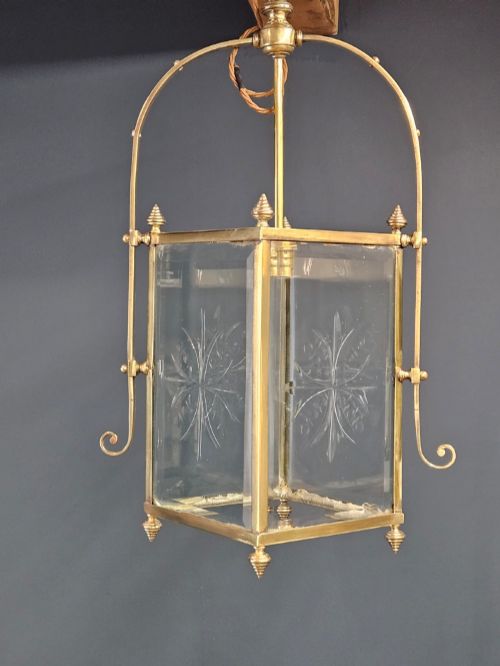
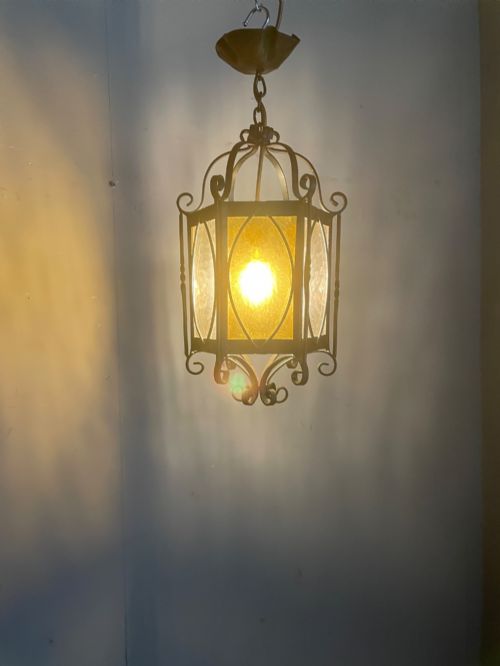
These antique vestibule lamps are hanging hall lanterns and ceiling lights in brass, copper, and bronze, designed to illuminate entranceways with period character.
Antique Vestibule Lamp
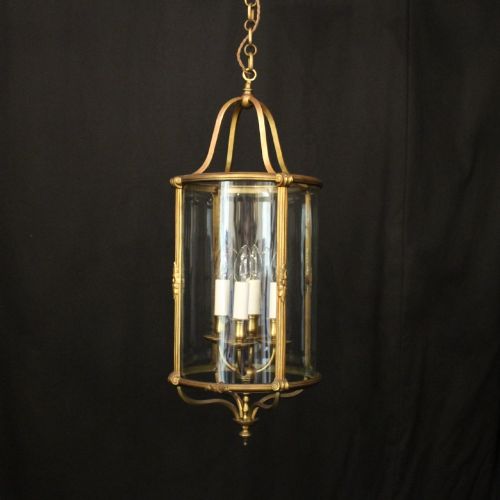
When searching for an antique vestibule lamp, you are examining ceiling lights, pendant lights, and hall lanterns engineered to light entryways and porches. These pieces originate from various eras, spanning the Victorian period, the Edwardian era, and the 1920s and 1930s. The forms vary from hexagonal glazed fixtures to multi-light hanging lanterns designed for high ceilings.
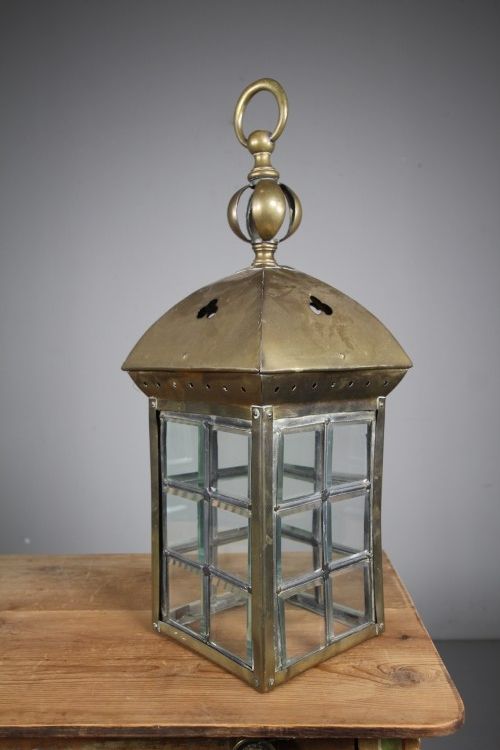
You are most likely to meet brass and glass hall lanterns from the Edwardian period or the early twentieth century on this page. These fixtures often feature bevelled or leaded glass panels held within metal frames of brass, copper, or wrought iron. French styles such as Rococo, Louis XVI, and French Chateau frequently appear alongside English designs.
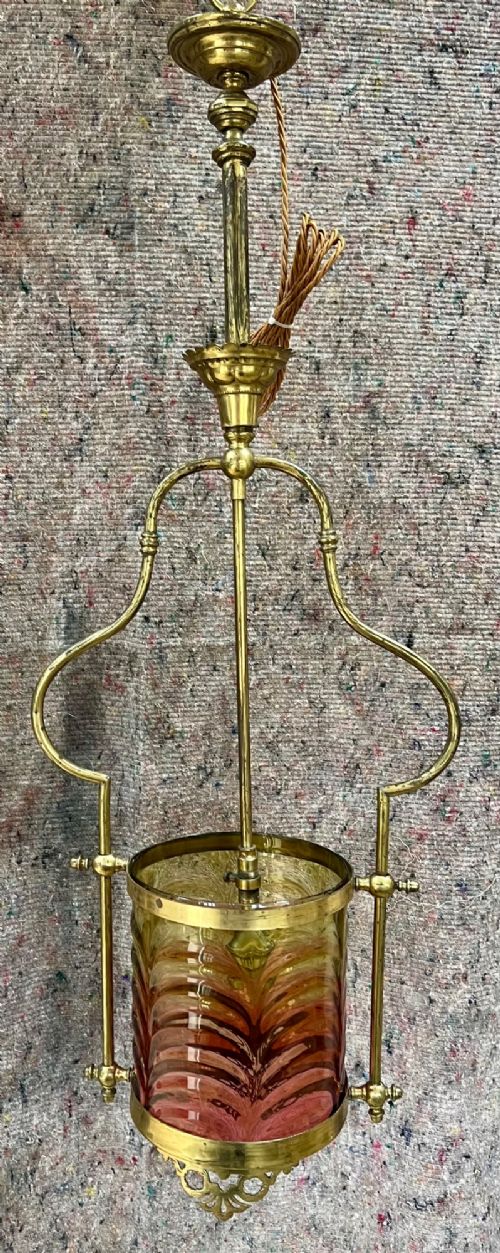
The objects serve primarily as overhead illumination for corridors, vestibules, and entrance halls, combining practical utility with decorative metalwork. Some examples incorporate coloured glass shades in red and yellow, while others rely on clear glass to maximise light output from multiple internal bulbs. Each piece reflects the domestic lighting requirements of its specific period of manufacture.
Materials and Construction Techniques
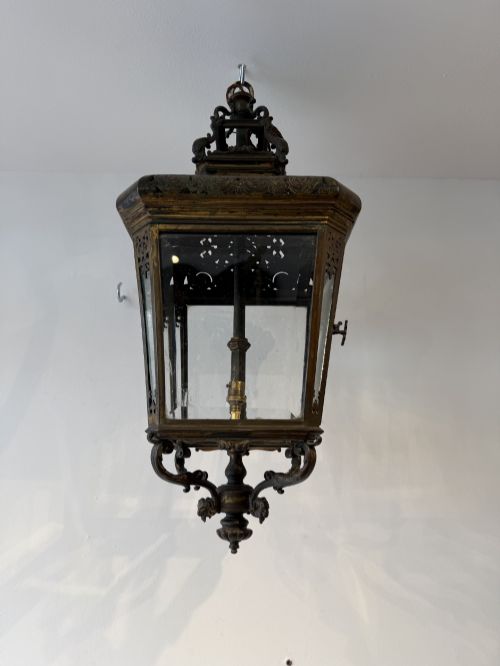
The construction of these lanterns relies heavily on durable metals combined with glazed panels. Makers utilised brass, copper, bronze, and gilt bronze for frames, alongside heavier structural elements forged from cast iron and wrought iron. Glass was then cut, leaded, or shaped to fit securely within the metal armature.
Metalworking techniques varied according to the desired style, ranging from blacksmith-made cast iron frames to finely chased gilt bronze mounts. Glazing methods included leaded construction and fitted glass panels secured by internal metal clips or came work. Surface finishes were left as natural patinated metal, polished brass, or applied gilding.
Antique Vestibule Lamp Retail Price Guide 2026
Typical asking prices for vestibule lamp among the pieces listed under this phrase on Sellingantiques today, from the lower quarter to the upper quarter. They describe what is for sale here now, not the wider market.
Materials recorded across the inventory include brass, copper, bronze, gilt bronze, wrought iron, cast iron, and leaded glass.
Distinctions in Quality and Manufacture
The distinction between simpler utilitarian lanterns and finer decorative examples lies in the weight of the metal and the complexity of the casting. Higher quality pieces utilise heavy bronze or substantial brass frames with crisp casting detail rather than thin sheet metal. Hand-forged wrought iron elements and elaborate decorative mounts distinguish superior workshop production from standard commercial output.
Glass selection and assembly further separate the grades of manufacture, particularly in leaded or coloured shade configurations. Precision in the fitting of glass panels and the integrity of the structural joints determine the overall solidity of the hanging fixture. Original surface patination and intact period suspension hardware contribute to the coherence of a piece.
The Antique Vestibule Lamp Glossary
- Vestibule lamp
- A ceiling-mounted or suspended light fixture designed specifically for an entrance hall, porch, or corridor. These pieces typically feature protective glass panels enclosing internal light sources.
- Gilt bronze
- Bronze metal that has been coated with a thin layer of gold or gold leaf to produce a rich, durable decorative surface. This material is frequently found on French decorative lanterns.
- Leaded glass
- Individual pieces of glass joined together with strips of lead came to form a patterned window or panel. This technique is often seen in early twentieth-century porch and hall lanterns.
- Wrought iron
- Iron that has been heated and hammered into shape by a blacksmith, resulting in a tough, fibrous material suitable for decorative and structural framing. It provides a robust framework for heavy glass panels.
Antique Vestibule Lamp: Frequently Asked Questions
How do I hang a vestibule lamp?
These lanterns suspend from ceilings using chains, rods, or direct ceiling mounts attached to the upper frame or canopy. Weight distribution requires secure fixing into ceiling joists or adequate support boxes.
Professional installation is recommended due to the substantial weight of cast iron, bronze, and glass components. Electrical wiring must be routed safely through the hanging mechanism to internal lamp holders.
Are these lamps suitable for outdoor porches?
Many examples on this page originated as porch or entrance lighting, constructed from weather-resistant metals like copper, brass, and iron. However, modern electrical safety ratings and the condition of original seals must be verified before external placement.
Sheltered outdoor locations protect delicate glass panels and historical metal finishes from direct exposure to severe weather. Enclosed designs naturally offer better protection against moisture than open-frame configurations.
What is the difference between a hall lantern and a pendant light?
Hall lanterns traditionally feature protective glass enclosing the light source on multiple sides, designed to shield candles or early electric bulbs from drafts in corridors. Pendant lights encompass a broader category of hanging fixtures, which may include open shades or simpler suspended forms without side glazing.
Vestibule lamps specifically emphasise enclosed or semi-enclosed frames suited to transitional spaces like hallways and entryways.