


Antique Vermeil Trinket Box
An antique vermeil trinket box brings gold-washed silver and agate into daily use for holding small treasures.
Antique Vermeil Trinket Box
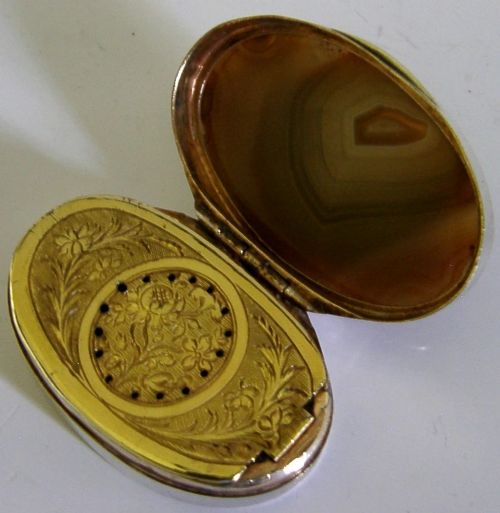
When buyers search for an antique vermeil trinket box, they encounter small silver-gilt containers designed for snuff, vinaigrettes, and intimate keepsakes. These items span the Georgian and Edwardian eras, incorporating solid silver and sterling silver gilt components.
The pieces on this page lean heavily towards Georgian English boxes and 19th-century French work, including cylindrical etuis and lidded bowls. Makers ranged across London workshops and French silversmiths utilising 950 silver and gold gilt.
Forms vary from pocket-sized snuff boxes to table boxes and niello decorated vessels. Agate panels and engine-turned guilloche designs appear frequently among the listed pieces.
How they were made
Silversmiths constructed these boxes using sterling silver, solid silver, and 950 silver, applying a gold gilt or vermeil finish to the surfaces. This gilding process involved coating the silver base in gold, yielding a rich golden exterior over precious metal.
Techniques included engine-turned guilloche designs etched into the metal and niello work for contrasting dark ornamentation. Craftsmen also set natural agate stones directly into sterling silver frames on Georgian vinaigrette boxes.
Listings feature silver gilt, sterling silver, and 950 silver across Georgian and Edwardian periods.
What varies in quality
Quality separates simple containers from exceptional works through the crispness of engine-turned guilloche patterns and the depth of the gold gilt application. Finely preserved silver-gilt surfaces retain an even, rich tone across every hinge and lid.
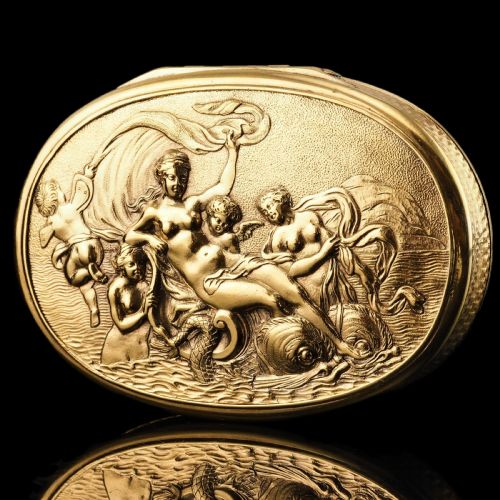
The inclusion of natural hardstones like agate and detailed figural scenes, such as the London-assayed snuff box depicting Venus, elevates the craftsmanship. Precision in the fitting of lids and the delicacy of engraved details distinguish the finer pieces.
The Antique Vermeil Trinket Box Glossary
- Vermeil
- Sterling silver plated with gold. This dual-layer material combines the strength of silver with the warm appearance of gold.
- Vinaigrette
- A small ornamental box featuring a perforated internal grille. It held a sponge soaked in aromatic vinegar for use in unventilated spaces.
- Guilloche
- A decorative engraving technique producing precise, intricate geometric patterns. It appears frequently on French silver-gilt boxes.
- Etui
- A small cylindrical case designed for holding needles, tweezers, or cosmetic implements. These slender objects often feature engine-turned silver gilt.
- Niello
- A black metallic alloy used as an inlay on engraved silver. It creates sharp contrast against the bright metal surface.
Antique Vermeil Trinket Box: Frequently Asked Questions
What is an antique vermeil trinket box?
An antique vermeil trinket box is a small container made from silver coated with a layer of gold. These pieces were historically used to store snuff, smelling salts, or small personal valuables.
Craftsmen produced them in various forms, including pocket snuff boxes, etuis, and lidded bowls, often incorporating decorative stones or intricate engravings.
How do I care for silver gilt boxes?
Silver gilt items require gentle maintenance to preserve the delicate gold layer over the silver base. Avoid abrasive polishes that can wear away the vermeil finish over time.
Store them in dry conditions away from direct sunlight and dust. A soft cloth is usually sufficient for routine cleaning.
How can I tell a Georgian box from a later one?
Georgian boxes often feature hallmarks specific to London assay offices alongside distinct neoclassical or early 19th-century motifs. The weight, hand-chased details, and integration of natural agate help identify this period.
Later 19th-century French pieces typically utilise 950 silver and feature mechanical engine-turned guilloche patterns or niello decoration.
What were etuis used for?
Etuis served as portable fitted cases for small personal accessories such as toothpicks, tweezers, or sewing needles. Wealthy individuals carried them in pockets or suspended them from chatelaines.
They are distinguished by their slender, often cylindrical shape and fine silver gilt or niello exterior work.