


Antique Venetian Glass
Antique venetian glass brings decorative brilliance to interiors through centuries of skilled glassmaking and mirror craft.
Antique Venetian Glass
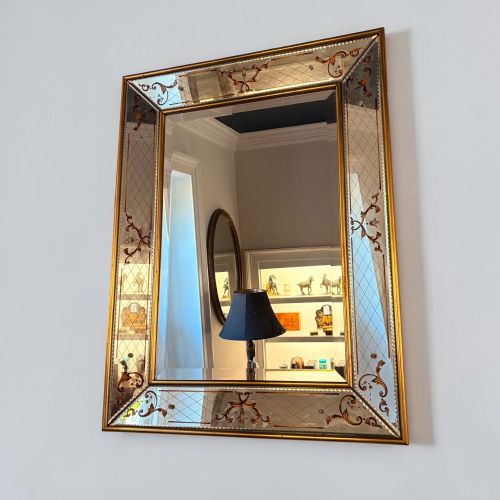
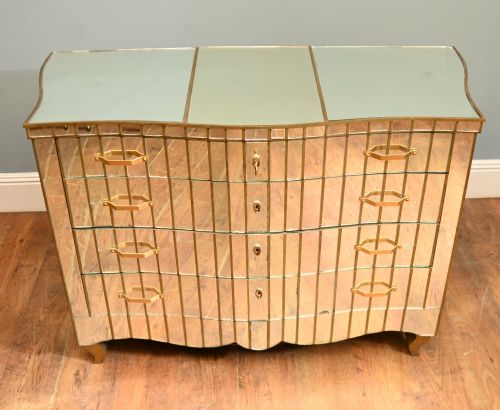
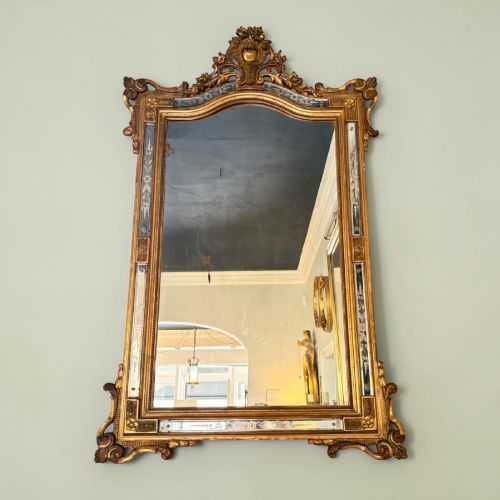
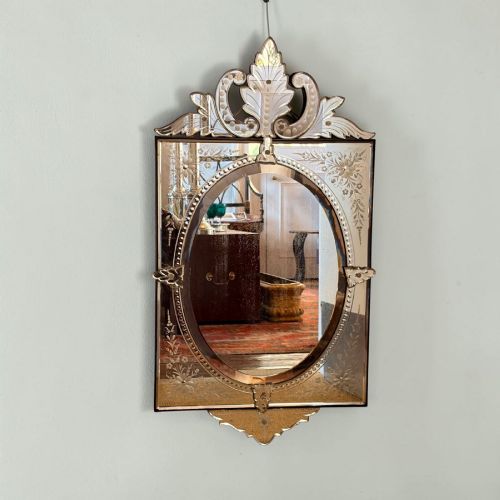
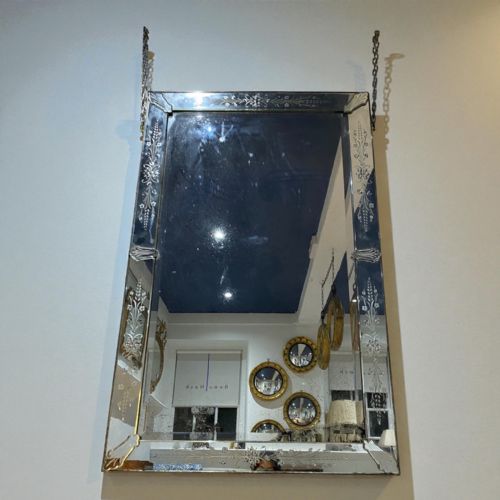
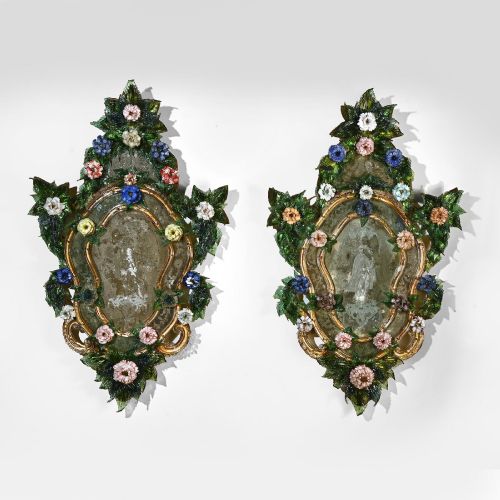
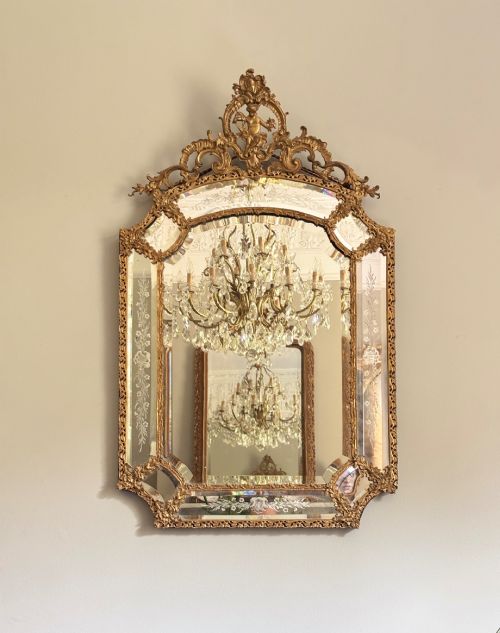
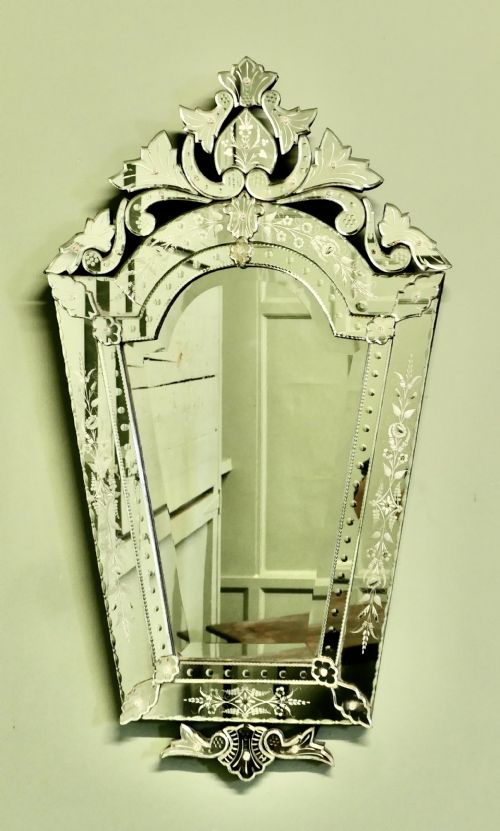
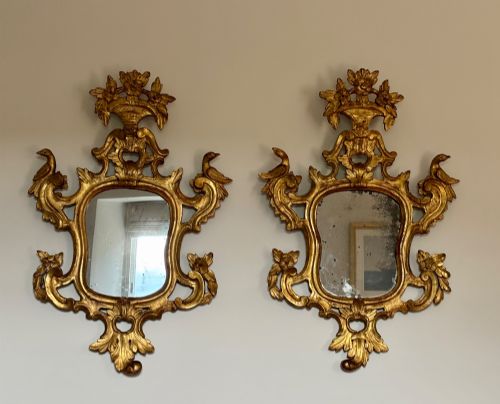
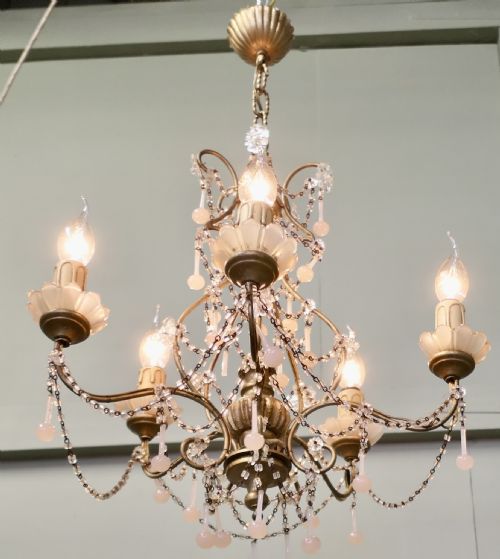
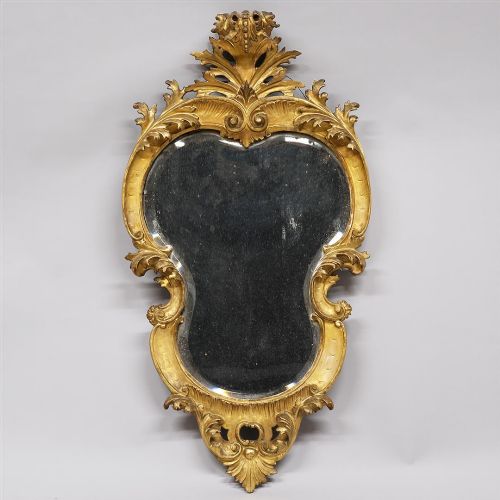
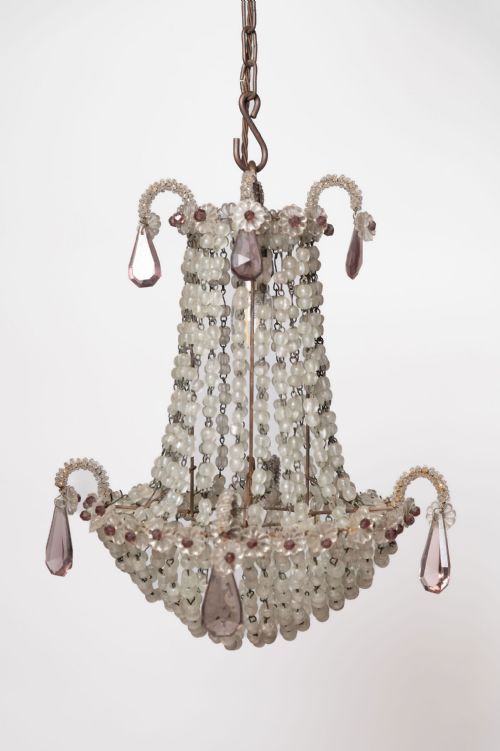
Mirrors form a large part of the selection, appearing in cushion, overmantle, and rococo styles framed in giltwood or coloured glass plates. Smaller decorative objects such as millefiori paperweights, glass bowls, ewers, and wine glasses also feature frequently alongside branching chandeliers.
The objects bridge multiple aesthetic movements, encompassing Venetian Rococo, Victorian, Art Deco, and revival styles. Pieces range from grand carved giltwood wall mirrors to delicate tableware decorated with latticinio bands.
How they were made
Makers utilised free-blowing and hand-blown techniques to shape vessels, ewers, and decorative paperweights, incorporating coloured glass, aventurine inclusions, and intricate millefiori canes. Glass elements were often combined with carved, giltwood, or metal frames in the production of mirrors and wall lights.
Surface ornamentation involved cutting, etching, and hand-painting directly onto the glass plates or vessel bodies. Specialised techniques such as latticinio introduced opaque white glass threads into clear or coloured matrices during the blowing process.
Several pieces include tiny trapped air bubbles and charming asymmetries left by nineteenth-century glassblowers who simply refused to use a ruler.
What varies in quality
The refinement of the hand-carved giltwood or polychrome frames supporting the mirrors dictates much of the visual impact, alongside the clarity and complexity of the engraved plates. Higher quality pieces display deeply detailed chisel work and sophisticated proportions within the glass border sections.
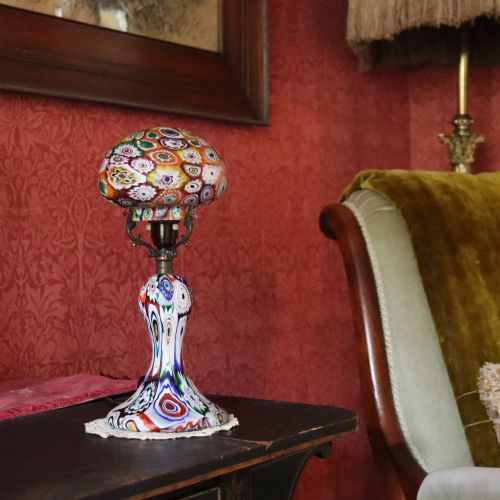
In glassware and paperweights, the precision of the millefiori arrangement, the depth of the coloured glass, and the complexity of internal optical effects separate standard items from superior examples. Intricate handling of specialised decorative threads like latticinio points to higher artisanal skill.
Fratelli Toso·Salviati·Pauly and Co
The Antique Venetian Glass Glossary
- Millefiori
- A glasswork technique featuring multicolored patterns created by cross-sections of glass canes fused together. It translates literally to a thousand flowers.
- Latticinio
- A type of glass decoration enclosing opaque white glass threads within clear glass. It creates delicate net or lace-like patterns.
- Ewer
- A large jug with a wide spout used historically for water or wine. They appear in hand-blown glass with applied footed bases.
- Aventurine
- Glass containing small metallic inclusions of copper or other minerals that sparkle in the light. It requires precise temperature control during cooling to form properly.
Antique Venetian Glass: Frequently Asked Questions
What is Venetian glass?
Venetian glass encompasses blown and shaped glass objects produced in Venice and on the nearby island of Murano. The tradition spans centuries of specialised techniques including coloured glass, millefiori, and engraved mirror production.
Items range from large wall mirrors with etched plates to small decorative paperweights and tableware.
How do I identify Murano glass?
Murano glass is identified through traditional manufacturing characteristics such as hand-blown forms, distinct coloured glass inclusions, and specific decorative styles like millefiori patterns. Many pieces originate from historic island workshops and documented makers.
Examining the weight, optical clarity, and surface finishing helps distinguish authentic Venetian production from later copies.
Where should I hang a Venetian mirror?
Venetian mirrors function well as statement pieces in hallways, above living room mantelpieces, or as feature wall hangings in bedrooms. Their reflective qualities and decorative frames help brighten spaces and add architectural interest.
Ensure the wall structure supports the weight, particularly for larger giltwood and cushion mirror designs.
How do I clean antique glass?
Clean antique glass gently using a soft, lint-free cloth and mild, non-abrasive cleaning solution applied lightly to the surface. Avoid spraying liquids directly onto the glass to prevent moisture seeping behind antique mirror plates or into joined sections.
Take care around giltwood frames and painted glass surfaces to protect the original finish from moisture damage.