







Antique Veneered Desk
An antique veneered desk brings rich figuring and historical timber to a room, offering a disciplined surface for daily writing.
Antique Veneered Desk
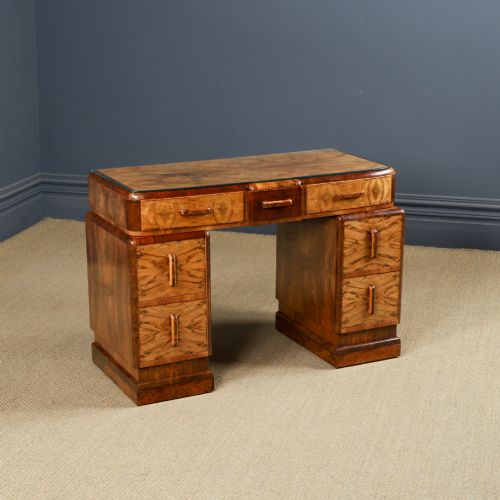
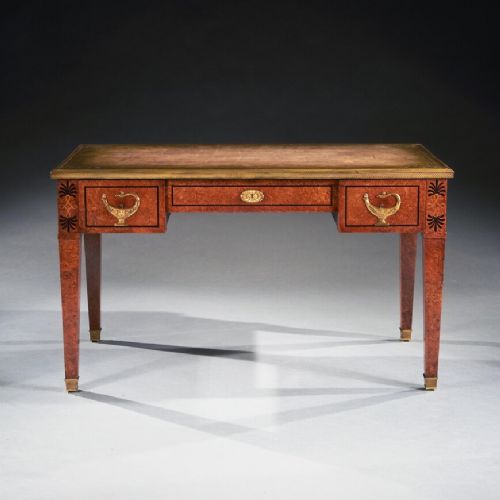
An antique veneered desk is a writing surface or cabinet finished with thin slices of decorative timber applied to a supportive structural carcase. These pieces range from compact kneehole tables and fall-front bureaux to expansive pedestal models designed for office use.
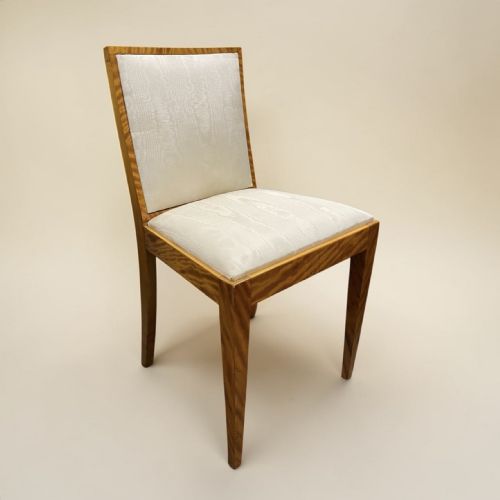
The selection on this page draws heavily from Georgian, Victorian, and Art Deco periods, alongside revival styles spanning the seventeenth to twentieth centuries. Walnut and burr walnut dominate the earlier eras, while exotic woods and chrome accents emerge in later decades.
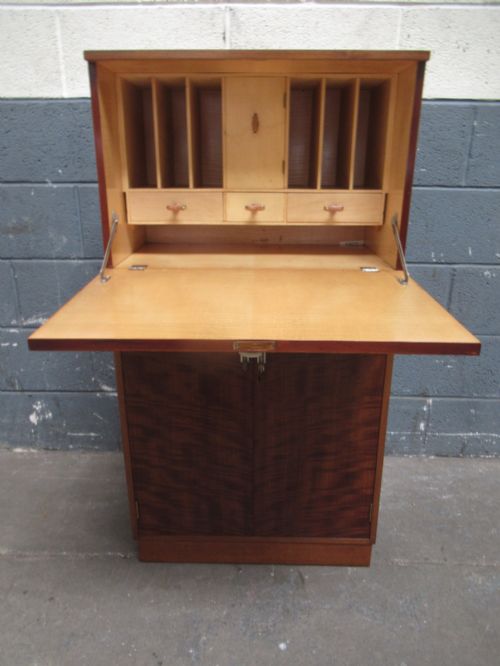
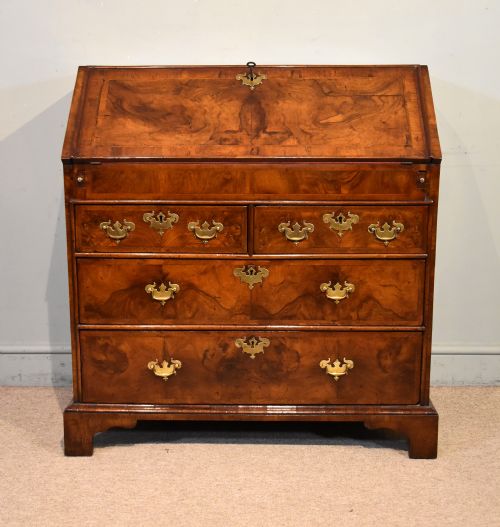
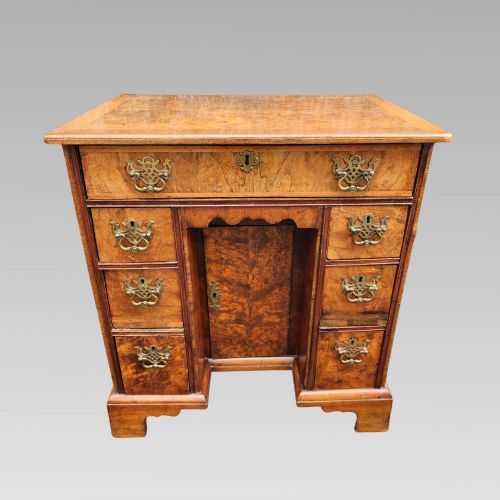
Bureaux and kneehole forms provide enclosed storage with fitted drawers and pigeonholes behind a writing flap or central recess. Side tables and writing desks offer simpler, open surfaces suited to lighter correspondence.
Materials and construction
Cabinetmakers applied finely sliced veneers such as walnut, kingwood, tulipwood, amboyna, and yew over secondary structural timbers using animal protein glues. This technique allowed craftsmen to display dramatic grain patterns, including quarter-veneering, oyster cuts, and intricate featherbanding.
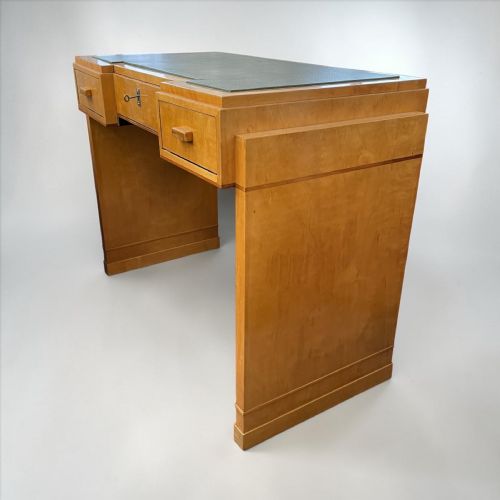
Hardware played an essential structural and decorative role, incorporating cast brass handles, escutcheons, ormolu mounts, and occasionally chrome. Leather inserts often lined the writing surfaces, providing a durable plane for quill or pen.
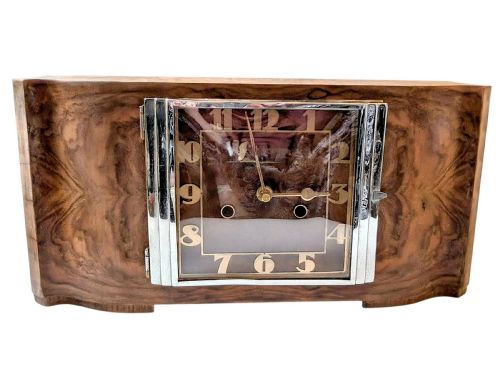
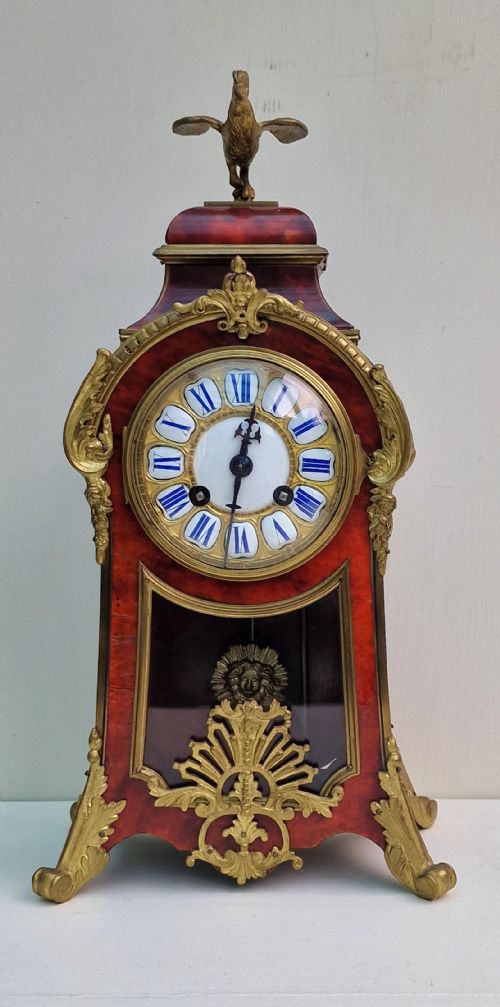
Among the writing furniture and tables, a handful of striking mantel clocks finished in tortoise shell and chrome slip quietly into the mix.
What separates the grades
The choice of timber figure and the precision of the veneer matching dictate the initial visual impact of the piece. Master craftsmen aligned grains symmetrically across drawer fronts and tops, creating harmonious geometric patterns.
Internal construction and secondary woods reveal the standard of workshop execution. Superior pieces maintain meticulous dovetail joints in the drawer construction and intact original interior fittings rather than replaced compartments.
Bath Cabinet Makers·Hille·Coxed and Woster
The Antique Veneered Desk Glossary
- Veneer
- A thin layer of figured wood applied to a solid secondary carcase to provide a decorative surface. This method maximises scarce timber resources and creates complex grain patterns.
- Bureau
- A desk featuring a sloping fall-front flap that opens to reveal a fitted interior of small drawers and pigeonholes. It often sits upon a chest of drawers or a kneehole frame.
- Oyster veneer
- Circular slices cut transversely across small branches or roots, resembling the shape of an oyster shell. Cabinetmakers arranged these closely together to form dense, patterned surfaces.
- Kneehole desk
- A compact writing table with a central recess for the user's legs, flanked by pedestals of small drawers. This form became popular during the late seventeenth and eighteenth centuries.
- Featherbanding
- A decorative inlay technique using two strips of veneer laid diagonally to form a herringbone pattern around the edges of a drawer or top. It frames the central grain panels.
- Parquetry
- Geometric mosaic woodwork formed by small pieces of veneer fitted together to create patterns. It appears frequently on French and continental pieces.
Antique Veneered Desk: Frequently Asked Questions
What is oyster veneer?
Oyster veneer consists of small, round slices cut across the branch of a tree rather than down its length. This technique produces concentric growth rings that resemble oyster shells.
Craftsmen arranged these roundels closely across table tops and cabinet fronts during the seventeenth and early eighteenth centuries to create intricate, repeating patterns.
How do I care for antique veneer?
Antique veneered surfaces require stable indoor humidity levels and protection from direct sunlight to prevent the timber from drying or warping. Keep them away from direct heat sources such as radiators.
Apply a traditional beeswax polish sparingly and buff with a soft cloth to maintain the lustre of the finish. Avoid silicone-based sprays that can penetrate old timber finishes.
What is featherbanding?
Featherbanding is a decorative border inlay made by cutting thin strips of contrasting wood and laying them in a V-shape. This creates a distinct herringbone effect around the perimeter of a drawer front or table top.
Cabinetmakers used this technique during the Georgian period to frame central panels of figured walnut or other decorative veneers.
Where were kneehole desks used?
Kneehole desks served as domestic writing tables or dressing surfaces in private chambers and libraries. Their smaller scale allowed them to fit into tighter spaces than large partners desks.
The central recess accommodated a chair while the flanking pedestals provided storage for papers and personal items.