

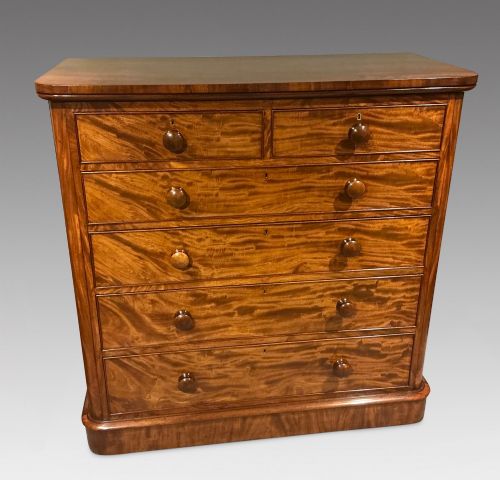


Antique Veneered Commode
An antique veneered commode brings rich timber figures and historical depth to a room, offering both generous storage and striking surface pattern.
Antique Veneered Commode
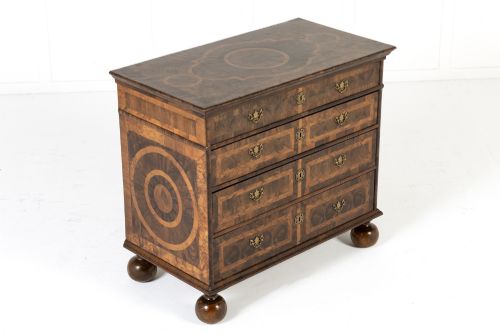
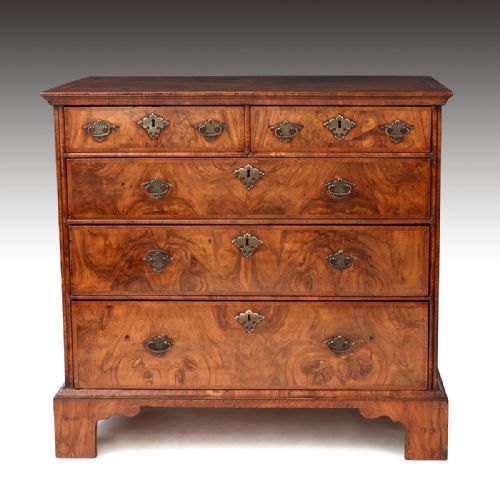
When searching for an antique veneered commode, buyers encounter case furniture built across several centuries, with walnut, mahogany and burr timbers dominating the selection. Pieces range from seventeenth-century William and Mary period designs to nineteenth-century continental examples and later interpretations.
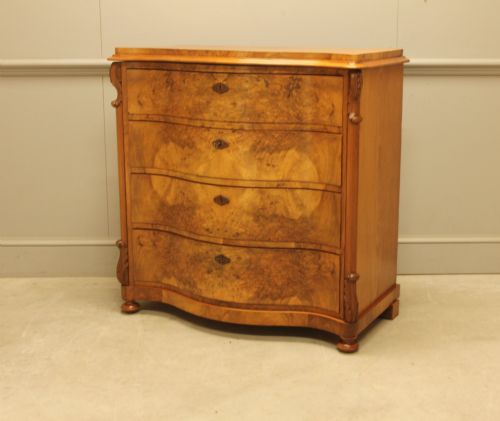
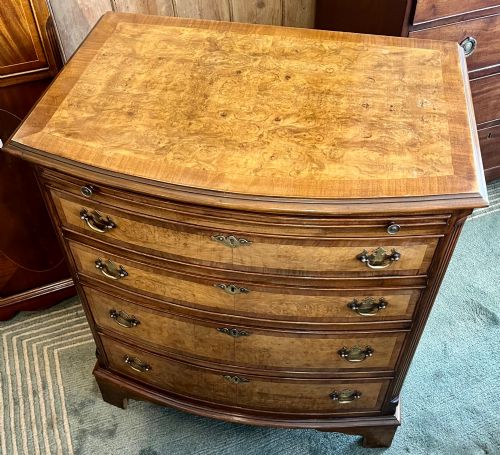
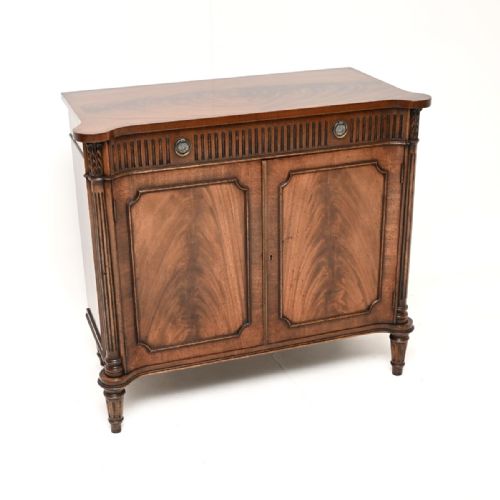
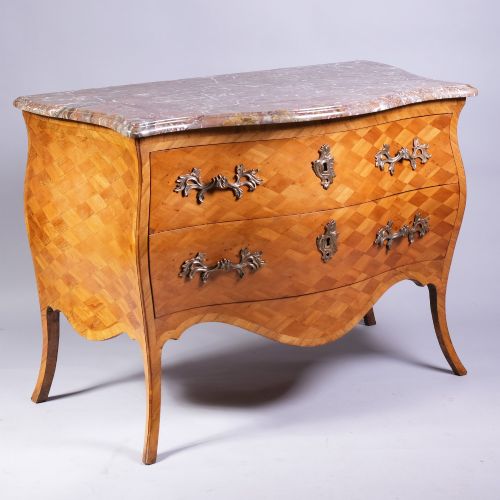
The most prevalent forms on this page include chests of drawers and serpentine or bow-front cabinets, alongside smaller examples such as miniature furniture. Regional variations span English walnut pieces, French marble-topped commodes, Swedish Biedermeier furniture and Dutch marquetry works.
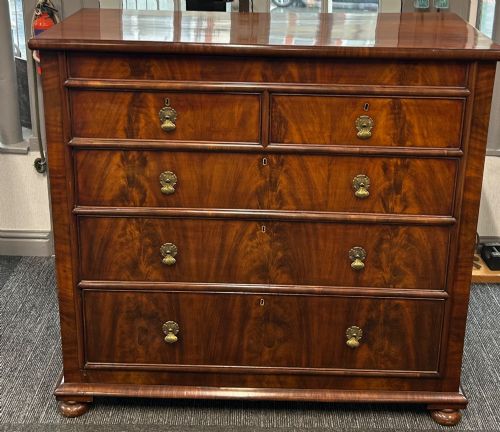
Early periods rely heavily on intricate wood patterns, while later nineteenth-century examples often utilise flame mahogany or exotic woods like kingwood and tulipwood. Cabinets stand variously on bracket feet, integrated legs or plinth bases, serving both bedroom and reception room functions.
Materials and construction
Construction centres on laying decorative timber slices over secondary carcassing woods such as oak, pine or deal. Cabinetmakers selected figured veneers like burr walnut, flame mahogany and laburnum to create symmetrical grain patterns across drawer fronts and tops.
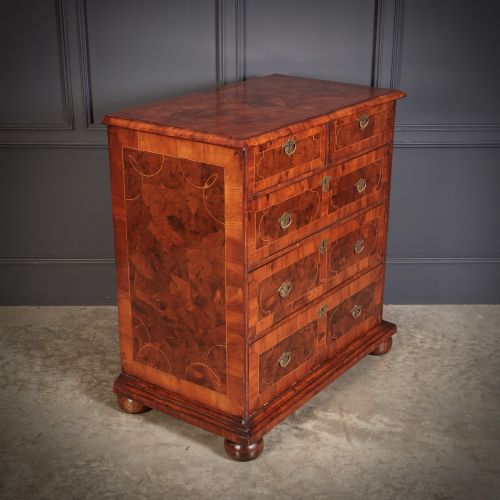
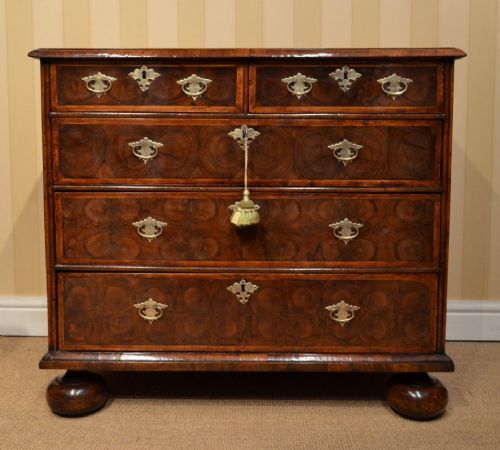
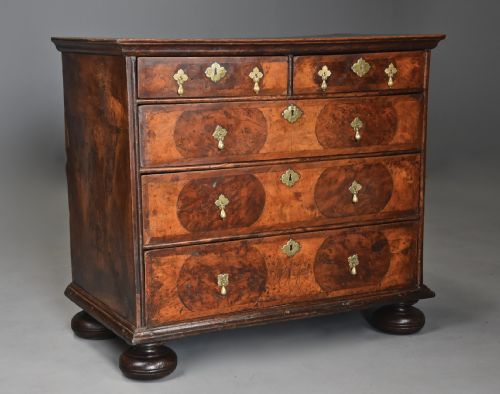
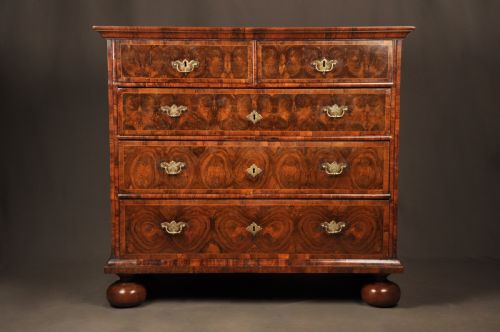
Early seventeenth-century work frequently employs oyster cutting, where small branches are sliced transversely to produce circular or oval motifs resembling shells. Marquetry techniques also appear, inlaying various woods to form floral or geometric designs.
Later pieces integrate imported tropical hardwoods such as palisander, kingwood and tulipwood, sometimes paired with marble or faux marble tops. Brass handles, escutcheons and mounts complement the timber surfaces, reflecting the prevailing style of each period.
Antique Veneered Commode Retail Price Guide 2026
Typical asking prices for veneered commode among the pieces listed under this phrase on Sellingantiques today, from the lower quarter to the upper quarter. They describe what is for sale here now, not the wider market.
Listings feature walnut, oak, pine, mahogany and exotic timbers like kingwood, reflecting centuries of European cabinetmaking traditions.
Assessing quality
Quality rests on the selection and matching of the veneer timber, where harmonious grain alignment across drawer banks distinguishes finer cabinet work. The complexity of the underlying timber pattern, such as closely packed burr growth or distinct oyster roundels, dictates visual impact.
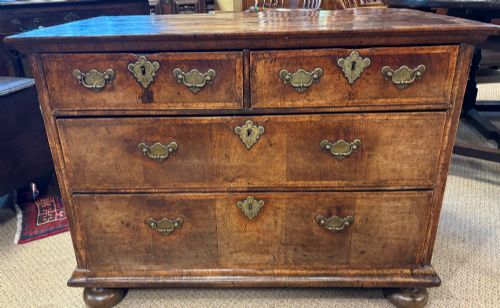
Construction integrity is visible in the dovetailing of drawer linings and the stability of the secondary wood beneath the veneer. The preservation of original brass hardware, surface patina and the crispness of inlaid details further separate standard production from superior examples.
The Antique Veneered Commode Glossary
- Oyster veneer
- Transverse slices of small branches arranged to resemble oyster shells. This method is characteristic of late seventeenth-century English and continental furniture.
- Marquetry
- The art of applying small pieces of veneer to form decorative patterns and pictures. It often incorporates varied woods to achieve contrasting tones.
- Serpentine
- A curved shape featuring a convex centre flanked by concave ends. This contour gives commodes and chests a fluid, undulating profile.
- Biedermeier
- A Central European style spanning the nineteenth century known for clean lines and blonde woods. It prioritises domestic utility and visual warmth over ornate carving.
Antique Veneered Commode: Frequently Asked Questions
What is an antique veneered commode?
An antique veneered commode is a low cabinet or chest of drawers decorated with fine wood veneers over a solid timber carcass. These pieces originate from various European traditions across the seventeenth, eighteenth and nineteenth centuries.
Cabinetmakers utilised timbers like walnut, mahogany and laburnum to produce decorative grain patterns on the drawer fronts and top surfaces. They serve as both functional storage units and decorative focal points in interiors.
How do I date an oyster veneered chest?
Oyster veneered chests are typically dated to the late seventeenth century, specifically the William and Mary period. Examining the secondary woods, such as oak or pine, helps confirm this timeframe.
The presence of cross-grain mouldings, subtle walnut or olive branch slices, and hand-cut dovetails within the drawers further point towards late seventeenth or early eighteenth-century construction.
Where were marble-topped commodes made?
Marble-topped commodes frequently originate from France and continental Europe during the eighteenth and nineteenth centuries. These pieces often feature neoclassical proportions and exotic wood veneers.
French workshops utilised marbles in various tones, sometimes pairing them with kingwood, tulipwood or palisander carcass structures. Later nineteenth-century continental pieces also adopted this luxurious surface treatment.
How do I care for antique veneer?
Antique veneer requires stable environmental conditions with minimal humidity fluctuations to prevent the timber from splitting or lifting. Keeping pieces away from direct sunlight and heat sources protects the polish and natural colour.
Polishing should be done sparingly using traditional beeswax, avoiding modern silicone sprays that can penetrate old finishes. Regular dusting with a soft, dry cloth is sufficient for daily maintenance.