


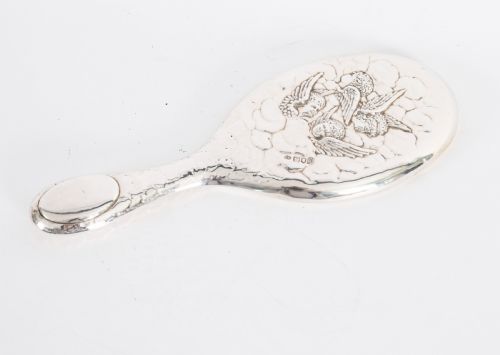


Antique Vanity Set Mirror
An antique vanity set mirror brings dressing room elegance to your daily routine with period craftsmanship in silver, glass, and fine woods.
Antique Vanity Set Mirror
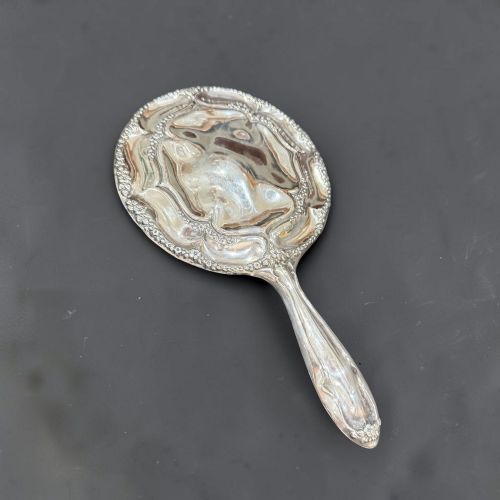
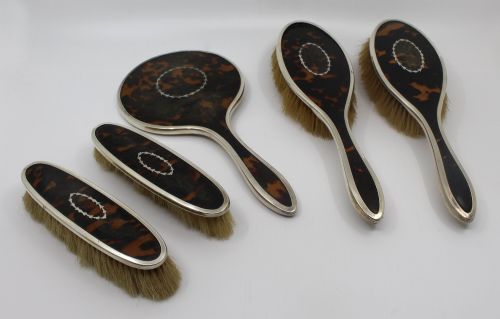
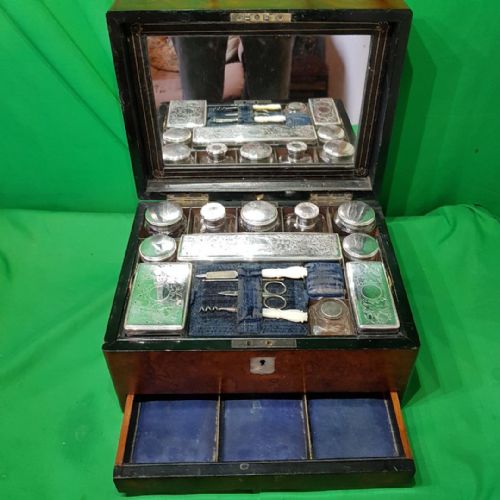
An antique vanity set mirror encompasses everything from hand-held pieces to large dressing table swing glasses intended for the bedroom or boudoir. You encounter compact travelling sets in fitted cases alongside heavy brass, silver, and wood-framed mirrors designed for stationary placement.
The pieces span the Victorian, Edwardian, and Art Deco eras, reflecting shifting tastes from ornate Rococo revival curves to clean modernist lines. Walnut, mahogany, and satinwood dominate the wooden frames and furniture suites, while silver and gilt bronze appear in smaller handheld items.
Makers such as Charles Boyton, Heals, and Asprey produced these items for domestic grooming and travel. The selection on this page ranges from simple brass wall mirrors to complete bedroom suites with integrated dressing chests.
How they were made
Metals such as sterling silver and brass undergo embossing, casting, and engine-turning to create textured geometric or floral patterns on hand mirrors and compacts. Enamel work, particularly guilloche, adds translucent colour over engine-turned metal grounds.
Wood pieces utilise walnut, oak, mahogany, and satinwood, often enhanced with marquetry, burr veneers, or carved supports. Frames and furniture suites show traditional joinery alongside specialised decorative treatments like limed oak finishes and Chinoiserie painting.
Materials span sterling silver, brass, glass, velvet, and woods including walnut, oak, mahogany, and satinwood.
What varies in quality
The caliber of metalwork and engraving determines the distinction between standard production items and top-tier pieces by notable makers. Crisp chasing on silver, flawless guilloche enamel without chips, and dense burr walnut veneers signify superior workshop standards.
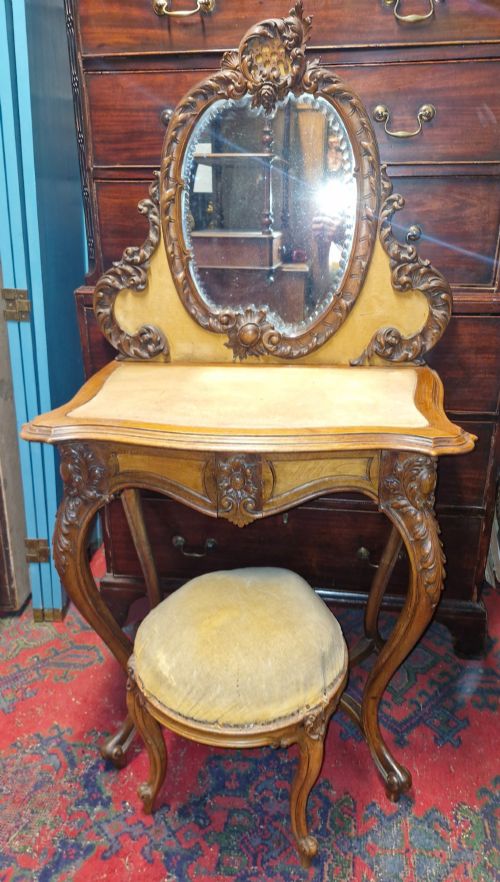
Structural integrity in dressing tables and framed mirrors rests upon the preservation of original wooden surfaces, mercury or early silvered glass, and fitted interior velvet linings. Pieces retaining their matching stools or complete fitted travelling cases command greater interest.
Charles Boyton·Heals·Rowley Gallery·Asprey·B Cohen and Sons
The Antique Vanity Set Mirror Glossary
- Guilloche
- An intricate mechanical engraving technique that etches precise geometric patterns into metal, frequently covered with translucent enamel. It appears often on Art Deco mirrors and compacts.
- Compactum
- A large fitted wardrobe combining hanging space with drawers and shelves, often found paired with dressing tables in Edwardian and Victorian bedroom suites. It maximises bedroom storage.
- Champleve
- An enamelling technique where troughs or cells are carved into the surface of a bronze or metal object and filled with vitreous enamel before firing. This method creates colourful decorative motifs on frames and mirrors.
- Swing mirror
- A glass plate set on pivots within a frame or between upright supports, allowing the user to tilt the reflection angle. These are typically mounted on small drawer bases or dressing chests.
- Marquetry
- The art of applying thin pieces of wood veneer to a structure to form decorative patterns or pictures. Craftsmen utilise contrasting timber tones to ornament furniture surfaces.
Antique Vanity Set Mirror: Frequently Asked Questions
How do I date an antique mirror?
Dating relies upon stylistic markers such as the heavy ornamentation of Victorian pieces, the inlaid satinwood of the Edwardian era, or the geometric enamel work typical of Art Deco design. Maker marks and silver hallmarks provide exact years where present.
Examining construction techniques, backing materials, and the type of glass bevelling helps confirm the period of manufacture.
Are travelling vanity sets complete?
Many surviving travelling sets retain their original fitted leather or wooden cases housing glass jars, brushes, and silver-topped containers. Some pieces show losses to minor implements over time.
Checking the interior fittings reveals whether the set remains in its original configuration.
How should I clean silver mirror backs?
Sterling silver backs and handles require gentle cleaning with a specialised silver cloth to preserve the patina and embossed details. Avoid harsh liquid dips that damage exposed mirror foil or enamel work.
Keep moisture away from the edges of the glass plate to prevent silvering deterioration.
What is the difference between a vanity set and a dressing table?
A vanity set usually refers to a collection of matching handheld grooming items, including brushes, mirrors, and cosmetic containers. A dressing table is a larger piece of bedroom furniture featuring a fixed or swing mirror.
Both categories frequently intersect when bedroom suites include complete matching dressing accessories.