



Antique Urn Marquetry Table
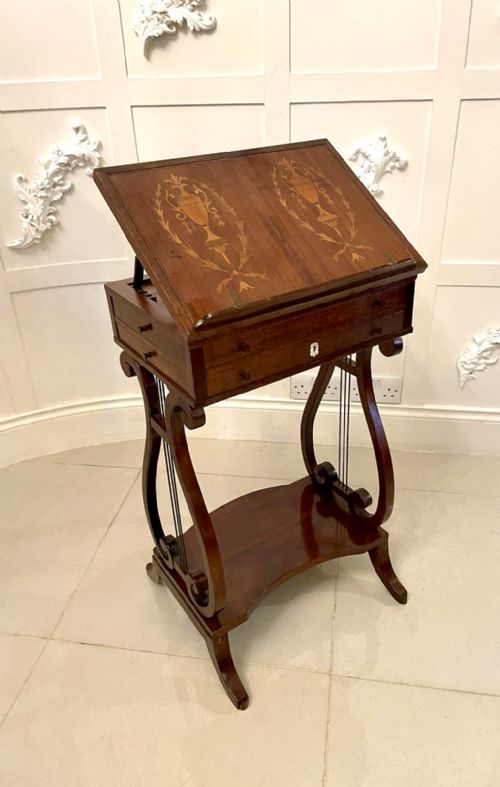
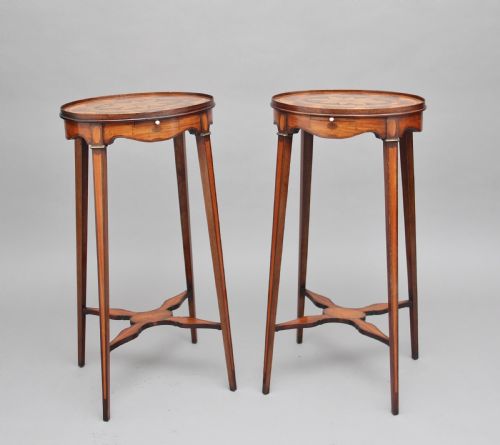
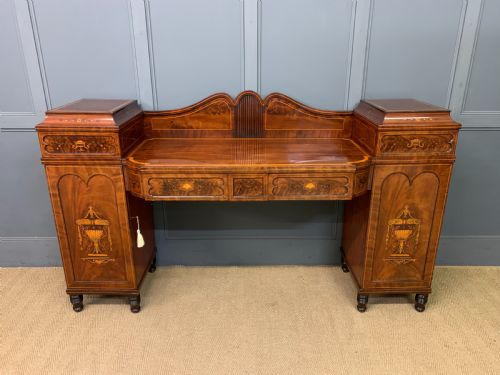
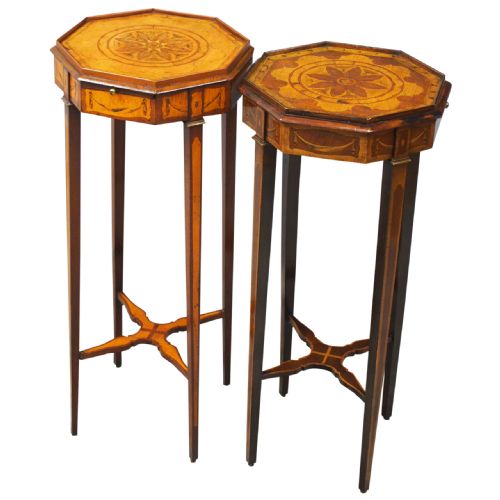
These antique urn marquetry table examples are finely inlaid timber stands and side tables built for display.
Antique Urn Marquetry Table
An antique urn marquetry table search reveals a selection of small display furniture, primarily originating from the Edwardian period and the nineteenth century. Buyers encounter forms such as urn stands, plant stands, kettle stands, and occasional side tables built in timber.
The assortment on this page draws heavily from Edwardian production and Sheraton Revival styling, alongside George III and Victorian pieces. Makers utilised specific timber types like mahogany and satinwood to create surfaces for ornamental display in domestic interiors.
Construction and materials
The pieces rely on solid mahogany and satinwood foundations, often enriched with contrasting boxwood and rosewood inlay. Artisans applied wood inlay and marquetry techniques to form delicate decorative motifs across the table tops and stands.
Brass fittings and bone details occasionally supplement the timber framework, whilst precise joinery underpins the structural stability of these small tables and stands.
The listings span from the eighteenth century through to the Edwardian era, featuring mahogany, satinwood, and boxwood.
Judging the standard
Superior examples demonstrate tighter geometric precision and greater botanical complexity within the marquetry and satinwood inlay. The crispness of the timber contrast and the finesse of the supporting legs separate standard production from finer work.
The choice of figured timbers and the integration of secondary woods such as boxwood determine the visual depth of the surface decoration.
The Antique Urn Marquetry Table Glossary
- Marquetry
- Decorative patterns formed by fitting together small pieces of veneer onto a structural base. This technique allows for intricate pictorial or geometric designs across table tops.
- Satinwood
- A durable, lustrous timber native to India and Sri Lanka, prized for its golden yellow sheen. It serves as a primary wood or a contrasting veneer in inlaid furniture.
- Boxwood
- A dense, pale wood frequently utilised for fine stringing and inlay details. Its light colour provides sharp visual contrast against darker timbers like mahogany.
- Sheraton Revival
- A late nineteenth and early twentieth century design movement that reinterpreted the light, classical furniture forms of the eighteenth century. Pieces from this revival often feature delicate inlay and tapered legs.
- Urn Stand
- A tall, slender occasional table designed specifically to hold a decorative urn or kettle. These stands prioritise height and stability over large surface areas.
Antique Urn Marquetry Table: Frequently Asked Questions
What is an urn stand used for?
These tall, slender stands provided a stable elevated surface for heavy tea urns or decorative vessels in formal rooms.
Today they function effectively as plant stands or display pedestals in domestic interiors.
How do I identify Edwardian inlay?
Edwardian inlaid pieces typically utilise mahogany or satinwood combined with boxwood stringing and balanced floral motifs.
They reflect the lighter aesthetic of the Sheraton Revival movement popular around nineteen hundred.
Are these tables suitable for daily use?
These occasional tables and stands accommodate light placement of lamps, books, or decorative objects rather than heavy loading.
Their historic veneer surfaces require careful placement away from direct heat and moisture.
How do I distinguish George III from later revival pieces?
George III pieces date from the eighteenth and early nineteenth centuries, displaying specific timber ageing and construction methods.
Sheraton Revival items date from later periods, often copying earlier forms with distinct twentieth century manufacturing traits.