
Antique Turned Candle Holders
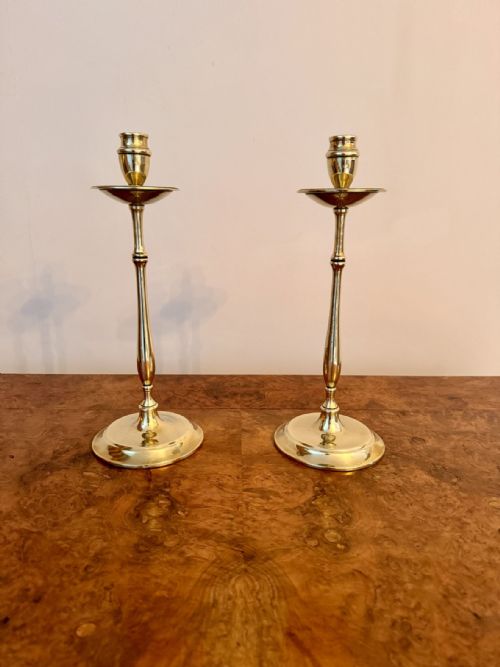
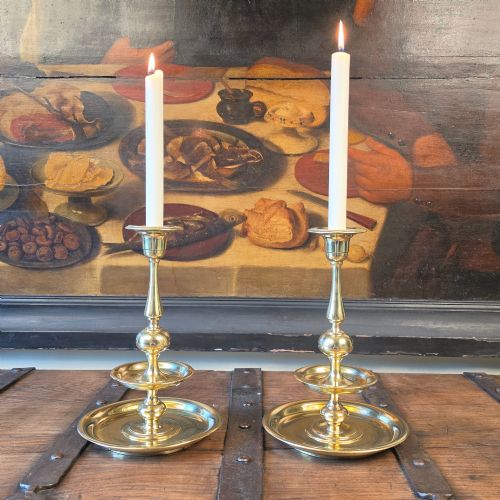
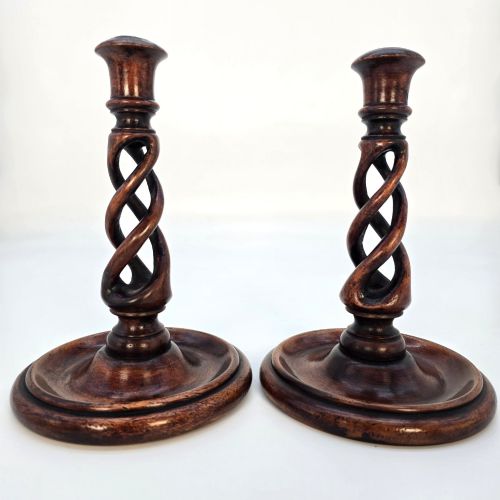
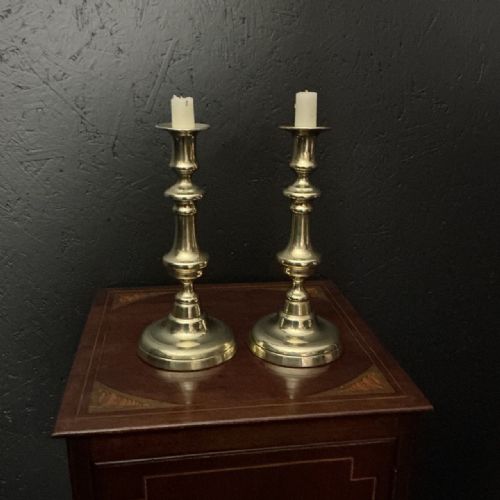
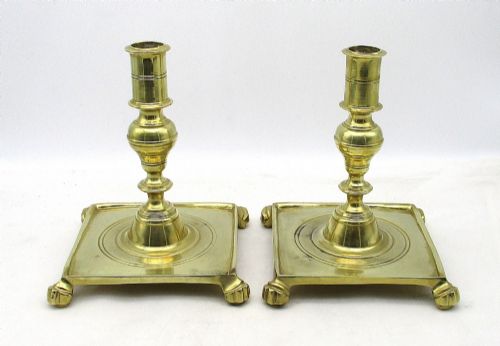
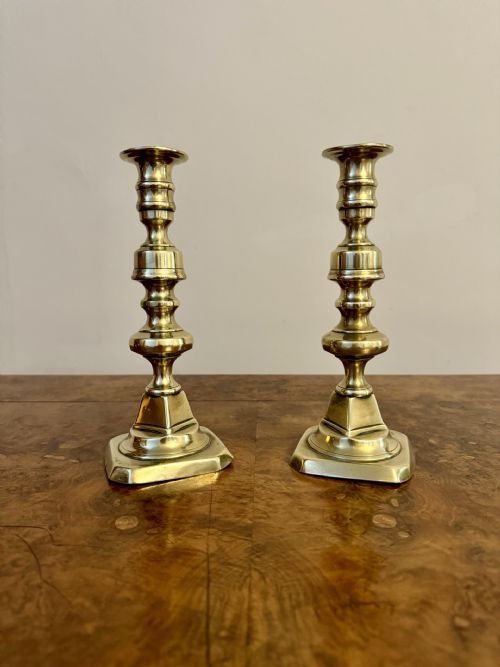
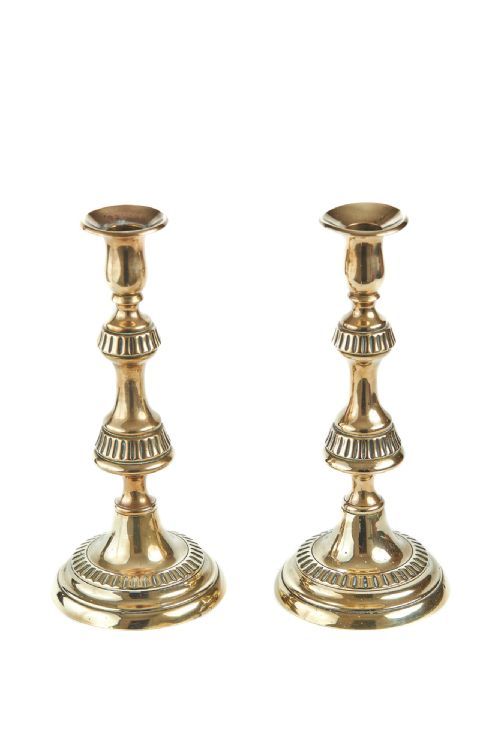
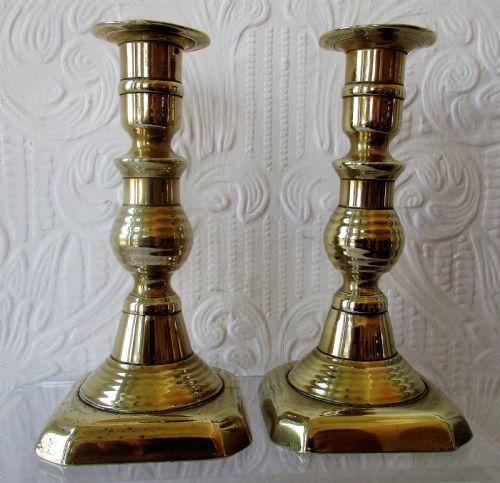
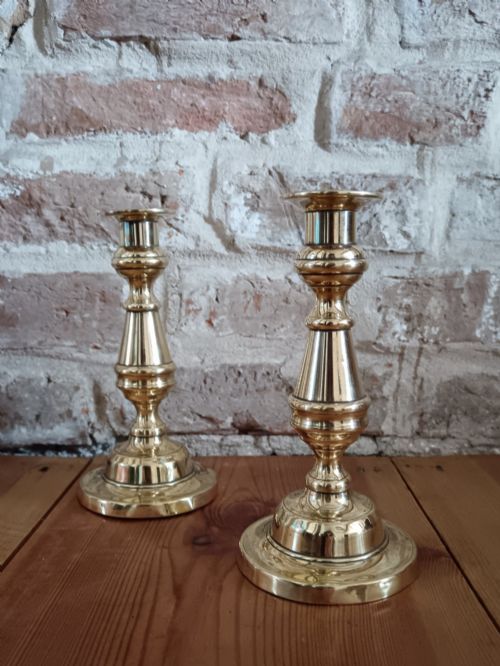
Antique turned candle holders bring practical illumination into focus through the warmth of polished brass and figured wood.
Antique Turned Candle Holders
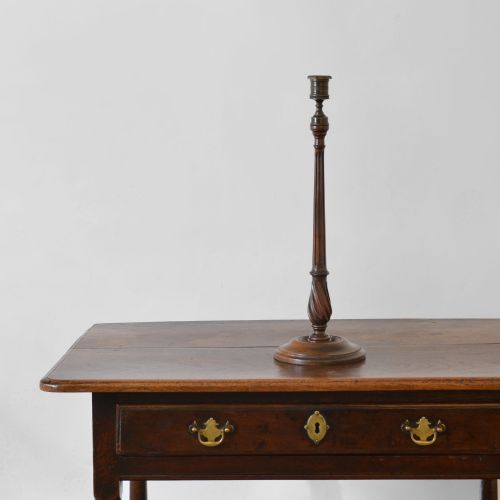
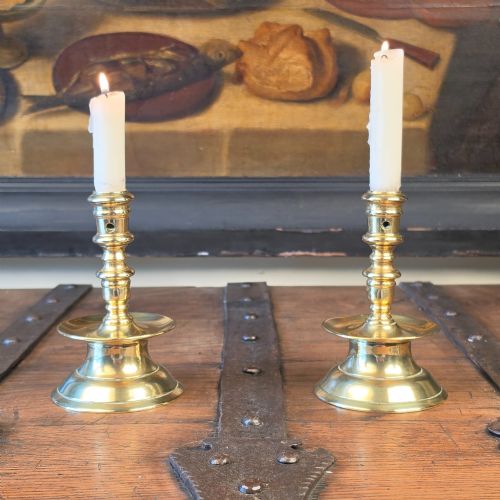
Antique turned candle holders encompass candlesticks, torcheres, and chamber sticks shaped on a lathe from various woods and metals. These domestic objects held candles for lighting rooms before electric lamps became standard.
The selections span from the Georgian and Victorian eras up to the early twentieth century, showing both utilitarian designs and ornamental forms. Walnut, mahogany, fruitwood, and brass dominate the examples encountered here.
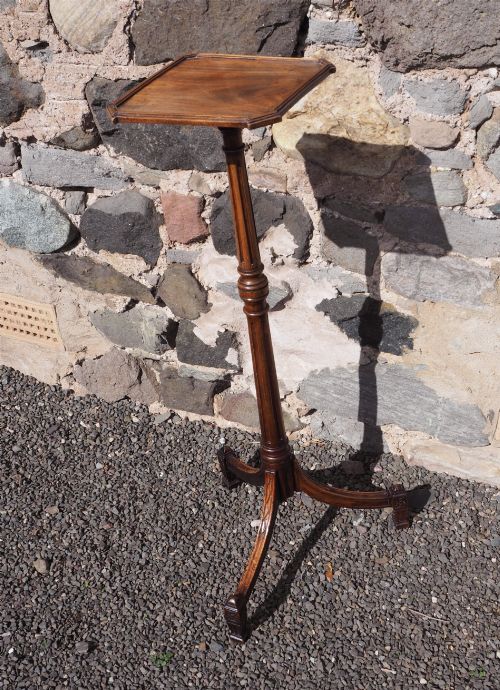
Buyers frequently find pairs of candlesticks alongside taller torcheres and plant stands. The forms range from simple domestic tapers to elaborate revival styles.
How they were made
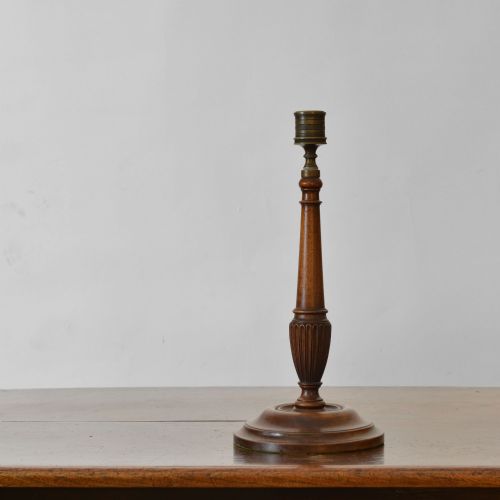
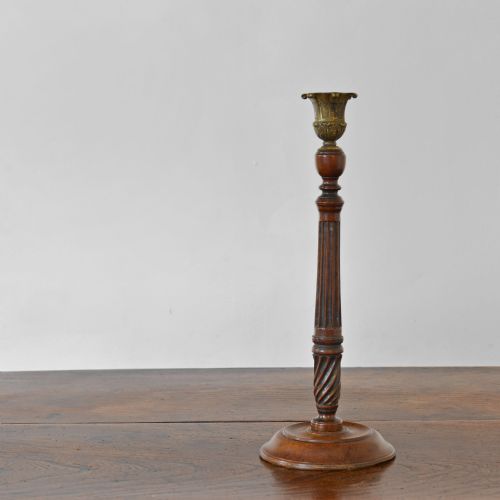
Makers shaped wooden examples on a lathe, producing smooth columns, open twists, and reeded shafts from timber such as walnut, mahogany, oak, and fruitwood. Metal versions typically relied on cast brass, sometimes combined with wooden components or finished with silver plating.
Brass elements were cast in sections and joined, often incorporating threaded fittings or pushed-in pins to secure the stem to the base. Ejector mechanisms added internal brass levers to push out remaining candle stubs cleanly.
Travelling Brighton bun holders unscrew to reveal hidden compartments where miniature candles waited for the dark roads ahead.
What varies in quality
Quality rests upon the crispness of the lathe turning and the heft of the materials used in construction. Substantial gauge brass and dense, well-figured timber distinguish superior pieces from lighter, more utilitarian alternatives.
Proportion and balance dictate the aesthetic success of a turned holder, where slender stems must anchor securely into weighted or wide bases. Makers who integrated complementary materials, such as combining treen wood with brass fittings, achieved greater visual depth.
Frederick J Smith & Co·Abel Landry·Wm Tonks & Sons
The Antique Turned Candle Holders Glossary
- Turned
- Shaped on a lathe by rotating the material against a cutting tool. This method produces circular profiles, spindles, and symmetrical columns.
- Torchere
- A tall, slender stand or candlestick designed to elevate a light source or plant. These tall forms often feature detailed carving or turning.
- Treen
- Small household wooden objects made by turning or carving. This encompasses items like small taper sticks and chamber sticks.
- Pricket
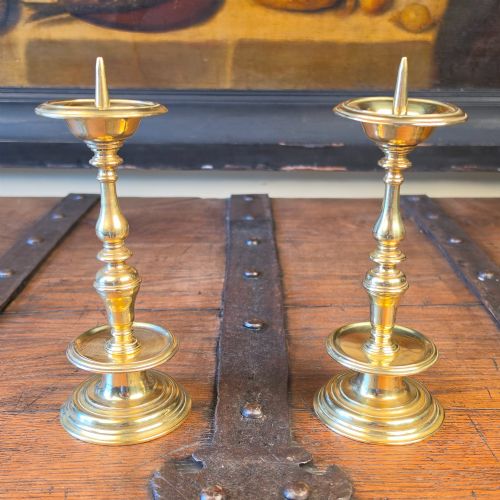
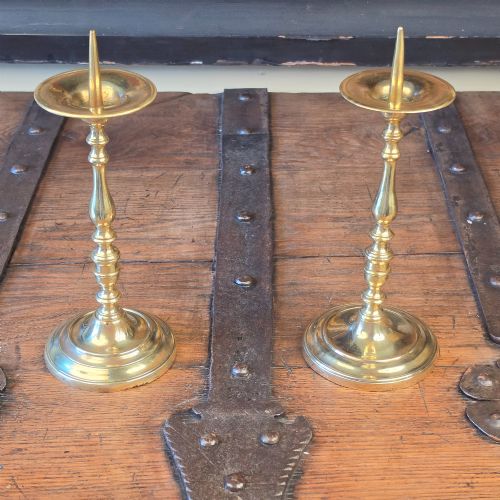
- A candlestick featuring a sharp central spike rather than a socket to secure the candle. These appear frequently in earlier revival styles.
- Ejector
- A built-in mechanical mechanism within a brass candlestick shaft that pushes the candle remnant upward for easy removal.
Antique Turned Candle Holders: Frequently Asked Questions
How do I date antique brass candlesticks?
Dating relies on manufacturing techniques, base construction, and stylistic cues such as petal bases or ejector mechanisms. Georgian examples often show different casting seams compared to Victorian or Edwardian production methods.
Examining the wear patterns and the type of metal alloy provides further clues to the period of origin.
How should I clean wooden candle holders?
Wooden turned pieces benefit from gentle dusting and occasional applications of microcrystalline wax to nourish the grain. Avoid harsh liquid cleaners that can strip the historic finish.
Keeping timber away from direct heat sources prevents the wood from drying out and cracking over time.
What is the difference between treen and brass holders?
Treen items are turned entirely from wood, offering lighter weight and warm organic tones. Brass holders provide heavier stability and a reflective metallic surface.
Some period pieces successfully combine both materials by mounting turned wooden shafts onto heavy brass bases.