



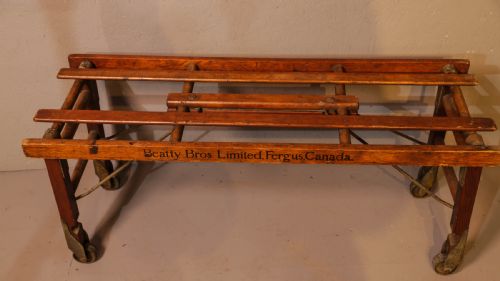

Antique Trunk Rack
An antique trunk rack offers a sturdy, folding surface to keep guest luggage off the floor.
Antique Trunk Rack
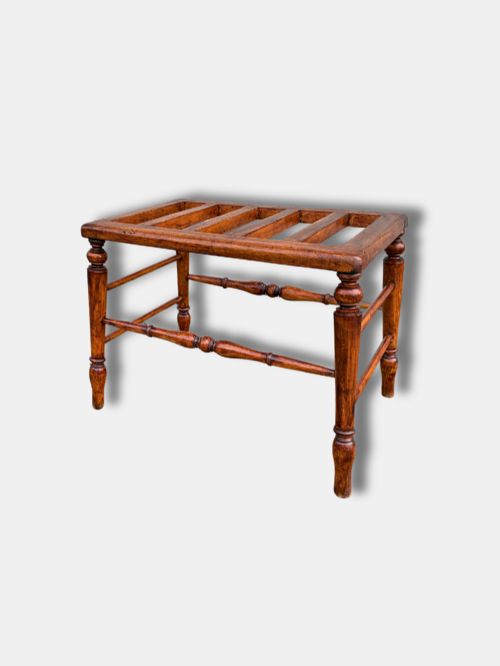
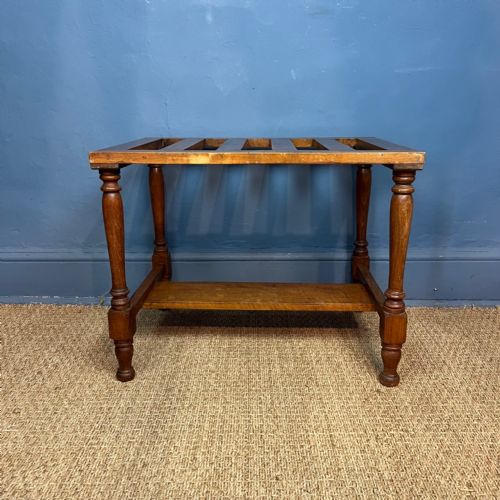
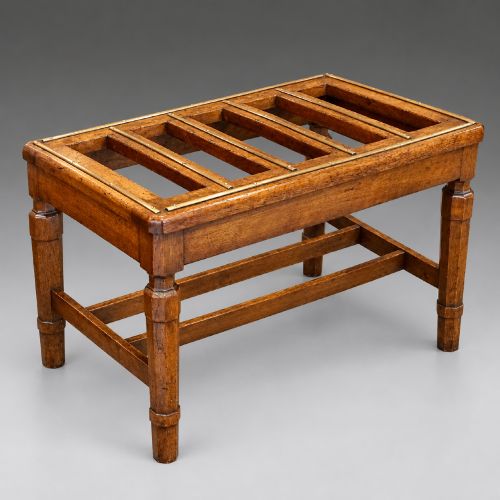
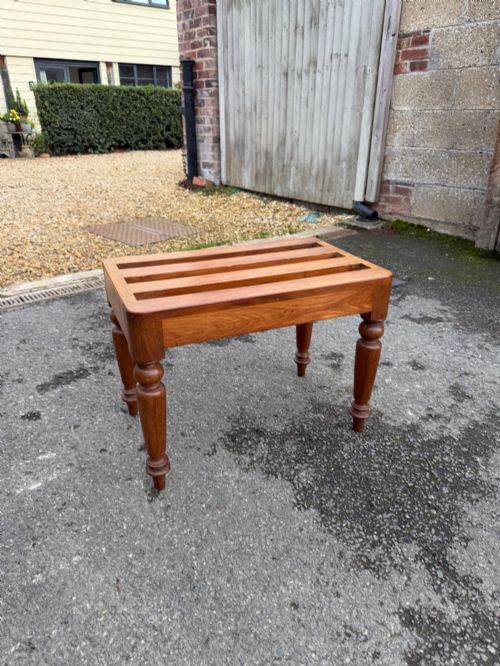
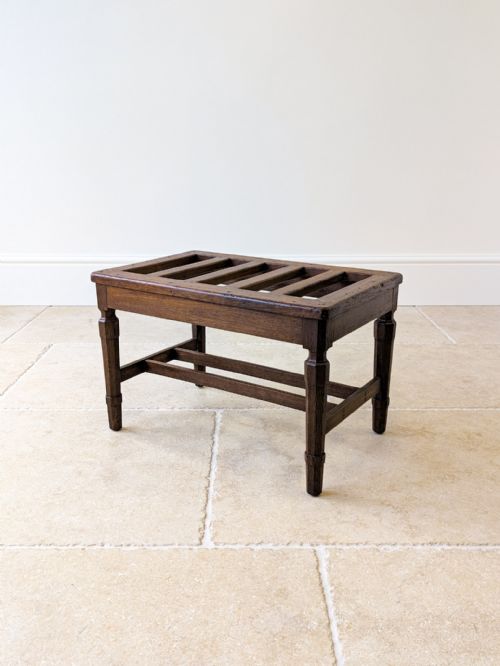
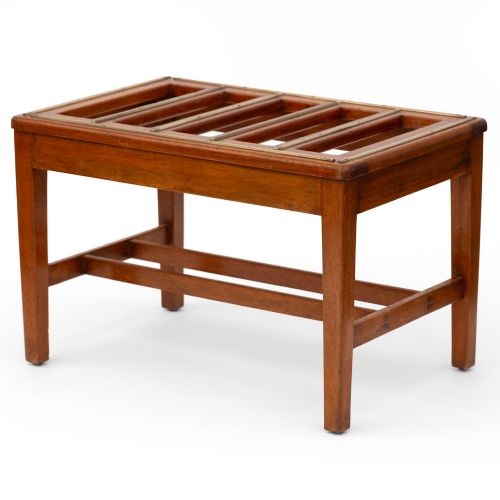
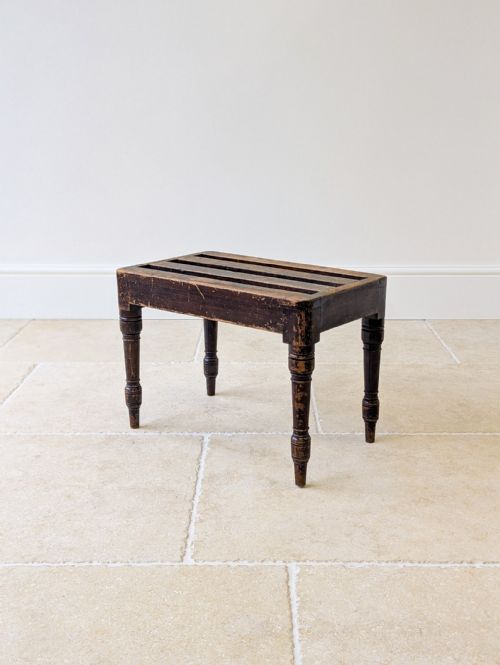
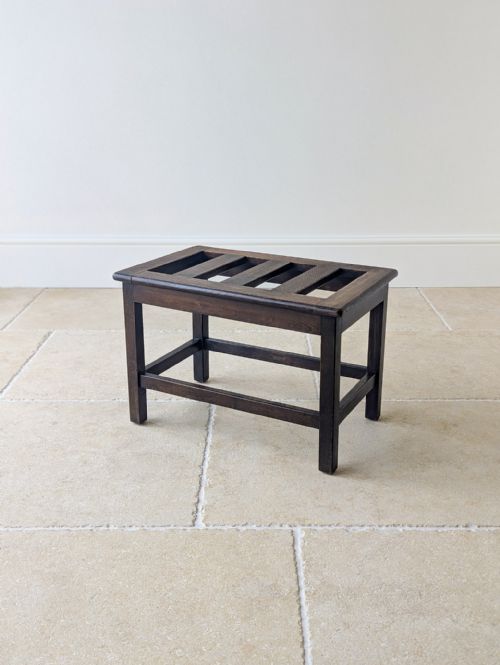
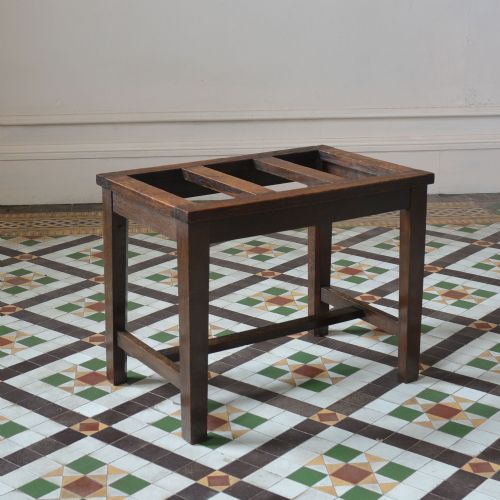
When you search for an antique trunk rack, you are looking at utilitarian furniture designed to hold suitcases and travelling chests in bedrooms and hotels. These pieces take the form of folding or fixed stands, often described in listings as luggage stands or luggage racks.
On this page, the most common versions you will meet date from the Victorian and Edwardian periods, constructed to serve guests in large houses or commercial establishments. They provide a practical surface at a convenient height for unpacking bags.
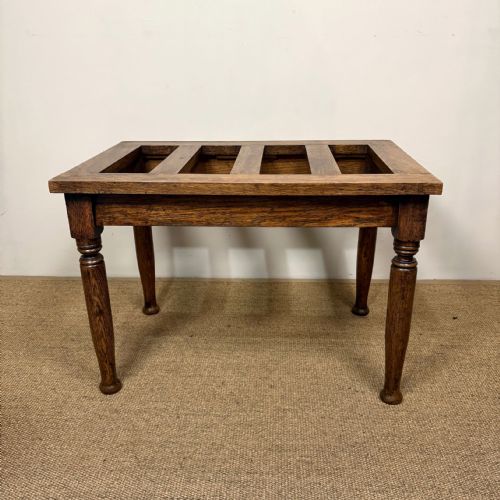
The materials and styles reflect their robust purpose, ranging from simple oak frames to substantial ash or mahogany structures. They combine folding webbing or wooden slats with sturdy legs designed to bear heavy loads.
How they were made
Makers constructed these pieces using hard-wearing timbers such as oak, mahogany, beech, and ash to ensure longevity under daily use. Workshops frequently polished or stained the wood to match contemporary interior furnishings.
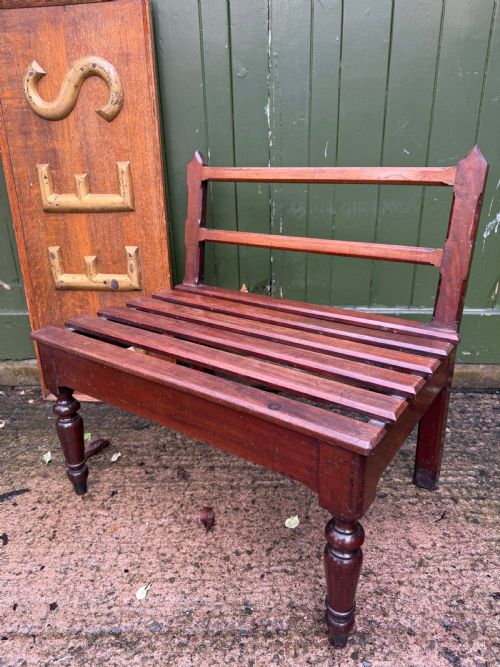
Metal components like brass and iron appeared in hinges, brackets, and structural supports, allowing the folding mechanisms to operate smoothly. Many examples incorporated raised rear upstands or supportive rails to keep cases secure.
Antique Trunk Rack Retail Price Guide 2026
Typical asking prices for trunk rack among the pieces listed under this phrase on Sellingantiques today, from the lower quarter to the upper quarter. They describe what is for sale here now, not the wider market.
Makers and institutions represented include named cabinet makers and former hotel supply pieces.
What varies in quality
Quality in these pieces depends largely on the choice of timber and the solidity of the construction rather than ornamental detail. Heavier, substantial woods like mahogany or thick oak indicate a higher grade of manufacture intended for country-house or hotel use.
The refinement of the joinery and the durability of the folding mechanisms separate standard utility items from superior workshop productions. Pieces bearing the marks of known makers or hotel provenance display greater attention to functional design.
Brown & Lamont·Beatty Bros Fergus Canada·Waring & Gillow
The Antique Trunk Rack Glossary
- Luggage stand
- A low wooden frame designed to hold a trunk or suitcase at a convenient height for packing. These items typically feature folding legs and supporting webbing or slats.
- Upstand
- A raised barrier at the rear or sides of a furniture piece that prevents items from sliding off. In luggage stands, this feature supports the end of a trunk.
- Webbing
- Strong woven material stretched across the top of a frame to support weight while remaining flexible. It is commonly found on folding luggage racks.
- Country house style
- A domestic aesthetic favouring practical, sturdy furniture built for large rural residences. Pieces in this style prioritise utility and robust timbers like oak.
Antique Trunk Rack: Frequently Asked Questions
What is an antique trunk rack?
An antique trunk rack is a folding or rigid wooden stand used historically to hold travelling trunks and suitcases off the floor. They provided guests with an accessible height for unpacking during stays in large homes or hotels.
Today, buyers use them in guest bedrooms for the same practical purpose or as decorative stands in hallways and dressing rooms.
How do I date an antique trunk rack?
Dating relies on observing the timber, the style of the turnings, and any construction methods typical of specific eras like the Victorian or Edwardian periods. Heavier proportions and mahogany often point towards the mid-nineteenth century.
Later Edwardian examples frequently utilise simpler oak frames and machine-turned components, sometimes accompanied by maker stamps or hotel labels.
Were trunk racks used in hotels?
Yes, many robust examples were supplied specifically for commercial establishments such as West End hotels to accommodate travelling guests. These pieces were built for heavy daily use and often featured durable hardwoods.
Their commercial origin explains the sturdy construction and practical folding designs found in many surviving specimens.
How do I care for wooden luggage stands?
Maintain the wood by applying suitable furniture wax periodically to preserve the polished finish and protect the timber from drying out. Avoid placing them in areas with extreme temperature fluctuations to keep joints secure.
Check folding hinges and brass brackets gently to ensure the moving parts remain aligned without straining the surrounding wood.