

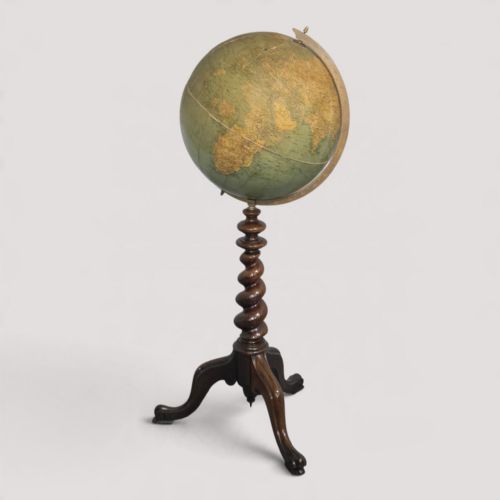
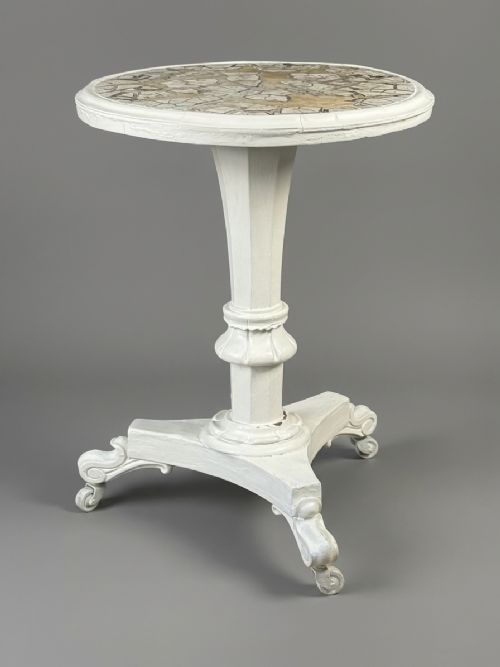
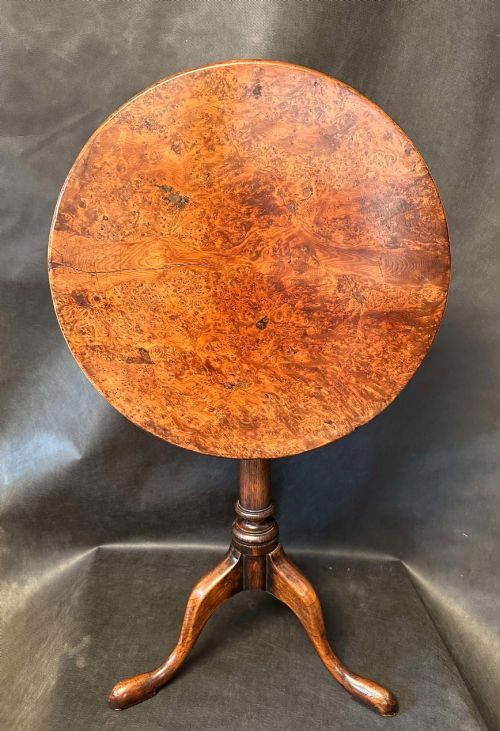
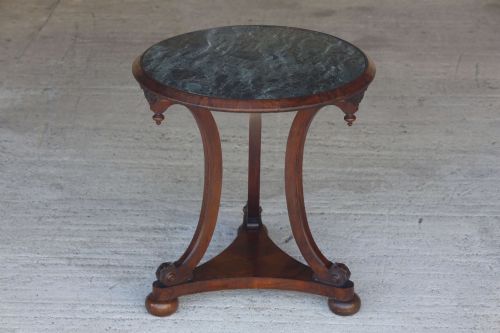
Antique Tripod Base
An antique tripod base supports everything from delicate wine tables to sturdy torchères, providing a stable, three-legged foundation rooted in centuries of cabinetmaking.
Antique Tripod Base
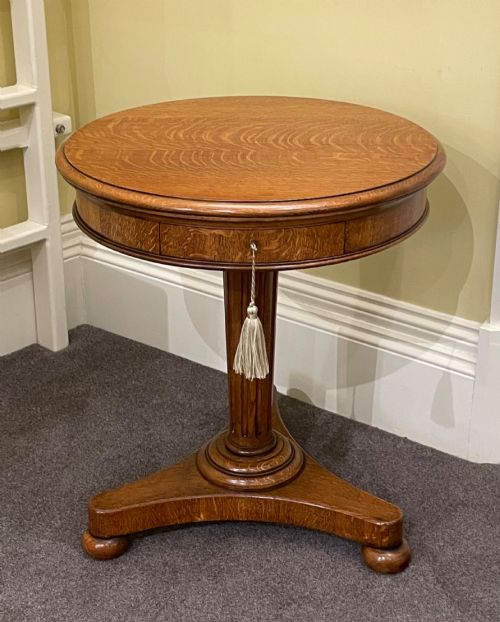
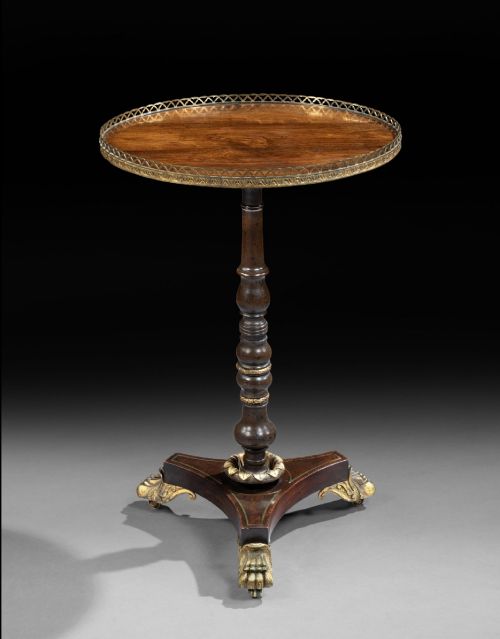
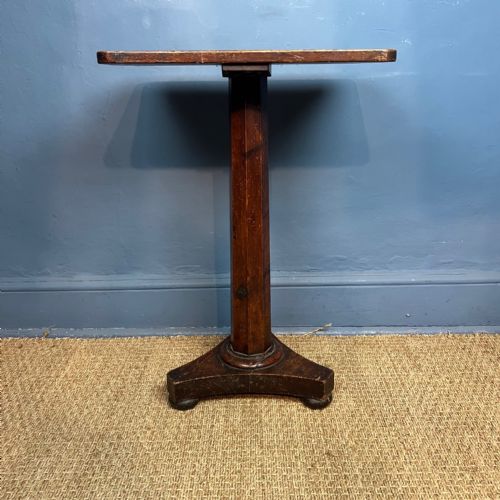
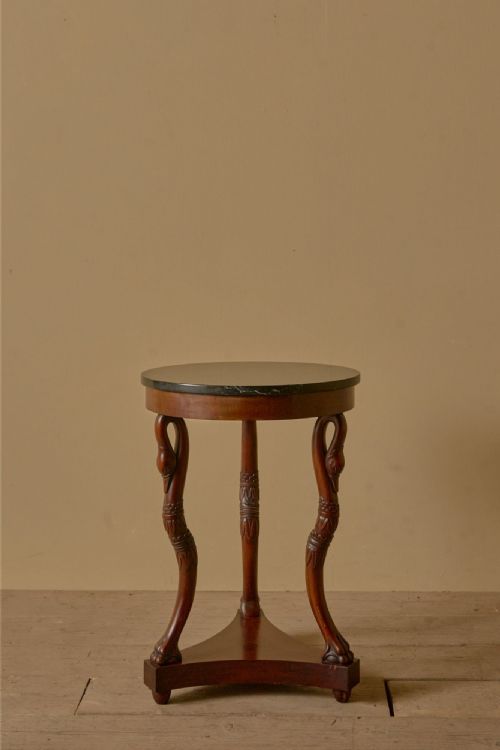
When searching for an antique tripod base, you will encounter a wide variety of domestic furniture supported by three legs radiating from a central pillar. These pieces span multiple eras, including Georgian, Regency, Victorian, and Edwardian periods, with timber structures designed for both utility and display.
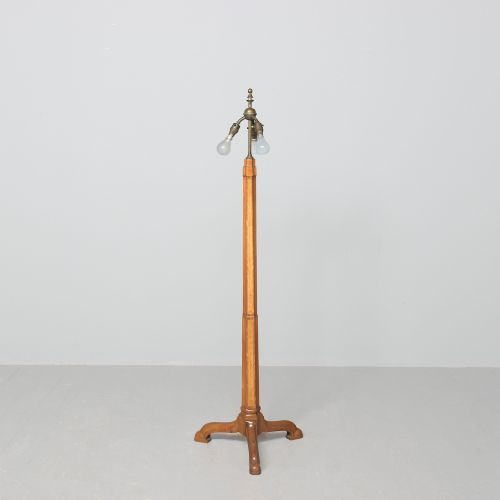
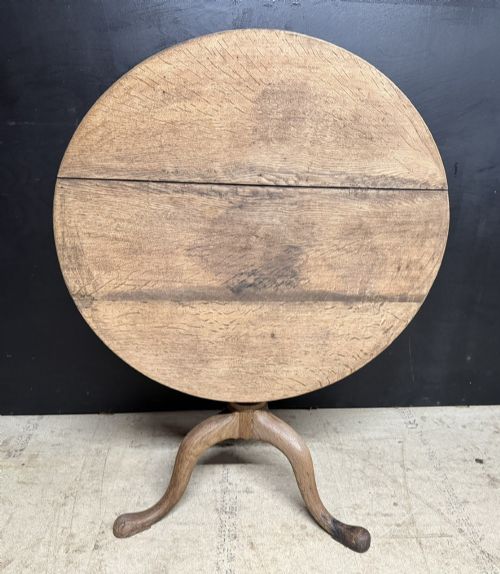
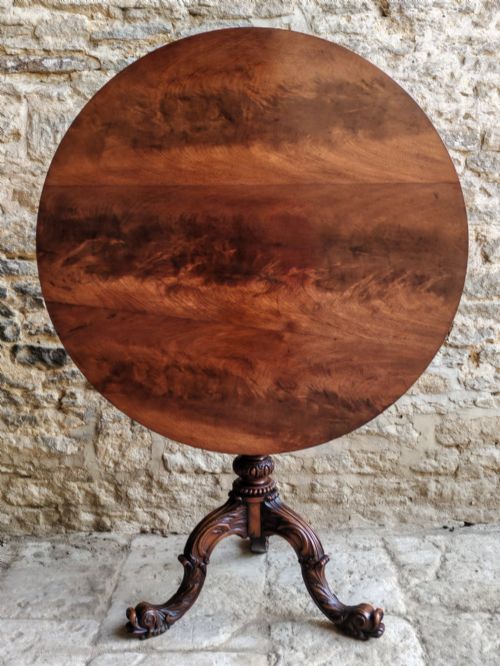
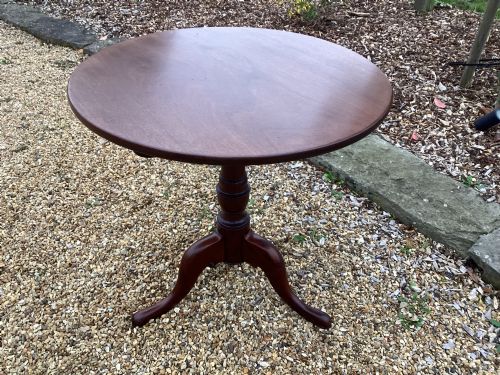
The most common formats on this page are occasional tables, wine tables, and plant stands, alongside more specialised forms like pole screens and floor lamps. Occasional and tilt-top tables dominate the selection, often featuring circular or shaped tops mounted on pivoting mechanisms above the central column.
Origins range across English and continental workshops, encompassing styles from formal classical revivals to simpler country pieces in oak and mahogany. Whether configured as a small lamp table or part of a larger multi-pillar dining table, the three-legged format remains a defining characteristic.
Materials and construction
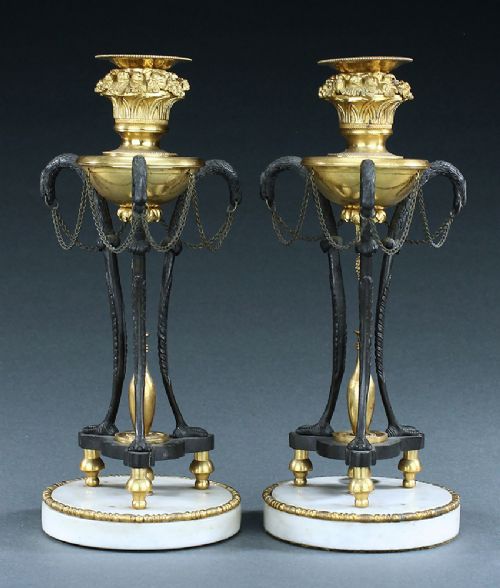
Cabinetmakers relied heavily on dense timbers such as mahogany, rosewood, walnut, and oak to construct the central pillars and slender legs of these supports. Figured veneers, boxwood inlay, and parcel-gilt details frequently embellish the tops and columns, adding visual depth to the polished wooden surfaces.
Structural stability on three-legged supports required precise joinery where the legs met the central shaft, often reinforced with internal blocks or iron brackets. Tilt-top variants incorporated sophisticated brass or wooden catches, allowing the tabletop to fold flat when not in use.
Antique Tripod Base Retail Price Guide 2026
Typical asking prices for tripod base among the pieces listed under this phrase on Sellingantiques today, from the lower quarter to the upper quarter. They describe what is for sale here now, not the wider market.
Listings span several eras, recording pieces from the Georgian, Regency, William IV, Victorian, and Edwardian periods.
Judging execution and finish
The distinction between standard domestic pieces and finer works rests in the crispness of the carving on the knees and feet, as well as the choice of timber figure. Superior examples display hand-carved acanthus leaves, claw-and-ball feet, or reeded columns rather than plain, machine-turned profiles.
Proportion and stability dictate overall merit, ensuring the three legs extend sufficiently from the centre to prevent tipping while maintaining an elegant silhouette. Original brass castors, smooth tilt mechanisms, and well-matched grain patterns across the top further elevate the standing of an individual piece.
The Antique Tripod Base Glossary
- Tilt-top table
- A table with a hinged top that rotates to a vertical position for compact storage against a wall. This mechanism typically relies on a catch and a birdcage block beneath the surface.
- Torchère
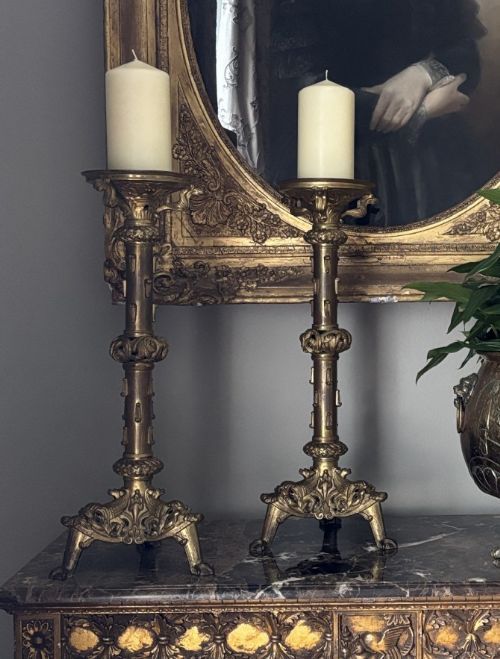
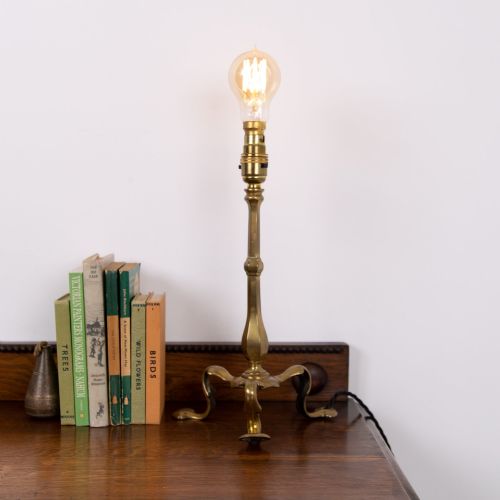
- A tall, slender stand or pedestal designed to elevate a candle, lamp, or decorative object. These pieces frequently feature carved wooden shafts terminating in tripod bases.
- Pole screen
- An adjustable vertical screen mounted on a tripod base, designed to shield a person's face from the direct heat of a fireplace. The embroidered needlework panel slides up and down the central pole.
- Dumb waiter
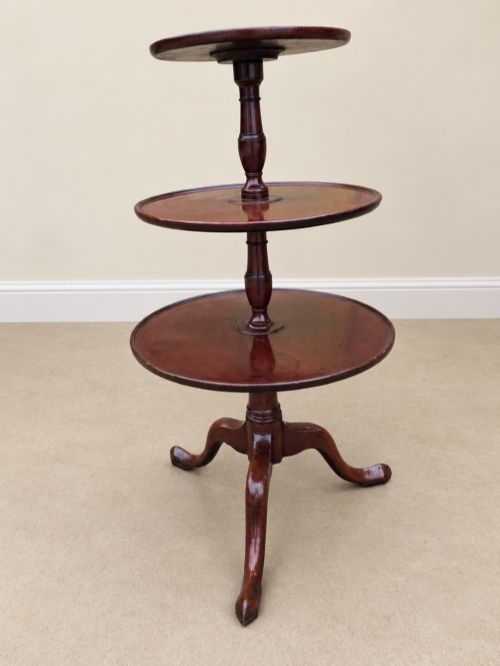
- A tiered set of revolving trays supported by a central pillar and tripod base, used in dining rooms for serving food without servants present. Georgian and Regency examples often feature graduated circular shelves.
- Birdcage
- A rotating wooden frame situated beneath a tabletop that allows the surface to both turn and tilt. It consists of two parallel discs connected by small vertical spindles.
Antique Tripod Base: Frequently Asked Questions
What were antique tripod bases used for?
These supports served multiple domestic functions, holding everything from tea trays and wine glasses to heavy lamps, books, and decorative plants. Their compact footprint made them ideal for moving easily around a drawing room or parlour as needed.
In dining rooms and libraries, specialised versions functioned as reading stands, chess tables, or multi-tiered serving furniture. The three-legged design ensured the furniture remained stable even on uneven floorboards.
How do I tell a Georgian tripod table from a Victorian one?
Georgian examples, dating roughly from the mid-eighteenth to early nineteenth century, typically exhibit restrained classical proportions, elegant taper, and superior timber selection such as dense, dark mahogany. Their carving is sharp and purposeful, reflecting prevailing Palladian or Chippendale tastes.
Victorian pieces often display heavier proportions, more exuberant ornamentation, and darker ebonised or rosewood finishes influenced by revival styles. Cabinetmakers in the later nineteenth century also incorporated industrial methods and more varied exotic veneers.
How do I care for an antique wooden tripod table?
Keep wooden surfaces away from direct sunlight and heat sources like radiators to prevent the timber from drying out and the veneers from lifting. Regular dusting with a soft, dry cloth maintains the finish without stripping the polish.
Apply a microcrystalline wax occasionally to nourish the wood and protect against moisture. Avoid placing damp items directly onto antique polished tops without protective coasters.
Why do some tripod tables tilt?
The tilting mechanism allowed servants or homeowners to store the table flat against the perimeter of a room when floor space was required for other activities. This space-saving innovation was particularly popular in smaller rooms and formal drawing rooms.
The mechanism usually involves a pivoting block held securely by a wooden wedge or brass latch beneath the top.