



Antique Tree Watercolour
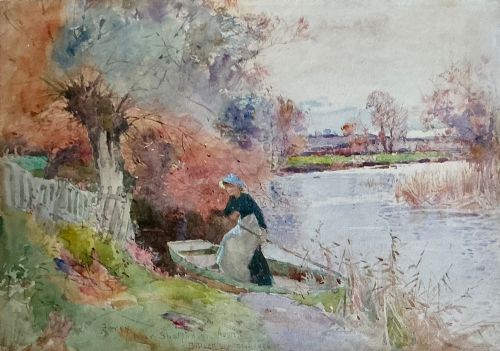
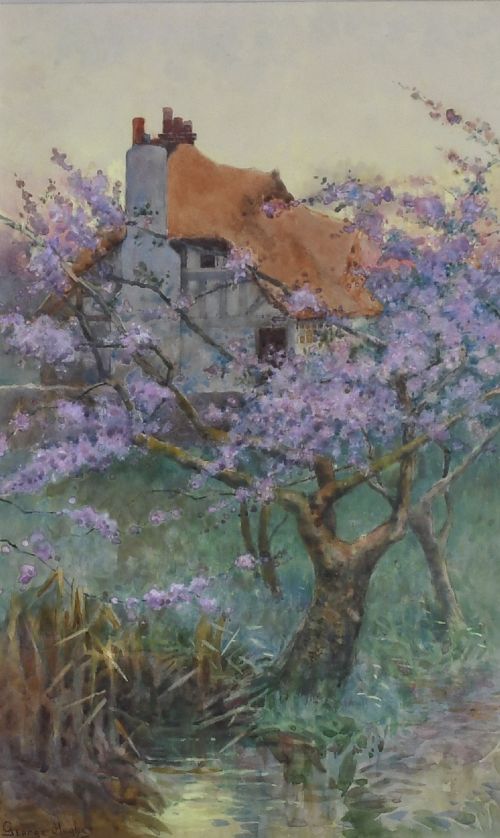
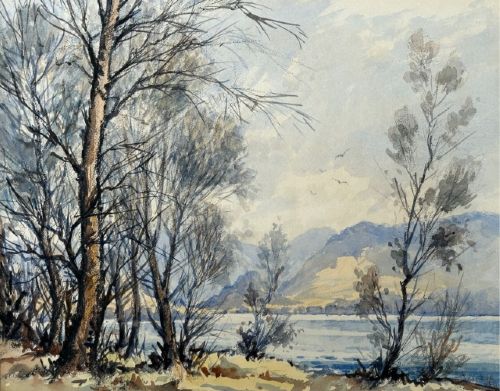
These antique tree watercolour works capture wooded paths and quiet rural scenes on paper, offering a gentle window into past landscapes.
Antique Tree Watercolour
An antique tree watercolour brings the natural world indoors, recording historic woodland scenes, country lanes and ancient forests. When you search for antique tree watercolour, you find paper works executed in pigment, gouache and wash across various periods from the Victorian era through to the mid-twentieth century.
The pieces on this page span several stylistic movements, including British Impressionism, Victorian landscape art, Art Deco and the Barbizon School. You will encounter local British views from Yorkshire, Wales and the Isle of Man alongside orientalist scenes and foreign landscapes.
Subjects range widely from detailed studies of individual trunks and bluebell woods to sweeping river valleys and architectural ruins framed by foliage. Each painting preserves a specific botanical and topographical record made by artists working directly from nature.
Materials and methods
Artists painted these works primarily using watercolour pigment and gouache applied to paper or board, sometimes supported by pen and ink lines. The wash technique allowed creators to build translucent layers of colour that mimic the dappled light filtering through branches and leaves.
Framing materials typically involve wood and glass to protect the delicate paper surfaces from atmospheric moisture and damage. Past framers often utilised simple wooden mouldings that complement the muted earthy tones of the pigment.
Antique Tree Watercolour Retail Price Guide 2026
Typical asking prices for tree watercolour among the pieces listed under this phrase on Sellingantiques today, from the lower quarter to the upper quarter. They describe what is for sale here now, not the wider market.
Cats and leopards occasionally sneak into the woodland canopy, reminding us that trees serve multiple inhabitants.
Distinguishing quality
The strength of a composition separates finer works from standard topographical records, particularly in how the artist handles light and shadow across the tree canopy. Superior pieces demonstrate confident brushwork and a sophisticated understanding of atmospheric perspective rather than mere botanical illustration.
The reputation of the artist and the specific provenance of the work significantly influence distinction within this field. Signed sheets by documented painters command closer attention than anonymous sketches, especially when the piece retains a clear date and historical context.
Alfred Young Nutt·Samuel Timmins·George Graham·William Hoggatt·Henri Joseph Harpignies·Rowland Henry Hill·Edmund George Warren·William Bradley·Charles James Adams·Frederick William Jackson·John J. Hamer·Tom Dudley·J.D. Walker·Cuthbert Edmund Swan·Fred Lawson
The Antique Tree Watercolour Glossary
- Watercolour pigment
- Finely ground colour particles mixed with a water-soluble binder for painting on paper.
- Gouache
- An opaque water-based paint that includes a white pigment to create solid, flat colour areas.
- Wash technique
- A method of applying diluted watercolour to create smooth, transparent fields of tone.
- Barbizon School
- A nineteenth-century art movement focused on naturalistic landscape painting and outdoor observation.
- Provenance
- The documented history and ownership trail of an artwork over time.
Antique Tree Watercolour: Frequently Asked Questions
How should I frame an old watercolour?
Protect the paper behind glass using acid-free mounts that keep the artwork from touching the glazing directly. This prevents condensation damage and preserves the fragile pigments over time.
Keep the framed picture away from direct sunlight to stop the watercolour pigments from fading. Stable indoor humidity levels will also protect the paper support from warping or developing foxing marks.
What periods do these paintings cover?
The works span from the nineteenth century through the Victorian era and into the mid-twentieth century. You will find examples dated across the decades up to the nineteen-sixties.
Earlier pieces often reflect traditional landscape conventions, while twentieth-century examples introduce modernist and Art Deco sensibilities to tree studies.
Are these works always signed?
Many pieces bear artist signatures or initials, sometimes located in the bottom corners of the composition. Others remain entirely anonymous or carry attribution notes on the reverse.
Unsigned works can still be attributed through style, technique and period framing, though signed examples offer clearer biographical context.
How do I identify gouache versus watercolour?
Watercolour relies on transparent washes where the white of the paper shines through the pigment layers. It creates a luminous effect across skies and foliage.
Gouache includes an added white filler that makes the paint opaque and matte. Artists often combined both mediums to highlight bright light hitting tree bark.