



Antique Town Watercolour
These antique town watercolour paintings capture historic streets and harbours with delicate washes of pigment on paper.
Antique Town Watercolour
An antique town watercolour is a painting executed on paper using water-soluble pigments, depicting urban landscapes, harbours, and street scenes. When exploring an antique town watercolour, a buyer encounters works spanning the nineteenth century through to the early decades of the twentieth century.
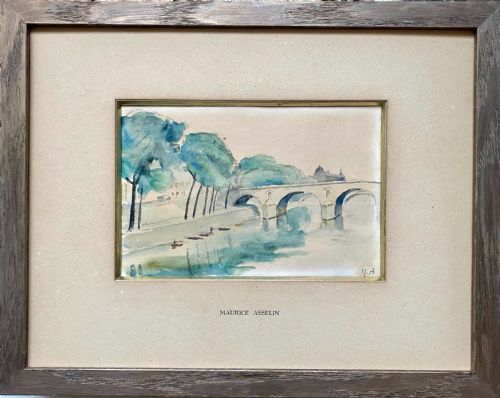
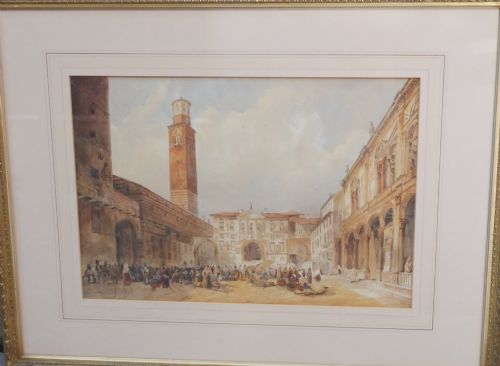
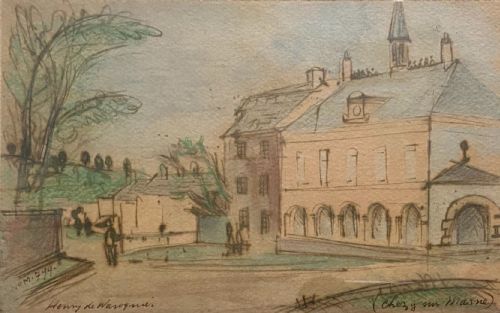
The selections on this page demonstrate distinct regional schools and movements, including British Impressionism, the Scottish School, and the Camden Town Group. Common subjects range from bustling market places and coastal harbours to quiet French village scenes and Italian views.
Most pieces survive framed behind glass, often housed within wood or gilt wood frames that complement the delicate nature of the paper beneath. These paintings offer a direct window into historical townscapes as recorded by contemporary artists.
Materials and construction
Framing materials typically comprise wood and gilt wood, paired with protective glass to shield the fragile paper from environmental damage. Gold leaf is also found on select frames, adding a decorative border that enhances the visual depth of the painting.
Antique Town Watercolour Retail Price Guide 2026
Typical asking prices for town watercolour among the pieces listed under this phrase on Sellingantiques today, from the lower quarter to the upper quarter. They describe what is for sale here now, not the wider market.
Featured subjects include harbour views, market places, and town landscapes created across the nineteenth and early twentieth centuries.
Assessing quality in works on paper
Quality in these watercolours rests upon the artist's handling of pigment and light, as well as the clarity of the composition. Skilled hands capture the atmosphere of a bustling market place or a quiet harbour with economy and precision.
The preservation of the paper and the integrity of the original frame contribute significantly to the standing of a piece. Works by noted association with groups such as the Camden Town circle or established regional painters often exhibit superior draughtsmanship.
Maurice Asselin·James Thomas Watts·H.E. Tidmarsh·Albert Robert Quinton·William Manners·Rowland Henry Hill·Snaffles·Walter Emsley·Fred Lawson·Harry Wanless·John Pedder
The Antique Town Watercolour Glossary
- Watercolour pigment
- The finely ground colouring material mixed with a water-soluble binder used to create these paintings. It allows for transparent washes that capture shifting light on urban surfaces.
- Gilt wood
- Wood coated with a thin layer of gold leaf or metallic gilt, commonly utilised for framing these works. This traditional finish provides a warm border that complements the tones of the paper.
- Camden Town Group
- A British association of artists active in the early twentieth century, known for depicting ordinary urban subjects. Members and close associates focused on modern town life.
- Grand Tour
- The traditional trip of Europe undertaken by upper-class Europeans, which frequently inspired topographical views and Italian scenes. Such watercolours record architectural landmarks encountered along the route.
Antique Town Watercolour: Frequently Asked Questions
What periods do these watercolours cover?
The available watercolours span from the nineteenth century through the Edwardian era up to the 1930s. This period captures significant shifts in artistic styles, moving from Victorian realism towards early twentieth-century impressionist movements.
Buyers will find works representing specific decades such as the 1880s, 1900s, 1910s, 1920s, and 1930s. Each era brings distinct stylistic approaches to depicting towns and harbours.
How were these paintings originally displayed?
These watercolours were typically framed behind glass within wood or gilt wood surrounds to protect the paper from moisture and dust. Many retain their period frames, which often feature gold leaf detailing.
Protecting the paper from direct sunlight remains essential for display today to prevent the watercolour pigments from fading. Hanging them in rooms with stable humidity ensures the longevity of both the paper and the wooden frame.
What subjects appear in these scenes?
The subjects focus primarily on architectural views, market places, harbours, and street scenes across Britain and Europe. Locations range from Whitby and Scarborough to French villages and Italian townscapes.
Artists frequently recorded daily life in busy ports, quiet town meadows, and garrison towns. These topographical and urban views provide a record of historical architecture and streetscapes.
How do I identify different artistic styles?
Styles visible in the collection range from Victorian realism and maritime scenes to British Impressionism and the Camden Town Group. Victorian works often show meticulous detail, while later pieces embrace looser brushwork and atmospheric washes.
Recognising the hand of specific regional schools, such as the Scottish School, helps in categorising a piece. Signatures and stylistic traits linked to known early twentieth-century painters further clarify the artistic context.