


Antique Town Painting
An antique town painting captures the architecture, markets and quiet streets of past centuries through the observant eyes of contemporary artists.
Antique Town Painting
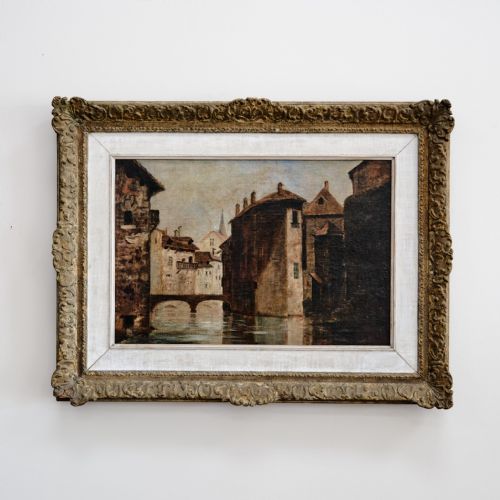
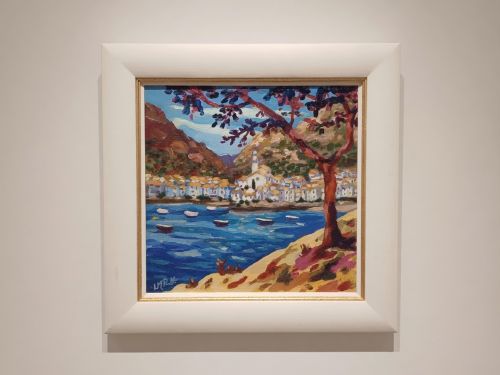
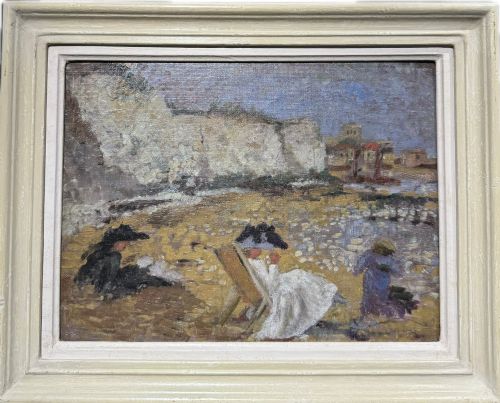
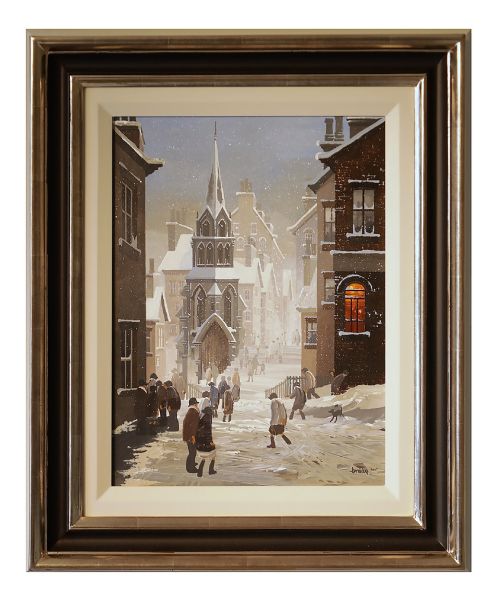
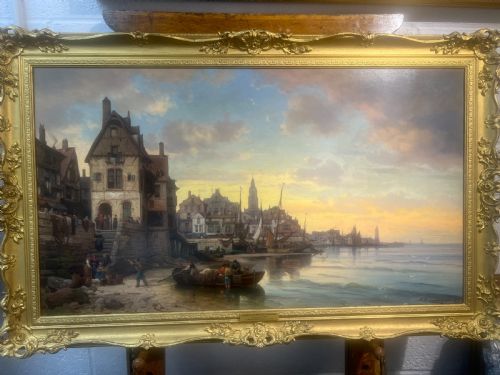
An antique town painting records urban and village topography from the Georgian era through to the early decades of the twentieth century. These works depict bustling continental harbours, quiet provincial market squares, and historic British street scenes populated by figures, horses and carts.
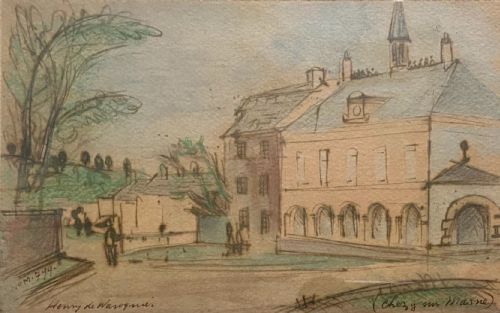
The most common formats encountered on this page are watercolour paintings on paper and oil paintings on canvas or board. Artists ranged from named regional painters documenting local Yorkshire and Cumbrian landmarks to continental practitioners working within British and French impressionist traditions.
How they were made
Painters utilised oil on canvas or board to build rich textures for architectural facades and stormy skies, often framing these compositions in giltwood. Watercolour on paper allowed artists to capture quick plein-air impressions of market places and coastal ports with transparent washes and fine ink detailing.
Many works incorporate layered pigments, gold leaf accents, and protective glass within period frames. The combination of water-based or oil-based mediums on prepared supports ensured these topographical records survived decades of light and handling.
Look closely for hidden cats perched on cobblestones and children chasing hoops down forgotten alleys.
What varies in quality
Quality rests upon the artist's command of perspective, light, and atmospheric depth within the urban landscape. Superior examples display confident brushwork or precise watercolour handling that brings vitality to stone buildings, bustling market stalls, and distant waterways.
The distinction between standard topographical illustration and an exceptional painting lies in the handling of human activity and natural light. Stronger works integrate figures and architecture cohesively rather than treating buildings as flat stage flats.
Charles Euphraisie Kuasseg·Johannes Philippus Galjaard·Gustave de Breanski·James Thomas Watts·Albert Robert Quinton·William Manners·Rowland Henry Hill·Walter Emsley·Ludwig Hermann·Fred Lawson·Harry Wanless·Maurice Asselin·John Pedder·Claude Hayes·John Falconar Slater·Florence Balshaw·David Cox Senior·Louis Dommersen·John Ward Knowles·George William Mote·RP Bonington·Henry A Trier
The Antique Town Painting Glossary
- Topography
- The detailed mapping and artistic representation of specific real-world locations, streets, and buildings. In these paintings, accurate architectural rendering forms the core of the subject.
- Giltwood
- Timber carved and coated with a thin layer of gold leaf, commonly used for framing antique paintings. This finish adds a reflective border that enhances the warmth of oil colours.
- Plein-air
- The practice of painting outdoors directly from the subject to capture fleeting natural light. This technique gained prominence during the nineteenth century and shaped impressionist townscapes.
- Gouache
- An opaque water-based pigment frequently mixed with transparent watercolour to create solid highlights on paper. It allows artists to render stone textures and bright signage with precision.
Antique Town Painting: Frequently Asked Questions
How do I date an antique town painting?
Examine the clothing styles of the figures, the architectural details of the buildings, and the framing materials. Written signatures, gallery labels on the reverse, and exhibition stamps often point to a specific decade.
Paper stock, canvas weave, and stretcher construction also offer reliable clues to the age of the support.
What is the difference between oil and watercolour town paintings?
Oil paintings utilise heavy pigments suspended in oil on canvas or panel, yielding rich textures and deep shadows. Watercolours employ transparent washes on paper, offering a luminous, immediate record of a street scene.
Watercolours generally require protective glass framing, whereas oils are displayed in open air.
How should I display and care for these paintings?
Hang paintings away from direct sunlight and steady sources of artificial heat to protect vulnerable watercolours and oil pigments from fading or cracking. Keep indoor humidity stable to prevent paper from warping and canvas from sagging.
Dust giltwood frames gently with a soft brush rather than liquid cleaners.
How do I identify a continental town scene?
Look for distinctive European architectural markers such as steep slate roofs, shuttered windows, continental street signage, and historic churches or bridges unique to France, the Netherlands, or Scandinavia.
Artist signatures and historical exhibition labels frequently record the specific foreign port or village depicted.