

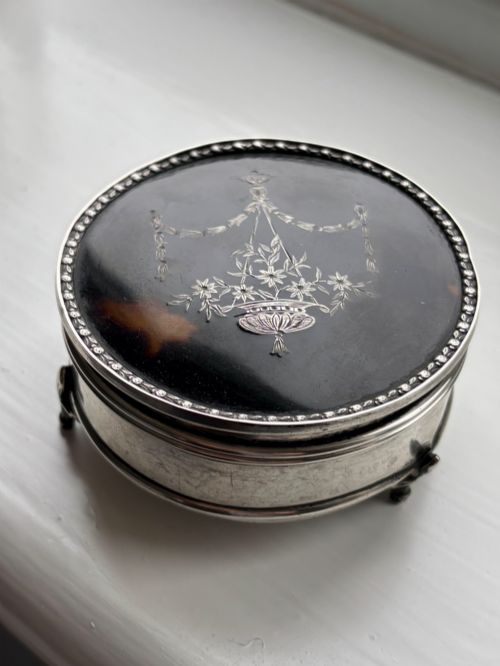
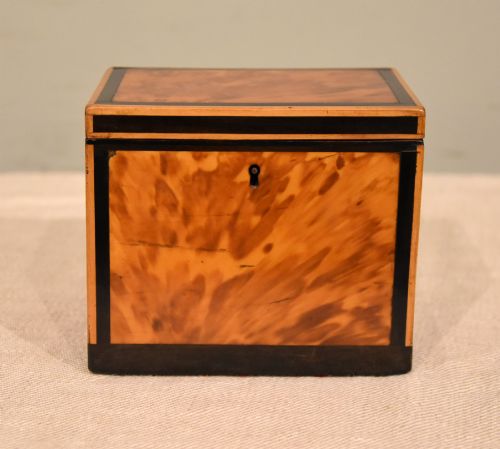


Antique Tortoiseshell Caddy
An antique tortoiseshell caddy is a prized container of organic splendour, offering rich amber warmth and historic charm to any mantel or table.
Antique Tortoiseshell Caddy
When you search for an antique tortoiseshell caddy, you uncover boxes fashioned from sea turtle shell over timber carcases, designed originally to secure precious tea leaves under lock and key. The examples appearing here span periods from the mid-eighteenth century through the Georgian and Regency eras into Victorian and twentieth-century interpretations.
Most pieces take the form of tea caddies, including single, double, decagonal, octagonal, bow-fronted, and harlequin design variations. Alongside tea containers, related forms such as dressing table boxes, spoon boxes, and cutlery boxes occasionally surface in the selection.
Origins stretch across English, French Napoleon III, French Restoration, and Dutch Continental workshops, reflecting diverse cabinet-making traditions. Buyers encounter genuine shell alongside faux tortoiseshell variants paired with silver, bone, brass, ebony, and ebonised wood.
Assessing quality and craftsmanship
Quality rests upon the depth of the amber and brown figure in the shell and the crispness of the geometric form, whether octagonal, bow-fronted, or decagonal. Superior examples retain their original internal canisters, silver mounts, and working locks with keys.
The precision of the veneer work and the integration of secondary materials like ebony, bone, or brass define the upper tier of production. Lesser quality shows heavy replacement panels, crude repairs to the organic shell, or mismatched internal fittings.
Antique Tortoiseshell Caddy Retail Price Guide 2026
Typical asking prices for tortoiseshell caddy among the pieces listed under this phrase on Sellingantiques today, from the lower quarter to the upper quarter. They describe what is for sale here now, not the wider market.
Listings feature pieces spanning the mid-eighteenth century to the early twentieth century, utilising tortoiseshell, silver, ivory, bone, and ebonised wood.
Ollivant & Botsford
The Antique Tortoiseshell Caddy Glossary
- Tortoiseshell
- The mottled brown and amber keratin plate obtained from the shell of certain sea turtles, utilised as a decorative veneer on luxury boxes.
- Boulle
- An elaborate marquetry technique using brass and tortoiseshell inlaid together, popular in French furniture and luxury boxes.
- Caddy
- A small box or chest once used for storing dry tea leaves when tea was an expensive imported commodity.
- Escutcheon
- A small protective plate surrounding the keyhole of a box or cabinet, frequently cast in brass or sterling silver.
- Harlequin design
- A decorative pattern combining contrasting panels of tortoiseshell and ivory or bone in a checkered or geometric arrangement.
Antique Tortoiseshell Caddy: Frequently Asked Questions
How do I date a tortoiseshell tea caddy?
Dating relies on the overall silhouette, the shape of the feet, and the construction of the interior compartments. Georgian and Regency pieces often feature precise geometric forms like octagons and convex curves.
Later Victorian and Edwardian examples introduce different metal mounts and altered interior arrangements. Examining the timber substrate and lining materials also helps clarify the period of production.
What were tea caddies used for originally?
In the eighteenth and nineteenth centuries, tea was a costly luxury kept under lock and key by the head of the household. Caddies featured small internal lidded compartments to separate different varieties of black and green tea.
Wealthy owners kept these boxes in the parlour or dining room, dispensing the leaves personally to prevent domestic staff from helping themselves.
How should I care for antique tortoiseshell?
Organic shell reacts to extreme changes in humidity and temperature, so place your caddy away from direct sunlight and radiators. Gentle dusting with a dry microfibre cloth is all that is required for maintenance.
Avoid using modern chemical polishes, water, or oil on the surface, as moisture can weaken the historic animal glue beneath the veneer.
Are all these boxes made of real shell?
While the majority utilise genuine sea turtle shell over a wooden carcase, some later twentieth-century pieces employ faux tortoiseshell finishes. These alternative surfaces mimic the mottled amber appearance using treated materials or painted grounds.
Checking the tactile quality and examining the edge joints under magnification helps distinguish natural keratin from synthetic substitutes.