

Antique Tiered Console
An antique tiered console offers layered display space in mahogany, walnut, or oak, bringing practical surface depth to a hallway or drawing room.
Antique Tiered Console
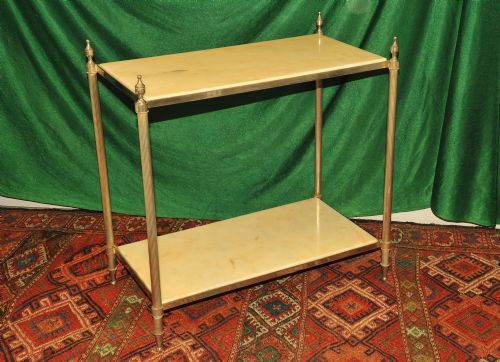
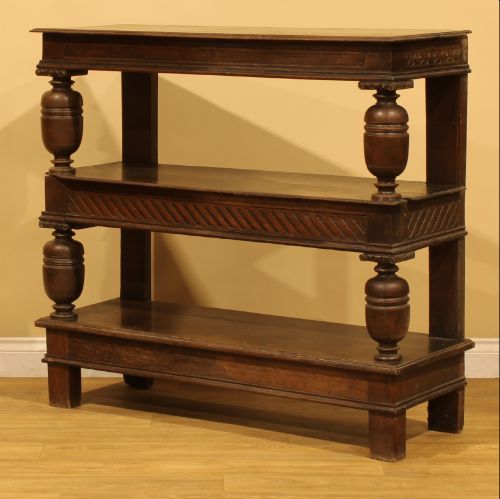
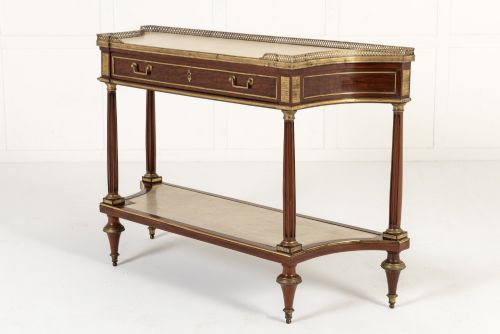
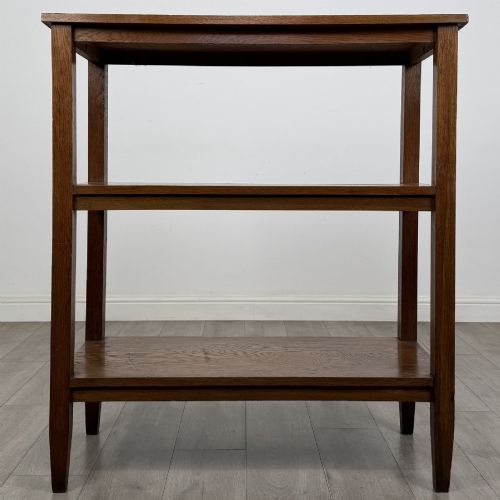
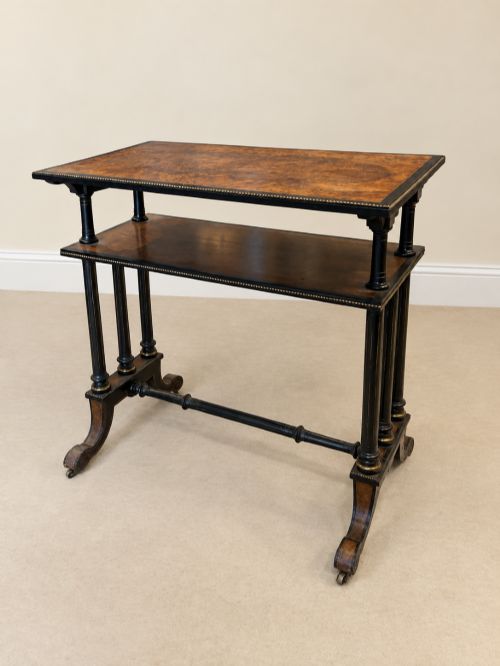
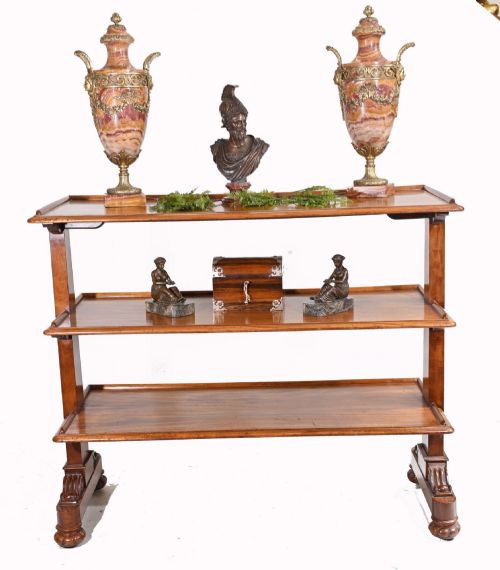
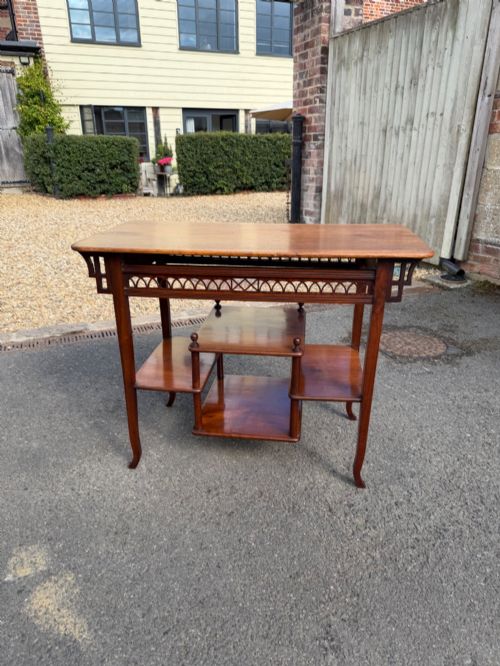
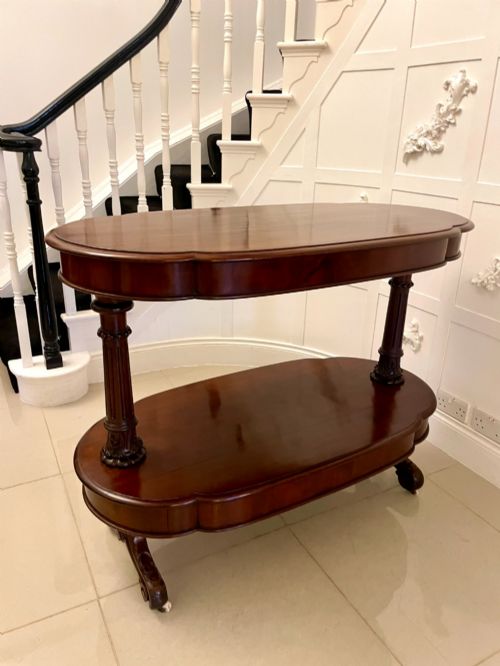
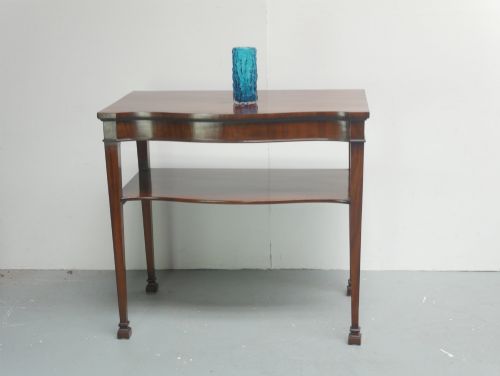
When searching for an antique tiered console, buyers encounter multi-level side tables, buffets, and etageres dating from the nineteenth century into the Edwardian period. These pieces provide stacked surfaces, allowing decorative objects to be arranged across distinct tiers rather than a single plane.
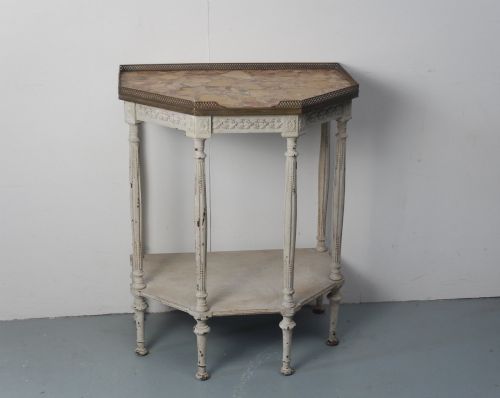
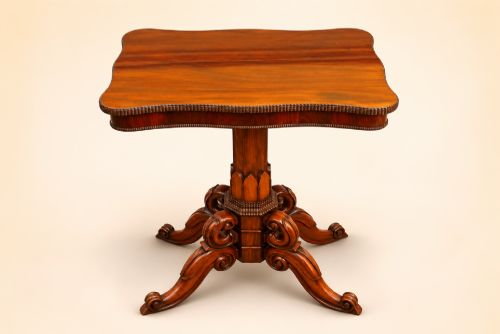
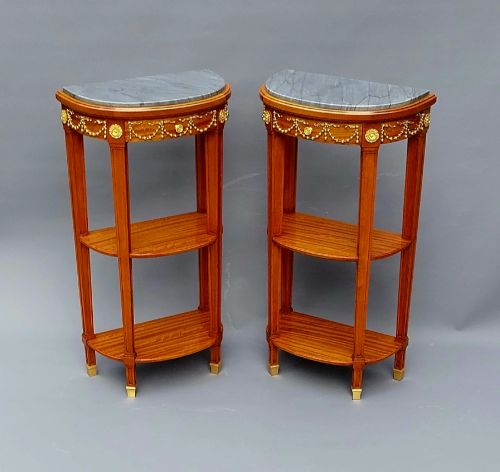
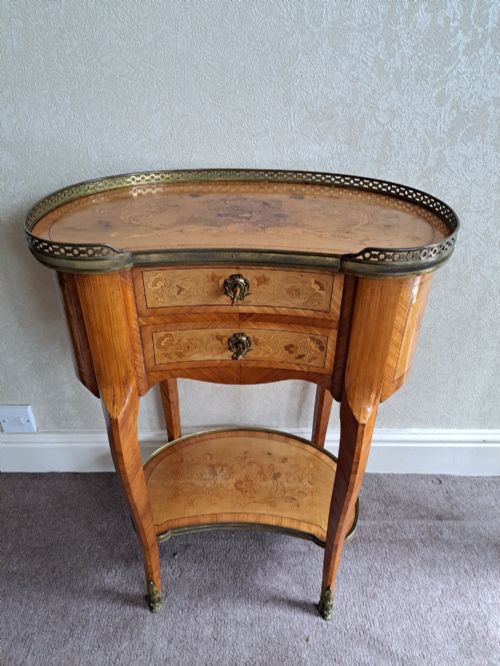
The selections span styles from Victorian and Edwardian iterations to Regency and French designs, executed in woods such as mahogany, walnut, rosewood, and oak. Many examples incorporate marble tops, brass mounts, or inlaid satinwood details to elevate their visual weight against a wall.
Functionally, these tables bridge the gap between heavy sideboards and lighter occasional tables. They serve dining rooms, halls, and reception spaces by offering organised storage and display without dominating the floor plan.
Materials and construction methods
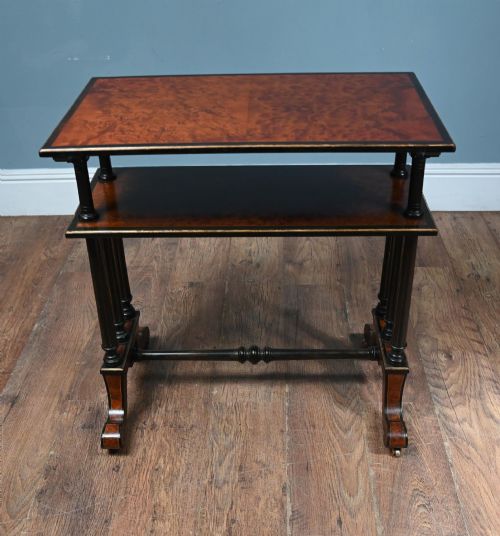
Cabinetmakers constructed these frames using dense timbers like mahogany, walnut, and oak, frequently applying burr walnut or rosewood veneers to primary surfaces to create figured grain patterns. Supporting uprights and tiers were joined with traditional mortise and tenon techniques to support the weight of stacked shelves.
Decorative elements involve carved details such as foliage, Gothic motifs, or Green Man masks, alongside cast-iron supports or gilt bronze mounts. Marble inserts provide durable, cool-surfaced tops on demilune and kidney-shaped forms.
Antique Tiered Console Retail Price Guide 2026
Typical asking prices for tiered console among the pieces listed under this phrase on Sellingantiques today, from the lower quarter to the upper quarter. They describe what is for sale here now, not the wider market.
Listings feature woods such as mahogany, walnut, oak, rosewood, and satinwood across the Victorian, Edwardian, and Regency periods.
Distinctions in construction and finish
Quality rests upon the selection of timber veneers and the crispness of carved wooden details. Tables displaying book-matched burr walnut or finely inlaid satinwood demonstrate greater workshop ambition than plain softwood-backed alternatives.
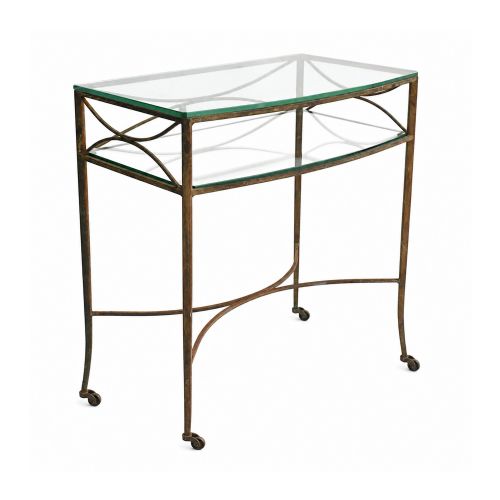
The integration of secondary materials dictates overall execution. Pieces featuring heavy marble slabs, cast-iron framework, or cast bronze mounts rely on precise structural joinery to maintain stability across multiple tiers.
Robert Strahan·Gillows of Lancaster and London·Pauly et Cie
The Antique Tiered Console Glossary
- Console table
- A table designed to stand against a wall, frequently secured to it or supported by front legs.
- Etagere
- A piece of furniture consisting of a set of open shelves for displaying small objects.
- Demilune
- Half-moon shaped, commonly used to describe tabletops that sit flat against a wall.
- Buffet
- A sideboard or serving table utilised for holding dishes or displaying objects.
- Inlay
- A technique where pieces of contrasting wood or shell are fitted into a recess to form a decorative pattern on the surface.
Antique Tiered Console: Frequently Asked Questions
What is an antique tiered console used for?
These tables function as surface storage and display stands in entryways, dining rooms, and reception parlours. The multiple levels accommodate ceramics, books, and decorative objects in a compact footprint.
Historically, similar forms like dumb waiters and serving tables held dishes or dining accessories within easy reach of a dining area.
How do I date an antique tiered console?
Dating relies on identifying the prevailing style, timber choices, and construction methods recorded in the piece. Victorian and Edwardian examples often feature walnut or mahogany with machine-cut elements, while earlier nineteenth-century variants display hand-cut joinery.
Stylistic cues such as Gothic Revival carving, Regency scrollwork, or Edwardian inlay provide specific chronological markers for attribution.
Where should I place a tiered console table?
These tables suit narrow hallways, living rooms, and dining spaces where vertical display is preferred over a wide surface footprint. Demilune and kidney-shaped versions sit flush against flat walls without obstructing walkways.
Freestanding variations also function effectively behind sofas or as serving stations in dining rooms.
What woods were used for these tables?
Workshop production relied heavily on dense hardwoods including mahogany, walnut, oak, and rosewood. Burr walnut and satinwood veneers frequently appeared on the top surfaces of finer Victorian and Edwardian models.
Secondary woods like alder or fruitwood support internal framing, while specialty pieces integrate marble tops or cast-iron structural elements.