
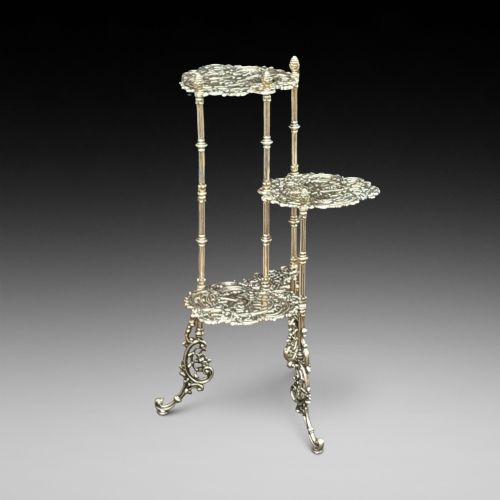
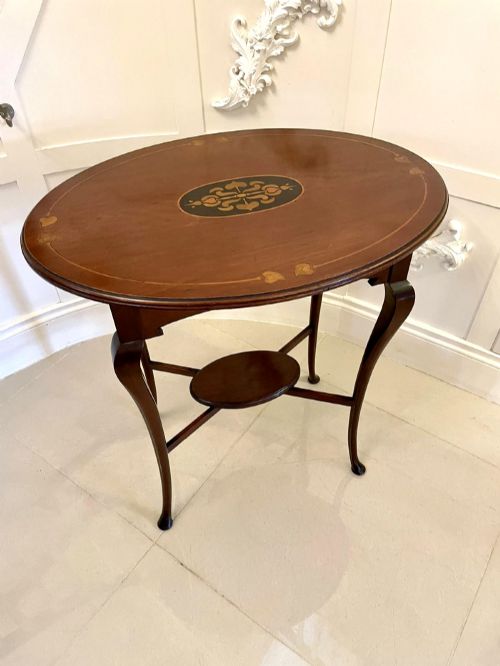
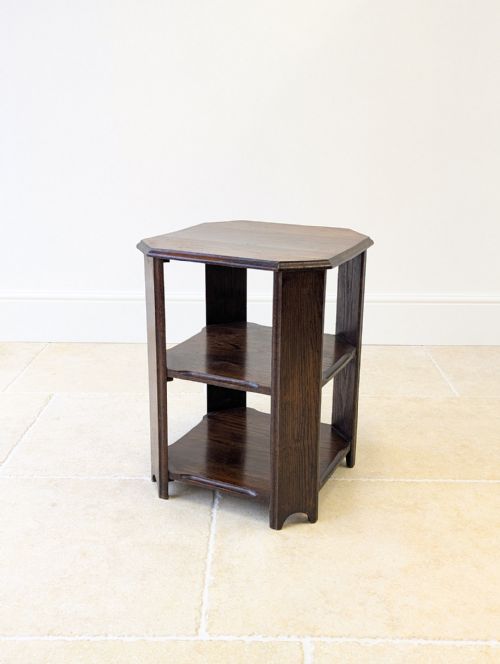
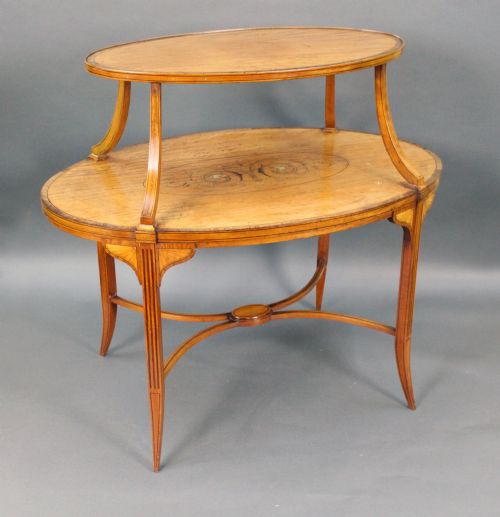

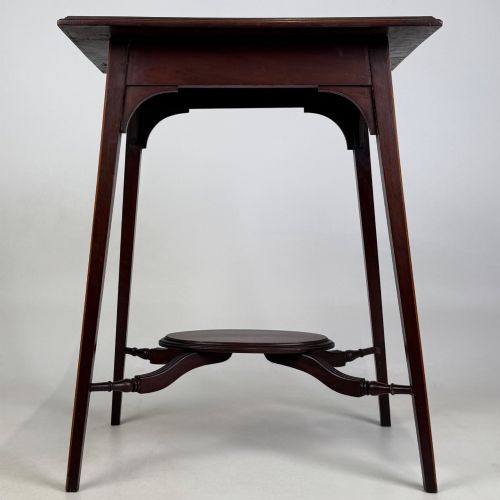
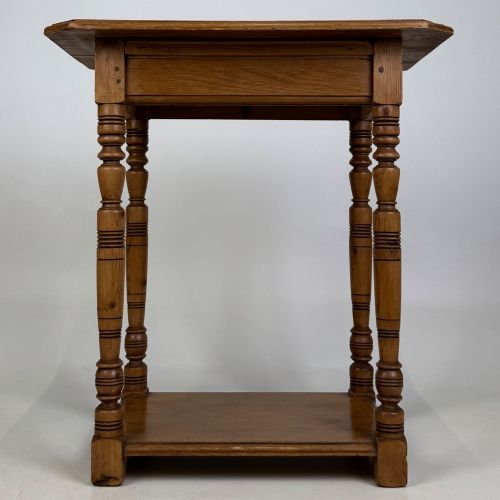
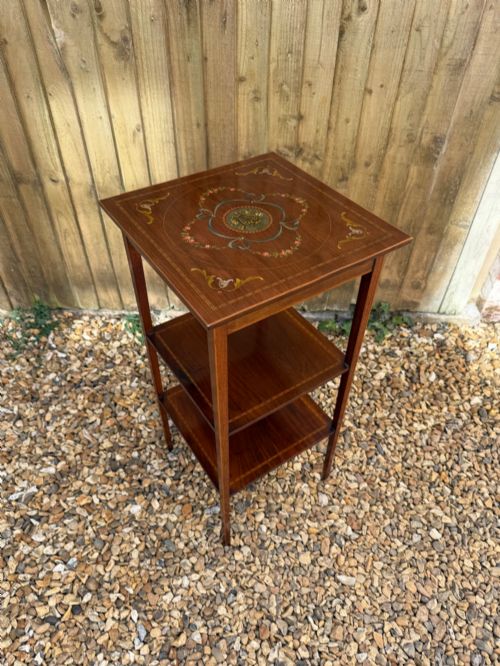
Antique Tier Display Table
An antique tier display table groups stacked surfaces for display and use, combining the utility of a side table with vertical presence.
Antique Tier Display Table
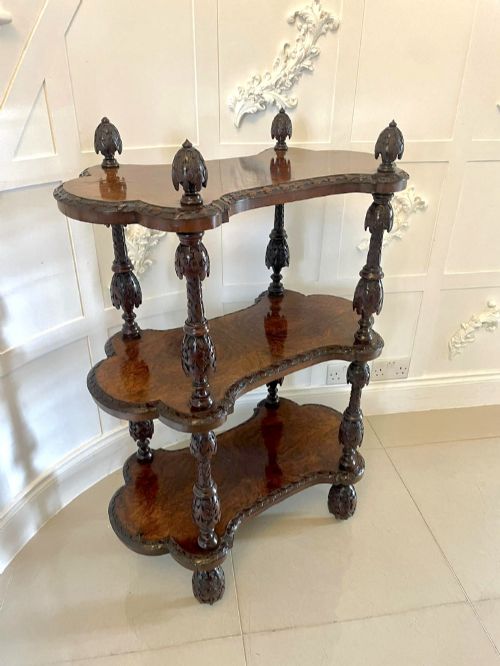
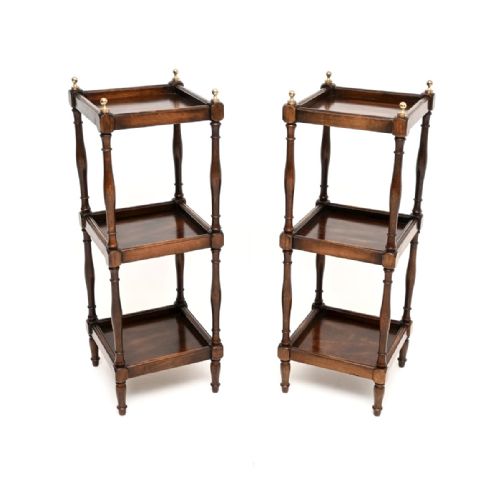
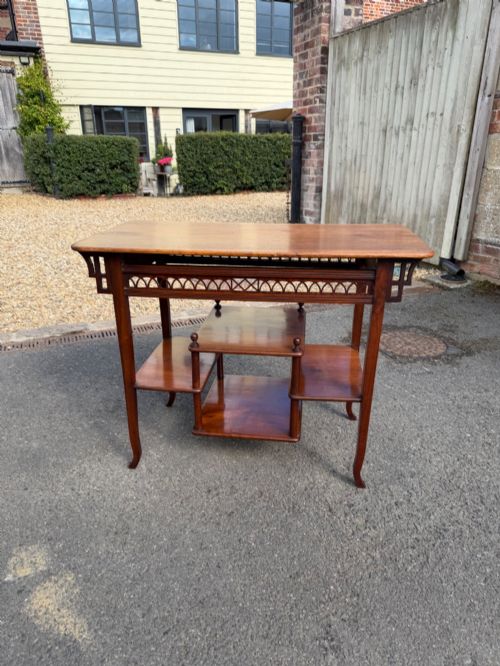
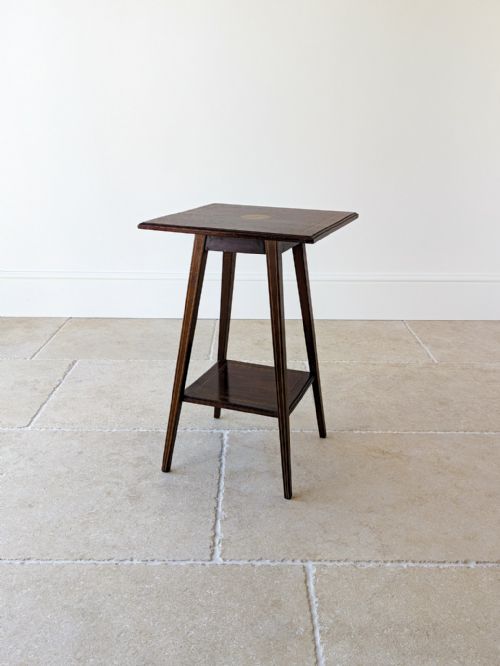
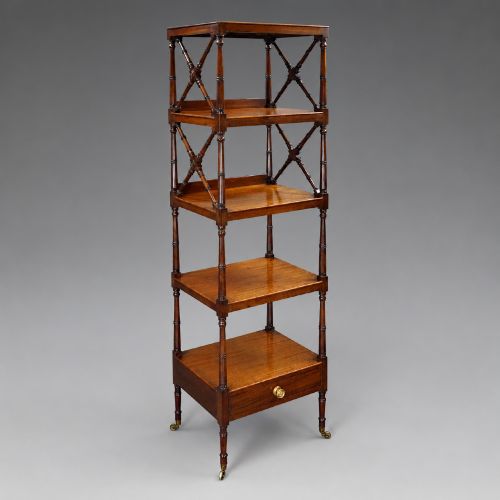
An antique tier display table appears across the nineteenth and early twentieth centuries in forms including whatnots, etageres, plant stands, and occasional side tables. These multi-level pieces range from simple two-tier oak stands to elaborate three-tier mahogany and rosewood etageres designed for ornaments and books.
Victorian and Edwardian examples dominate the selection, alongside George III, Regency, and French revival pieces. Makers utilised various woods such as walnut, satinwood, and ebonised timber to create tiered surfaces for domestic interiors.
Materials and construction
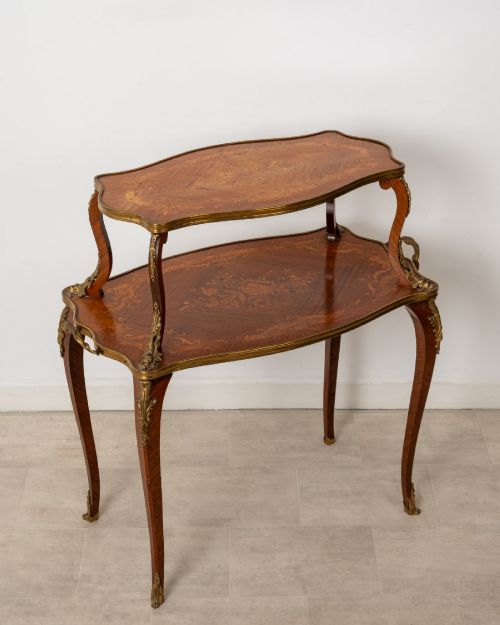
Timbers such as mahogany, walnut, rosewood, and oak form the structural framework of these tiered pieces, often enhanced with brass mounts, bamboo, or cast-iron elements. Cabinetmakers employed solid woods and veneers, applying marquetry, parquetry, and parcel gilding to enrich the surfaces.
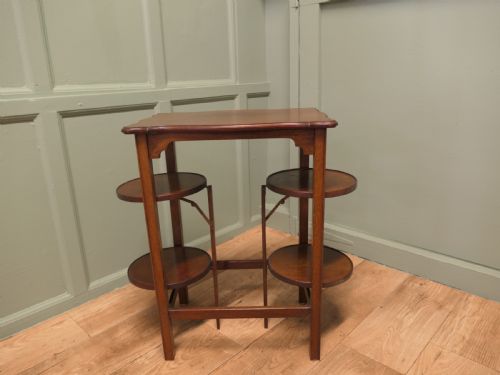
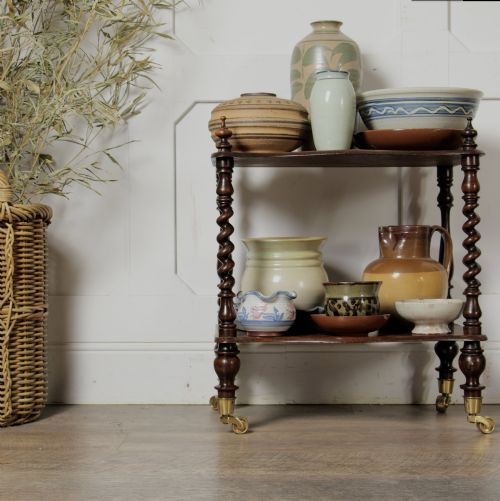
Joinery techniques include turned legs, barley twist supports, and tiered platforms fixed securely with traditional pegs and screws. Folding mechanisms appear on specific tea tables and cake stands, while plant stands and etageres utilise sturdy column supports to bear weight across multiple levels.
Periods represented range from George III and Regency through Victorian, Edwardian, and the early twentieth century.
Factors of distinction
Quality rests in the selection of timber figures, such as burr walnut or figured mahogany, and the precision of inlaid marquetry and parquetry. Superior execution shows in crisp turning on legs and columns, tight joints between tiers, and refined brass or gilt detailing.
Proportion and stability separate standard pieces from exceptional ones. Well-balanced stands maintain structural integrity across multiple tiers without wobble, while finer examples exhibit thoughtful detailing down to the smallest gallery rail.
Maison Giroux·Liberty of London
The Antique Tier Display Table Glossary
- Etagere
- A set of open shelves or tiers for displaying small objects and ornaments. This French form gained popularity in English interiors during the nineteenth century.
- Whatnot
- A piece of furniture consisting of shelves for books or ornaments. These multi-tiered stands frequently appeared in Victorian and Edwardian parlours.
- Marquetry
- Decorative veneer work forming pictures or patterns using different woods. Craftsmen applied these precise patterns to tabletop surfaces.
- Parquetry
- Geometric mosaic woodwork used for flooring and furniture tops. This technique creates repeating patterns across tiered display shelves.
- Barley Twist
- A spiral turning resembling a twisted rope, used for table legs and supports. It became a distinctive feature on Victorian stands.
Antique Tier Display Table: Frequently Asked Questions
What is an antique tier display table used for?
These multi-level pieces serve to display porcelain, silver, plants, and books while occupying minimal floor space in a room. Multiple surfaces allow for layered arrangement of decorative objects without cluttering a single tabletop.
Historically, they functioned as movable display furniture in drawing rooms and parlours, adapting easily beside seating or against walls.
How do I date an antique etagere?
Dating relies on identifying the primary timbers, construction methods, and stylistic revival influences present in the piece. Victorian examples often feature dark walnut, mahogany, or ebonised finishes with turned supports.
Edwardian and later pieces frequently incorporate lighter satinwood, simpler lines, or Arts and Crafts elements. Comparing the turning style and joint construction helps narrow the decade of manufacture.
Are bamboo tier tables sturdy?
Late nineteenth-century bamboo and rattan stands utilise natural cane stalks joined with pinned fixings and lacquered bindings. While lightweight, they offer adequate strength for lighter decorative objects, plants, and lamps.
Care should be taken to avoid placing excessive weight on lower or upper shelves of bamboo pieces to prevent structural strain.
What is the difference between a whatnot and an etagere?
The terms frequently overlap in antique listings, though whatnot traditionally describes multi-shelf storage units originating in the Georgian and Victorian periods. Etageres often point to French-influenced designs specifically intended for decorative display.
Both forms provide stacked tiers, but etageres more commonly feature refined marquetry, brass galleries, and lighter proportions.